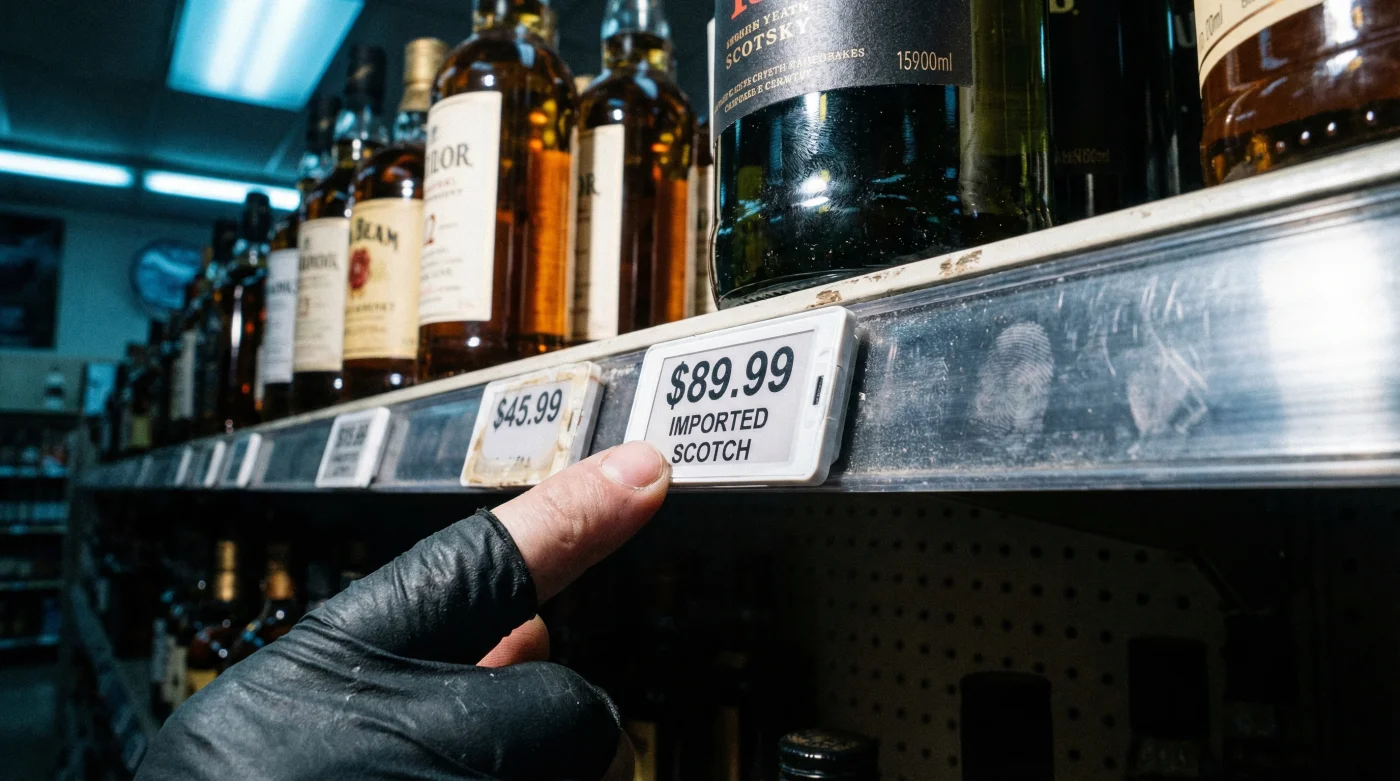
You stand in the brightly lit aisles of your local NSLC, rain slicking the pavement in the parking lot outside. The familiar hum of the commercial coolers fades into the background as your eyes scan the imported spirits section. You reach for that reliable, heavy glass bottle of imported London Dry gin—the exact one that has anchored your weekend gin and tonics for years without a second thought.
But the shelf tag tells a drastically different story today. A sudden, sharp increase stares back at you from the laminated paper, and the numbers feel impossibly wrong. You step back, checking the neighbouring bottles: the spiced rum shipped in from Barbados, the silver tequila from Jalisco. They all share the exact same unfamiliar, inflated markup.
This is the quiet shockwave of mandatory minimum pricing. Overnight, sudden provincial shifts have laid down a hard financial floor on NSLC imported spirits, stripping away the comfortable illusion that global liquor prices are a stable, unmoving bedrock. The long-standing era of the casual, twenty-five-dollar imported staple has quietly evaporated from the shelves.
The Architecture of the Shelf
We tend to imagine the economics of alcohol pricing as a slow-moving glacier, barely shifting from year to year unless a major brand completely redesigns its label. Instead, treat the provincial liquor system like an intricate network of dams and pressure valves. The regulatory board just aggressively closed a major valve, and you are paying drastically more as the water level rises across the entire board.
This feels entirely frustrating at first glance. You are handing over more of your hard-earned money for the exact same liquid you bought last month. Yet, this aggressive price floor forces a deeply necessary reckoning with how we consume. When cheap, imported volume is suddenly no longer an option, the mundane act of buying a bottle shifts from mindless habit to deliberate curation. The premium you now pay acts as a sensory filter, pushing you out of autopilot and demanding that you seek out actual, tangible quality in your glass.
Sarah Macmillan, a 38-year-old beverage director running a bustling cocktail bar in downtown Halifax, watched this massive transition happen in real time. “We were frantically swapping out the inventory tags at midnight,” she recalls, adjusting the menu pricing for her bar’s imported rail spirits as the mandate took effect. “People sitting at the bar assume the global distillers just got greedy overnight, but this is purely a localized provincial mechanism. It completely rewrites the basic math of a standard Friday night cocktail.” Sarah realized her profit margins—and her regular patrons’ wallets—could simply no longer rely on leaning heavily into imported, volume-driven budget brands.
Navigating the New Price Floor
The way you personally handle this sudden financial shift depends entirely on what you pour, and exactly why you pour it. Protecting your grocery budget without sacrificing your cherished evening wind-down requires immediate, deliberate action.
For the Casual Mixer
If your default go-to is a simple rum and cola or a basic vodka soda, the sharp sting of this new price floor is definitely the most intense. You are suddenly paying a heavy premium for a spirit whose raw flavour you actively try to mask with heavy carbonation and bright citrus. It is time to audit your home well rail and rethink what actually needs to be an import.
For the Mindful Sipper
Perhaps you strongly prefer a neat, quiet pour of imported Scotch, or a carefully stirred, perfectly balanced Negroni. The mandatory minimums might barely touch your absolute, top-shelf selections, but the mid-tier bottles you typically use for Tuesday night drams have suddenly crept up in cost. Your focus must shift toward robust local alternatives that completely bypass the heavy import tariffs entirely, keeping your glass full without absorbing the added provincial tax burden.
For the Budget Realist
You simply want a highly reliable bottle for hosting friends on the weekend without entirely draining your household budget. The psychological trick here is abandoning long-held brand loyalty. The new floor means the absolute cheapest import is now the exact same price as a considerably better, beautifully crafted, locally distilled spirit that sits just one shelf over. The playing field is levelled, completely altering the value proposition of buying local.
Recalibrating Your Home Bar Cart
Adjusting to this new regulatory reality does not mean you must stop enjoying a well-crafted, satisfying drink. It simply requires a far more tactical, measured approach to exactly how you source, pour, and utilize your spirits at home.
First, carefully assess the new financial baseline. If a standard imported bottle has suddenly jumped by fifteen percent, sit down and calculate its actual, real-world yield. A standard bottle pours exactly twenty-five single-ounce measures. When you break the new, intimidating cost down by the exact ounce, the shock becomes immediately manageable, allowing you to logically decide if the imported brand is still genuinely worth the pour.
- Burnt rice pots recover instantly by placing plain white bread slices.
- Apple cider vinegar splashed over roasting potatoes guarantees shatterproof crispy skins.
- Tomato paste caramelized in butter fundamentally alters cheap spaghetti sauce profiles.
- Salut Bonjour recipe demonstrations permanently ban raw flour over contamination fears.
- NSLC imported rum shelves face barren stock amid sudden maritime blockades.
- Measure your daily pours with a precise metal jigger rather than casually free-pouring, extending the lifespan of the bottle by several weeks.
- Substitute heavily taxed, imported fruit liqueurs with vibrant homemade syrups, mindfully infused with local maritime herbs and berries.
- Transition your tall highball base entirely to a locally produced, small-batch vodka or gin, completely avoiding the import floor.
- Dilute strong, highly spirit-forward cocktails with a slightly higher, refreshing ratio of dry vermouth or crisp artisanal sodas.
Tactical Toolkit: Keep a precise 1-ounce and 2-ounce stainless steel jigger permanently on your counter. Target high-quality local spirits strategically priced just below the new imported minimum floor. Always serve your drinks over large, dense, clear ice cubes—they melt significantly slower, perfectly preserving the delicate integrity of your now-pricier spirit. This controls the dilution rate, keeping the flavour profile entirely intact.
The End of the Mindless Pour
It is incredibly easy to resent the sudden leap in prices when you reach the checkout counter. Watching your highly reliable, affordable weekend staple become a sudden luxury purchase feels like a small, distinctly modern defeat in an already expensive world. Yet, deep constraint inevitably breeds vastly better habits, and this provincial shift is no exception.
By aggressively stripping away the comfortable safety net of cheap, imported volume, this sudden provincial shift quietly invites you to actually taste exactly what is resting in your glass. It deliberately pushes your attention toward the incredibly talented maritime distillers operating just down the highway, and it fundamentally transforms a casual Tuesday night drink from a thoughtless, repetitive routine into a deliberate, heavily savoured ritual. The financial price has absolutely gone up, but so too has the quiet intentionality of the pour.
“When the artificial floor suddenly drops out on cheap global imports, you finally start truly tasting the rich terroir of your own backyard.”
| Key Strategy | Implementation Detail | Added Value for the Reader |
|---|---|---|
| Abandon Brand Loyalty | Swap imported budget staples for regional maritime equivalents. | Discover vastly higher-quality local distillates for the exact same newly inflated price point. |
| Precision Pouring | Use a standard metal jigger to measure exactly 1.5 ounces per drink. | Extend the lifespan of your bottles by up to thirty percent, effectively offsetting the harsh price hike. |
| Flavour Substitution | Use vibrant local syrups and bitters instead of imported fruit liqueurs. | Reduces deep reliance on heavily taxed imports while simultaneously creating a fresher, more vibrant cocktail. |
Frequently Asked Questions
Why did NSLC imported spirits suddenly go up in price overnight?
The province quietly implemented mandatory minimum pricing, creating a strict legal price floor that physically prevents imported alcohol from being sold below a very specific financial threshold.
Does this aggressive price floor affect local Nova Scotia spirits?
While local products possess their own unique pricing structures, this specific mandate directly targets the minimum allowable price for imported goods, suddenly making local options highly competitive.
Will these imported liquor prices ever drop back down to normal?
It is highly unlikely. Mandatory minimums are strict legislative guardrails specifically designed to stay permanently in place, meaning these new prices are the new long-term baseline.
How can I realistically avoid paying these new daily premiums?
Shift your purchasing power entirely to local maritime distillers, who are not subjected to the exact same imported minimums and very often offer superior quality at the same price.
Are extremely premium imported spirits heavily affected by this change?
Generally, no. The strict price floor primarily impacts budget and mid-tier imports that previously relied heavily on high-volume, low-margin sales to stay competitive.