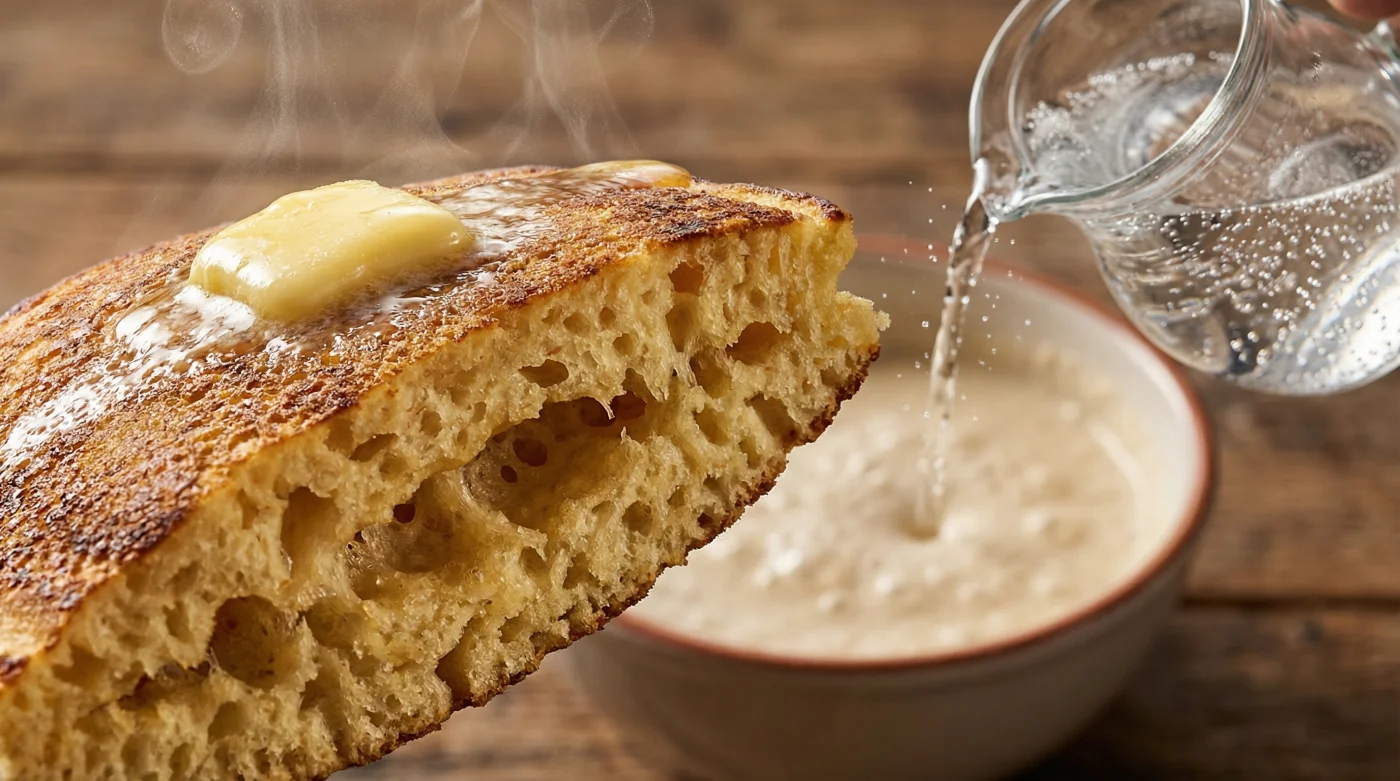
It begins before the house fully wakes. The frost is still clinging to the windowpanes, and the heavy cast iron skillet is coming up to temperature on the stove. There is a quiet rhythm to weekend mornings in the neighbourhood, punctuated by the sharp crack of an egg and the rich, nutty smell of butter beginning to brown. You stand there, whisk in hand, chasing the memory of a towering diner breakfast.
Yet, despite your best efforts, the results on the plate often tell a different story. You pour the batter, wait for the edges to bubble, and flip, only to end up with heavy, stubborn flour discs. They taste fine, soaking up your local maple syrup, but they lack that impossibly airy, cloud-like texture that makes eating out feel like a genuine occasion.
We have been conditioned to believe that the chemical reaction of baking powder is the only path to a proper rise. Most home recipes pile on teaspoons of the white powder, hoping sheer chemical force will push the heavy flour and milk mixture upward. But chemical leaveners have limits, and relying on them entirely often leaves a faint, tinny tang at the back of your throat.
The secret hiding in plain sight at your favourite corner diner is not a magical flour blend or a specialized flat top grill. It is a calculated, two-ingredient modification relying entirely on trapped carbonated gas bubbles. By swapping out a portion of your tap water or milk for heavily carbonated club soda, you change the physical structure of the batter entirely.
The Physics of the Morning Pour
Think of your batter not as a thick paste meant to be beaten into submission, but as a fragile web of scaffolding. When you mix flour with liquid, gluten proteins begin to link arms. Your goal is to keep those arms loose enough to stretch, while filling the spaces between them with as much air as possible before the heat sets the structure.
Traditional mixing often ruins this delicate balance. Agitating the bowl endlessly smooths out the lumps but tightens the gluten network, resulting in a tough, chewy interior texture. You are effectively squeezing all the available air out of the room before the door is even closed.
This is where the professional pivot comes into play. You keep your standard dry ingredients—the flour, the salt, a modest pinch of baking powder for a baseline lift. You measure your wet ingredients, but you intentionally hold back roughly a quarter of the heavy dairy or flat tap water. In its place, you introduce something violent and volatile: plain, unflavoured club soda.
The carbonation acts as a thousand tiny, mechanical airbags. The moment the cold batter hits the hot, greased cast iron, those microscopic pockets of gas react. They expand rapidly, exploding into airy interiors and forcing the heavy batter upward long before the starches have a chance to solidify and trap them.
I learned this watching Chef Marc Lévesque, a 52-year-old lifer who runs a bustling, unpretentious spot in downtown Ottawa. His kitchen is a masterclass in controlled chaos, but when it comes to the flat top, his movements slow down entirely. He never whisks his morning batter to death; he treats it with an odd, surprising reverence.
Marc builds his base mixture the night before, letting the flour fully hydrate in the commercial fridge. But the soda is an entirely different matter. He pours fiercely cold club soda into the resting mixture just seconds before the morning rush begins, folding it with a massive rubber spatula so gently that it feels like he is trying not to wake it up.
Adapting the Fizz to Your Routine
You do not need a stainless steel commercial kitchen to replicate this mechanic. The beauty of this modification lies in its sheer flexibility. Whether you are leaning into a rich, traditional recipe or working around modern dietary preferences, the carbonation principle remains the same. You just need to adjust your timing.
For the traditionalist holding tightly to a cherished buttermilk recipe, the strategy involves a careful balancing act. The acid in the buttermilk is already reacting with the baking soda you added, so the club soda acts as a secondary booster. It creates a double, stacked lift system that yields the tallest possible stack on the plate without compromising that signature tang.
- Frozen sirloin steaks seared without thawing retain perfectly red medium centers.
- White basmati rice demands a cold water rinse before stovetop boiling.
- Fresh button mushrooms stored in paper bags avoid rapid slimy decay.
- Fresh basil leaves blanched before blending create vibrant green finishing oils.
- Dark roast coffee completely loses bitter acidity with standard table salt.
Overcompensating with extra carbonation here bridges that structural gap beautifully. By swapping up to a third of the plant milk for soda, you provide the crucial mechanical lifting force that the absent dairy proteins would normally help support, ensuring the batter holds its shape.
Building the Bubble Matrix
Executing this trick demands a mindful shift in your physical movements at the counter. The instinct to forcefully whisk away every dry spot of flour must be permanently ignored. You are now working with a live, volatile ingredient, and every aggressive stir pops the very bubbles you are trying to meticulously trap.
Approach the mixing bowl with a uniquely light hand. Think of folding the liquid into the dry ingredients as gently turning over a fragile pillow. You want to intentionally leave the stubborn lumps alone; they will naturally hydrate and steam themselves flat once they hit the heat of the pan.
To guarantee a flawless execution every single time, rely on this specific, tactile toolkit:
- The Ratio: Replace exactly 25 percent of your total recipe liquid with plain, unflavoured club soda.
- The Temperature: The soda must be ice cold. Warm carbonation dissipates too quickly in the bowl before it reaches the pan.
- The Heat: Aim for a surface temperature of 190°C. If butter burns immediately, the pan is too hot. If it does not sizzle aggressively, wait.
- The Timing: Pour the soda directly into the batter right before you ladle. Never let the fully mixed batter sit.
The entire success of this method hinges on rapid thermal transfer. You want the violent expansion of gas happening directly on the cooking surface, nowhere else. Ensuring immediate pan-contact is critical to trap those bursting spheres inside the cooking flour matrix before they vanish.
The Quiet Satisfaction of the Weekend
Standing by the stove, watching the edges of the batter puff up and dry out, you start to see the difference immediately. The surface bubbles aggressively, resembling a porous sponge rather than a flat, solid mass. When you slide the spatula underneath and finally flip, the weight of it feels entirely different—hollow, delicate, and full of immense promise.
Understanding the mechanics of what you are cooking entirely removes the underlying anxiety of failure. It transforms a frustrating, hit-or-miss chore into a deeply rewarding, predictable morning ritual. Mastering this minor detail brings a profound sense of professional competence right to your own kitchen island.
You are no longer just blindly following a list of ingredients passed down on a faded recipe card. You are orchestrating the physics of your food, creating a morning experience that is intentionally light, remarkably tender, and quietly perfect.
The secret to diner texture is not found in a cardboard box of baking powder; it is captured entirely in the fleeting life of a carbonated bubble.
| Key Point | Detail | Added Value for the Reader |
|---|---|---|
| Standard Tap Water | Flattens the batter, adding raw moisture without supporting structure. | Results in a dense, chewy texture that rests heavily on the plate. |
| Extra Baking Powder | Tries to force a rise through excessive, unbalanced chemical reactions. | Leaves a bitter, metallic aftertaste that masks the sweet maple syrup. |
| Club Soda Swap | Injects explosive, mechanical gas bubbles directly into the gluten web. | Creates towering, impossibly airy interiors that rival professional kitchens. |
Frequently Asked Questions
Can I use flavoured sparkling water? No, the subtle flavourings and oils turn bitter when exposed to high heat. Always stick to plain club soda.
Does tonic water work the same way? Tonic water contains quinine and added sweeteners, which will quickly scorch on the pan and severely alter the final taste.
How long can the batter sit after adding the soda? It should not sit at all. You have roughly ten minutes before the carbonation completely dissipates into the air.
Should I whisk the soda in completely to avoid flour pockets? Absolutely not. Fold it gently until just barely combined. Flour lumps are completely normal and will cook out.
What if my pan is not hot enough when I pour? The gas bubbles will slowly pop and escape before the batter has a chance to set, leaving you with flat discs. Always ensure a fully preheated surface.