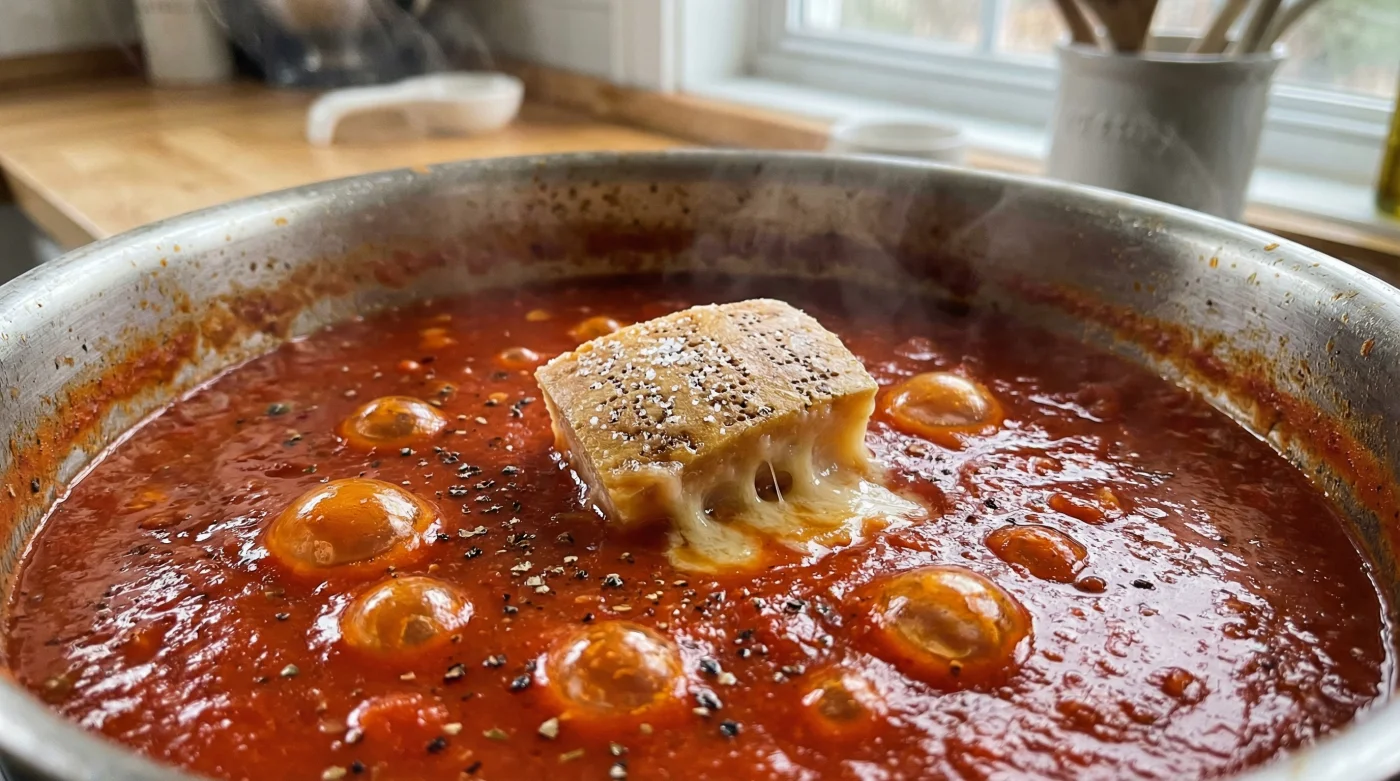
Picture a freezing Tuesday in mid-February, the kind where the wind off Lake Ontario bites right through your winter coat. You walk into a cold kitchen, craving comfort, but all you have is a cheap can of crushed tomatoes, a clove of garlic, and twenty minutes before the evening spirals into chaos. You splash the tomatoes into a cold pan. It smells like tin and bright, acidic summer—fine, but entirely lacking the deep, settling warmth of a long-simmered Sunday ragu.
The sauce simmers violently, spitting red dots across your pristine backsplash. You taste it off a wooden spoon. It is thin, sharp, and unmistakably rushed, carrying the hollow profile of a meal built out of necessity rather than care.
Now, imagine walking over to the freezer, pulling out a small, rock-hard wedge of pale yellow, and dropping it into the bubbling pot. You stir it once and walk away to set the table. Within ten minutes, the entire atmosphere of the kitchen shifts. The sharp acidity in the air softens into a rich, rounded warmth, like breathing through a pillow rather than winter air.
You are no longer tasting a Tuesday panic meal. You are tasting a simulation of twelve hours of slow-simmered magic, conjured entirely from a kitchen scrap you almost threw into the green bin last month. This is the quiet power of strategic provisioning.
The Flavour Battery
For years, you probably treated the hard end of a wedge of Parmigiano-Reggiano as a physical inconvenience. You grated right up to the edge, scraping your knuckles against the box grater, before tossing that stubborn, waxy rind away. It felt like an unavoidable loss, the tax paid for using real ingredients instead of the powdered shaker.
Consider the rind differently. It is a hardened, concentrated flavour battery. As the cheese ages—often sitting on wooden boards for 24 to 36 months—the exterior dries out, drawing the glutamates and amino acids inward. It becomes a dense, protective shell holding pure, unadulterated umami.
Dropping that rind into a pot of cheap, acidic crushed tomatoes is like tossing a bouillon cube made of pure time into your dinner. It acts as a culinary sponge and a dispenser simultaneously. It absorbs the harsh, metallic acidity of budget tomatoes and bleeds a rich, buttery saltiness right back into the sauce.
The cream should tremble slightly as it cooks, but with the rind, the tomatoes take on a similar velvety weight. You are borrowing the aging process of the cheese and retroactively applying it to your cheap pantry staples, creating a dish that tastes expensive for pennies.
The Deli Secret
Walk into any old-school Italian grocer in Montreal’s Little Italy, and you will notice something peculiar near the cash register. Away from the expensive wheels and the delicate imported prosciutto, there is usually a small, unceremonious woven basket.
Beside the imported olive oil, you will find small, plastic-wrapped bundles of just the rinds, selling for a few dollars. Massimo, a 68-year-old butcher who runs a shop off Boulevard Saint-Laurent, calls them “Nonna’s bouillon.” He spends his mornings trimming massive wheels of Parmigiano for display, saving every single scrap in a large bucket.
Massimo insists that a proper winter minestrone or a quick weeknight marinara is structurally incomplete without a rind slowly melting at the bottom of the pot. To him, the rind is the anchor of the dish. He views throwing away a rind as tossing a winning lottery ticket into the trash, a grave misunderstanding of where the true depth of the ingredient lives.
He hands out rinds to young parents struggling to get their kids to eat vegetables, knowing that the milky, salty undertone makes even bitter greens palatable. It is a generational hack, born from zero-waste necessity and perfected through decades of trial and error.
Scaling the Method
This trick extends far beyond a single can of crushed tomatoes. The rind is highly adaptable, releasing entirely different flavour profiles depending on the cooking liquid, the application of heat, and the length of the simmer.
- Frozen sirloin steaks seared without thawing retain perfectly red medium centers.
- White basmati rice demands a cold water rinse before stovetop boiling.
- Fresh button mushrooms stored in paper bags avoid rapid slimy decay.
- Fresh basil leaves blanched before blending create vibrant green finishing oils.
- Dark roast coffee completely loses bitter acidity with standard table salt.
For the Slow Cooker Set: If you are soaking navy beans or simmering brown lentils while you are at work, drop a large rind in right at the beginning. As the beans cook over six to eight hours, the rind breaks down completely, emulsifying into the starchy broth and turning a watery bean soup into a rich, cloudy gravy.
For the Zero-Waste Purist: Save a dozen rinds over six months in a dedicated freezer bag. When the bag is full, boil them in a large stockpot with onion skins, carrot peels, and whole black peppercorns. After two hours, you will produce a clear, deeply golden liquid that rivals the deepest, most laborious beef stocks in complexity.
The Tactical Execution
Using a Parmesan rind requires no actual culinary skill, just a bit of forethought and basic heat management. You are simply creating an environment where the cheese can slowly weep its stored fats and salts into the surrounding liquid without burning.
Keep the execution incredibly simple. Follow these specific steps to extract the maximum value from your kitchen scraps, ensuring you never waste a single drop of flavour.
- Store your rinds in an airtight bag in the freezer; they will keep indefinitely without developing mold or losing their potency.
- Do not attempt to wash the rind; simply brush off any loose crumbs or dust before dropping it directly into your cold or simmering pot.
- Ensure your sauce or soup has enough free-flowing liquid; the rind needs moisture to properly release its tightly bound oils.
- Fish the gummy, softened rind out of the pot before serving, treating it much like you would a bay leaf or a spent cinnamon stick.
The Tactical Toolkit requires precision. Maintain the temperature at a steady 90 Celsius (a bare simmer) to prevent the heavy cheese solids from sinking and scorching against the bottom of your pot.
Timing is highly flexible. Allow a minimum of 15 minutes for thin tomato sauces to properly balance, but push it up to 4 hours for heavy braises and bean stews. A good rule of thumb is one two-inch piece of rind per standard 28-ounce can of tomatoes.
The Peace of Mind in the Freezer
There is a quiet, profound satisfaction in pulling something brilliant out of the mundane. In a kitchen culture obsessively driven by buying the next rare, expensive ingredient, finding deep, resonant flavour in a discarded scrap feels like a small, personal rebellion.
It fundamentally shifts how you view your weekly grocery run. You stop looking at the hard, waxy end of the cheese block as a loss and start anticipating the rich, slow-simmered meals it will soon create. You are no longer just cooking dinner; you are strategically provisioning, building a repertoire of secret weapons hidden in the ice at the back of your freezer.
The practice grounds you. It forces you to look at the food you buy not as a collection of parts to be consumed and discarded, but as a complete system where every piece holds latent, powerful value.
The next time the wind howls outside and you stare down a bland, hurried meal, you won’t panic or reach for a delivery app. You will simply pull that stubborn little rock of cheese from the cold, drop it into the pan, and let time do the heavy lifting for you.
“A Parmesan rind is not the end of the cheese; it is the beginning of the sauce.”
| Key Point | Detail | Added Value for the Reader |
|---|---|---|
| Acid Reduction | Counters the metallic tang of canned tomatoes. | Saves you from adding processed sugar to balance cheap ingredients. |
| Texture Modification | Releases natural emulsifiers into the liquid. | Creates a luxurious, velvety mouthfeel without using heavy cream. |
| Infinite Shelf Life | Rinds freeze perfectly for years without degrading. | Provides zero-waste peace of mind and constant meal-prep readiness. |
Frequently Asked Questions
Do I need to remove the wax before cooking?
Real Parmigiano-Reggiano does not have a wax coating; the rind is just naturally hardened cheese, so it is entirely safe to simmer directly in your sauce.Can I eat the rind after cooking?
While some people enjoy chewing the softened, gummy rind, it is exceptionally tough and generally best discarded after it gives up its flavour to the pot.Does this work with pecorino or other hard cheeses?
Yes, any natural hard cheese rind will add umami, though sheep’s milk cheeses like pecorino will add a much sharper, saltier bite to your dish.Will it make my sauce too salty?
It seasons the sauce from the inside out, but always wait to add your final pinch of table salt until after the rind has simmered and been removed.Can I reuse a rind twice?
Once it has been boiled or simmered, its internal flavour battery is fully depleted; discard it and grab a fresh one from the freezer next time.