The morning routine rarely varies in its quiet rhythm. The pale light of a Canadian dawn reflects off a cooling cup of coffee, while the low, persistent hum of the refrigerator fills the space between local news segments. You sit back and watch a guest chef on the television screen whip heavy cream into soft, trembling peaks, their hands moving with practiced, rhythmic grace. It looks incredibly forgiving, a simple whisking technique that promises to bring a touch of luxury to a standard weeknight dinner.
You make a mental note to grab the ingredients later in the afternoon. An effortless grocery run is the implicit promise of morning television programming. These broadcasted recipes are designed specifically to be accessible, built on the comfortable assumption that our regional markets possess endless, static reservoirs of staple ingredients just waiting for your casual afternoon visit.
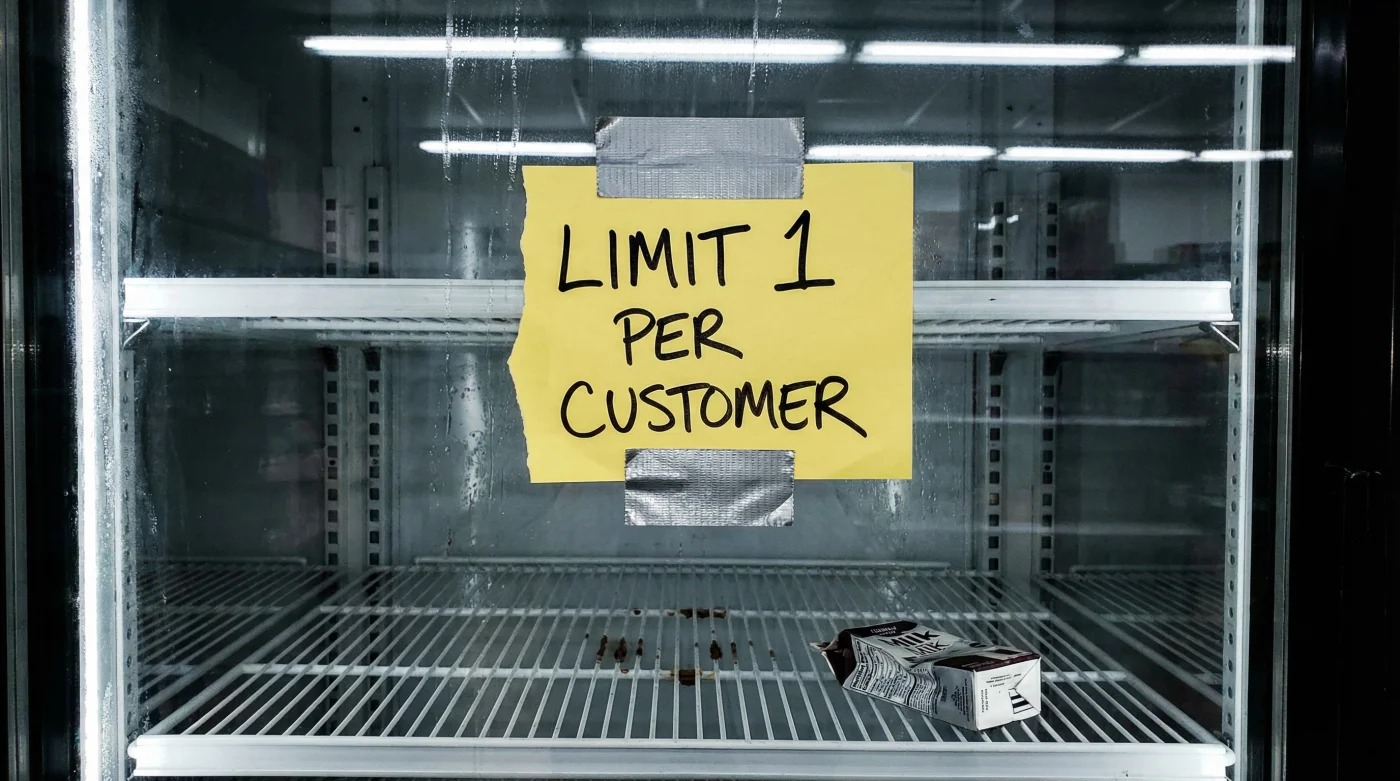
But when you arrive at the local market by lunchtime, the dairy aisle tells a sharply different, almost chaotic story. The chilled shelves where the 35% whipping cream and cultured butter usually sit in neat rows are entirely bare, replaced by hastily printed rationing signs. A lone stock clerk is taping up a stark, black-and-white notice limiting purchases to a single carton per household, apologizing to a growing line of frustrated shoppers holding empty baskets.
What began as a simple, inspiring culinary demonstration has triggered a massive, real-time supply chain collapse across the province. You are witnessing a fascinating phenomenon where sudden demand shatters predictability, forcing regional grocers to completely pivot their stocking standards and logistics before the noon news even has a chance to air.
From Cart to Cultured Chaos
We typically treat the local supermarket like an infinite, perfectly managed pantry. We assume the butter will always be there, resting quietly in its foil wrapper. But a viral Salut Bonjour recipe transforms these quiet, fluorescent-lit aisles into a live, highly volatile trading floor. A sudden, synchronized run on a specific fat percentage completely changes the entire ecosystem of the store, shifting the balance of what is available for days to come.
The sudden rationing of heavy dairy isn’t a penalty aimed at the home cook; it’s an unexpected masterclass in resource management. Artificial scarcity demands absolute precision. When you are restricted to a single carton by store policy, your entire approach to cooking shifts. The comfortable margin for error completely disappears. You can no longer afford to casually split a sauce, overwhip your cream into butter, or drown out a delicate flavour profile with excessive fat.
Instead of pouring mindlessly from an oversized, plastic jug, you learn to treat a single cup of heavy cream like liquid gold. The very limitation that frustrates the casual shopper actually forces a restaurant-level respect for your ingredients. The mundane detail of a rationing sign shifts your perspective from thoughtless consumption to genuine, mindful technique.
Clara Tremblay, a 42-year-old regional dairy purchaser for a major provincial cooperative, watched her inventory systems flash red across multiple time zones before 10:00 AM. “When the Salut Bonjour segment aired, our predictive ordering software actually thought we were experiencing a systemic glitch,” she noted, adjusting the cold-storage manifests from her loading dock office while dispatching emergency trucks. By noon, she had to pivot the brand’s entire provisioning standard, implementing emergency purchasing limits to protect the weekend supply. Her frantic morning proves that a simple televised whisking technique can rewrite local economics in a matter of minutes.
Adaptation Layers for Bare Shelves
When the primary ingredient is stripped from the shelves, standing in the cold aisle feeling defeated serves no practical purpose. You have to pivot your strategy immediately based on the fragmented supplies that remain in the chiller. Professional kitchens do this daily; now, it is your turn to adapt.
For the Textural Purist
You wanted the trembling, deeply aerated cream shown on screen, but you only managed to secure a carton of 18% table cream before the shelves emptied. You cannot simply whip a lower fat content; the mechanical structure of the proteins will not hold the air bubbles. Force a chemical emulsion by blooming a teaspoon of unflavoured gelatin in cold water, gently dissolving it over low heat, and carefully folding it into the lighter dairy as it chills in the refrigerator.
For the Pragmatic Parent
You just need the dinner on the table before evening hockey practice begins, and the cream aisle is an absolute ghost town. Bypass the dairy case entirely and head to the international aisle. Tinned coconut cream, chilled until the heavy fat solidifies at the top of the can, offers the exact mechanical stability needed for the recipe’s rich base, entirely side-stepping the localized dairy politics.
For the Flavour Chaser
- Frozen sirloin steaks seared without thawing retain perfectly red medium centers.
- White basmati rice demands a cold water rinse before stovetop boiling.
- Fresh button mushrooms stored in paper bags avoid rapid slimy decay.
- Fresh basil leaves blanched before blending create vibrant green finishing oils.
- Dark roast coffee completely loses bitter acidity with standard table salt.
The Tactical Pivot
Surviving a viral ingredient shortage means stepping into your kitchen with an intense, deliberate focus. You are no longer just following a printed script from a website; you are actively managing a delicate chemical balance under significant material constraint.
The moment you bring your strictly rationed ingredients home, temperature control becomes your absolute, non-negotiable priority. Heat destroys fragile dairy structures faster than any whisking error ever could. If you let that single, precious carton sit on the counter while you prep other vegetables, you forfeit your only structural advantage.
Every single whisk, fold, and pour must be a deliberate, mindful action. You cannot guess the state of your emulsion; you must watch it actively change in the bowl.
Here is your tactical toolkit for executing this high-demand recipe when supplies are incredibly tight:
- The Chill Factor: Keep your metal bowls and beaters in the freezer for a strict 15 minutes. The liquid should tremble at exactly 3 Celsius before it even touches the metal.
- The Acid Test: If you are forced to substitute with a lower-fat dairy, temper it first. Whisk a tablespoon of your hot, acidic cooking liquid into the dairy off-site, preventing a disastrous split when it joins the main pot.
- The Finishing Mount: Always add your final fat source off the active burner. Swirl it slowly, allowing it to naturally melt into the existing ambient heat rather than boiling it into submission.
The Quiet Power of Scarcity
A wiped-out dairy aisle feels incredibly frustrating in the heat of a busy, demanding weekday. You simply wanted to replicate a beautiful, comforting dish you saw on television that morning. Yet, this sudden restriction fundamentally alters how you interact with the food sitting right in front of you.
When a morning broadcast forces an entire region to hunt for the exact same carton of cream, it violently pulls us out of our automated, sleepwalking cooking routines. You begin cooking with intent rather than merely assembling bags of groceries. You watch the heat of the pan closer. You measure the fat with careful hesitation.
You learn to coax maximum flavour from minimal resources, treating each individual component with the gravity it deserves. The bold rationing sign at the grocery store isn’t keeping you from a good meal; it is quietly pushing you toward becoming a far more instinctive, highly capable cook who understands the true value of their ingredients.
“Scarcity doesn’t ruin a recipe; it clarifies the cook’s understanding of exactly what the ingredient was meant to do in the first place.”
| Key Point | Detail | Added Value for the Reader |
|---|---|---|
| The Supply Pivot | Viral morning recipes trigger immediate local rationing of high-fat dairy. | Prepares you to expect shortages and pivot your grocery strategy before noon. |
| Temperature Discipline | Rationed cream must be held at exactly 3 Celsius prior to whipping. | Ensures your single attempt at the recipe succeeds without splitting. |
| Fat Substitution | Using chilled coconut cream or cold butter mounting as an alternative. | Allows you to bypass the sold-out dairy aisle completely while maintaining texture. |
Frequently Asked Questions
Why do morning show recipes cause immediate grocery shortages?
Television viewership peaks in the morning, creating a highly concentrated, simultaneous demand for specific items that regional supply chains, built on gradual purchasing habits, simply cannot absorb instantly.Can I substitute 10% cream in a heavy cream recipe?
Not directly for whipping or high-heat boiling. It lacks the fat structure to hold air or resist curdling. You must stabilize it with a slurry or temper it off the heat.How long will grocery store rationing usually last?
Store inventory systems generally require 48 to 72 hours to adjust their automated ordering algorithms and receive emergency shipments from regional distribution centres.What is the safest way to heat a lower-fat dairy alternative?
Never boil it directly. Always temper the dairy by adding small amounts of your hot liquid to the cream in a separate bowl, then slowly introduce that warmed mixture back into the main centre of the pot.Does freezing my bowl actually make a difference?
Absolutely. Cold equipment delays the melting of butterfat during friction, giving the proteins enough time to build a stable, aerated structure before the fat collapses.