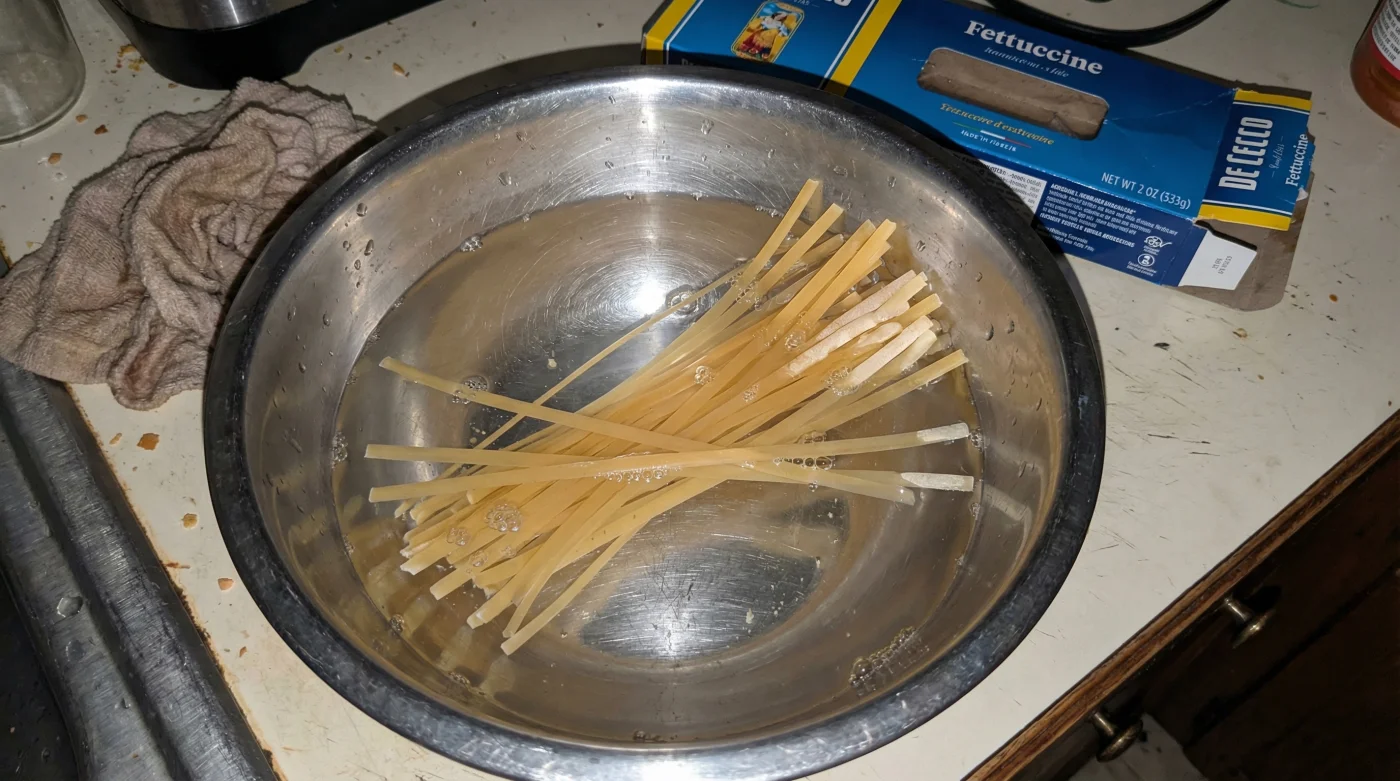
You stand by the stove on a rushed Tuesday evening, watching a massive stainless steel pot stubbornly refuse to boil. The windows of your kitchen fog up against the chill of the evening, the humidity settles heavily over the room, and you wait. We treat this waiting as a mandatory tax for dinner, assuming that perfectly cooked noodles require a volcanic cauldron of salted water rolling aggressively over a high flame.
We are taught from our earliest cooking memories that chaotic, boiling water is the only way to conquer dried boxed pasta. You drop the brittle, pale yellow sticks of spaghetti into the cavernous pot, hoping they bend into absolute submission before the lower halves scorch against the hot metal of the base.
But the professional reality operates on a completely different frequency. Instead of a violent boil and wasted electricity, the most efficient method happens quietly, sitting on the kitchen counter in a simple bowl of cold tap water, long before you even turn the burner dial.
It turns out that dried semolina wheat does not actually require aggressive heat to soften. By separating the hydration process from the cooking process, you bypass the waiting entirely, transforming a rigid pantry staple into a pliable, fast-cooking ingredient that behaves more like fresh dough.
The Sponge and the Flame
The traditional method forces two distinct chemical reactions to happen simultaneously: absorbing water and gelatinizing starches. This is why it takes ten to twelve minutes of high heat to force the dry centre of a penne noodle to soften. But if you pull these tasks apart, the logic completely flips.
Think of dried pasta like a rigid, dried-out kitchen sponge. If you blast a dry sponge with boiling water, it absorbs unevenly and scalds. If you let it rest gently in cool water, it plumps up symmetrically, slowly drawing moisture into its core without damaging the delicate exterior structure.
By soaking your pasta in cold water, you allow the gluten network to hydrate at its own unhurried pace. The noodles turn pale, bendable, and completely saturated with moisture. Because the hydration phase is already finished, the actual cooking phase—the heat required to make the starches edible—now takes incredibly little effort.
Marcello, a 52-year-old prep cook working at a bustling, narrow trattoria in Montreal, relies entirely on this separation of tasks. During a chaotic Friday dinner service, he does not have twelve minutes to wait for a box of rigatoni to boil. Instead, he keeps large lexan containers of pre-soaked, pliable pasta sitting in cool water in the walk-in fridge. When an order for carbonara fires, he drops a handful of the soaked noodles straight into a shallow pan of simmering sauce. Sixty seconds later, it hits perfect al dente. “The water does the heavy lifting while we sleep,” he notes, tapping a container of pale, hydrated fusilli.
Adjusting for Your Kitchen Rhythm
This technique adapts beautifully to different household routines, fundamentally changing how you plan your evening meals. The flexibility allows you to manipulate a basic ingredient to serve your specific schedule, rather than being chained to the stove.
For the Busy Parent
If you know dinner will be a scramble, toss a box of macaroni into a sealed container of cold water before you leave for work or head out for school pickup. By the time you return, the pasta is fully hydrated. You only need to warm it directly in sauce, getting the meal on the table in five minutes instead of twenty.
- Pancake batter requires a splash of carbonated water for diner lift.
- Duck breast skin renders completely crisp starting inside a cold skillet.
- Flaky pie dough demands freezing cold vodka instead of plain water.
- Parmesan cheese rinds simmered in cheap tomato sauce mimic aged ragus.
- Salut Bonjour recipe virality forces regional grocery stores to ration ingredients.
If you struggle to make glossy, restaurant-quality pan sauces, cold-soaking is your missing link. As the pasta sits in cold water, it releases surface starches slowly and evenly. This creates a highly concentrated, cloudy liquid that acts as a powerful binding agent. Adding a splash of this reserved soaking water to your melted butter or olive oil guarantees a thick coating that clings tightly to every noodle.
For the Camp Stove Minimalist
When you are boiling water over a small propane flame at a campsite in Algonquin Park, fuel is precious. Cold-soaking your dinner in a water bottle during your afternoon hike means you save precious propane fuel instantly, requiring only a tiny fraction of liquid to reach a simmer.
The Mindful Hydration Protocol
Executing this technique requires stepping away from the printed instructions on the cardboard box. It is a minimalist approach that changes your perspective on prep work.
Here is your tactical toolkit for mastering the cold-soak method:
- The Soak: Submerge your dried boxed pasta in a wide bowl of cold tap water. Ensure there is at least two inches of water above the noodles, as they will expand significantly.
- The Timing: Thin shapes like spaghetti need about 60 minutes. Thicker shapes like rigatoni need 90 minutes. You can safely leave them in the fridge overnight.
- The Transfer: Drain the pliable pasta through a sieve, but reserve one cup of the starchy, cloudy soaking water.
- The Finish: Heat your desired sauce in a wide skillet until simmering. Drop the hydrated pasta directly into the sauce along with a splash of the reserved water. Toss gently for one to two minutes until the pasta turns slightly translucent.
Reclaiming the Evening Simplicity
There is a profound sense of relief in knowing you no longer have to wrestle with a heavy, boiling cauldron at the end of a long day. Letting go of the massive pot of water is about more than just saving a few cents on your monthly hydro bill.
It is about working with the natural properties of your food rather than forcing them into submission through sheer heat. You gain control over your clock, turning a rigid, time-consuming staple into an adaptable component that bends to your schedule.
When you stop treating pasta like a stubborn obstacle and start treating it like a thirsty ingredient, your kitchen becomes a quieter, cooler, and far more efficient space. The frantic waiting fades away, leaving only a perfect plate of food.
“A rigid ingredient will always fight the flame, but a properly hydrated one will welcome the sauce with open arms.”
| Key Point | Detail | Added Value for the Reader |
|---|---|---|
| Cold Hydration | Soaking dried pasta in tap water for 60-90 minutes softens the gluten structure completely. | Eliminates the need to boil a massive 4-litre pot of water, saving significant time and reducing kitchen humidity. |
| Starch Extraction | The cold bath pulls surface starches off the noodles gently, leaving a concentrated, cloudy liquid behind. | Provides a potent binding agent for emulsifying pan sauces like cacio e pepe to a perfect restaurant consistency. |
| Direct Cooking | Pre-hydrated pasta only requires 60 to 90 seconds of simmering heat to fully gelatinize the starches and become edible. | Allows you to cook the pasta directly in the simmering sauce, resulting in far deeper flavour absorption. |
Frequently Asked Questions
Can I soak the pasta for too long?
Once the pasta is fully hydrated, it stops absorbing water. Leaving it submerged in the fridge overnight is completely fine and will not turn it to mush, provided the water remains cold.Does this work with fresh or gluten-free pasta?
This technique is strictly for traditional dried, durum wheat semolina pasta. Fresh pasta already contains moisture, and gluten-free alternatives lack the necessary structural integrity and will disintegrate.Do I need to salt the soaking water?
No, keep the soaking water entirely plain. You will introduce salt when you drop the hydrated pasta into your seasoned sauce or warm broth to finish the cooking process.Will the pasta stick together in the cold water?
Because cold water does not activate the sticky gelatinization process of the starches, the noodles will generally remain separated with just a gentle stir when first submerged.Is the leftover soaking water safe to use in my sauce?
Absolutely. It is merely tap water and raw wheat starch. Simmering it alongside your sauce for the final minute of cooking renders it completely safe and highly effective for thickening.