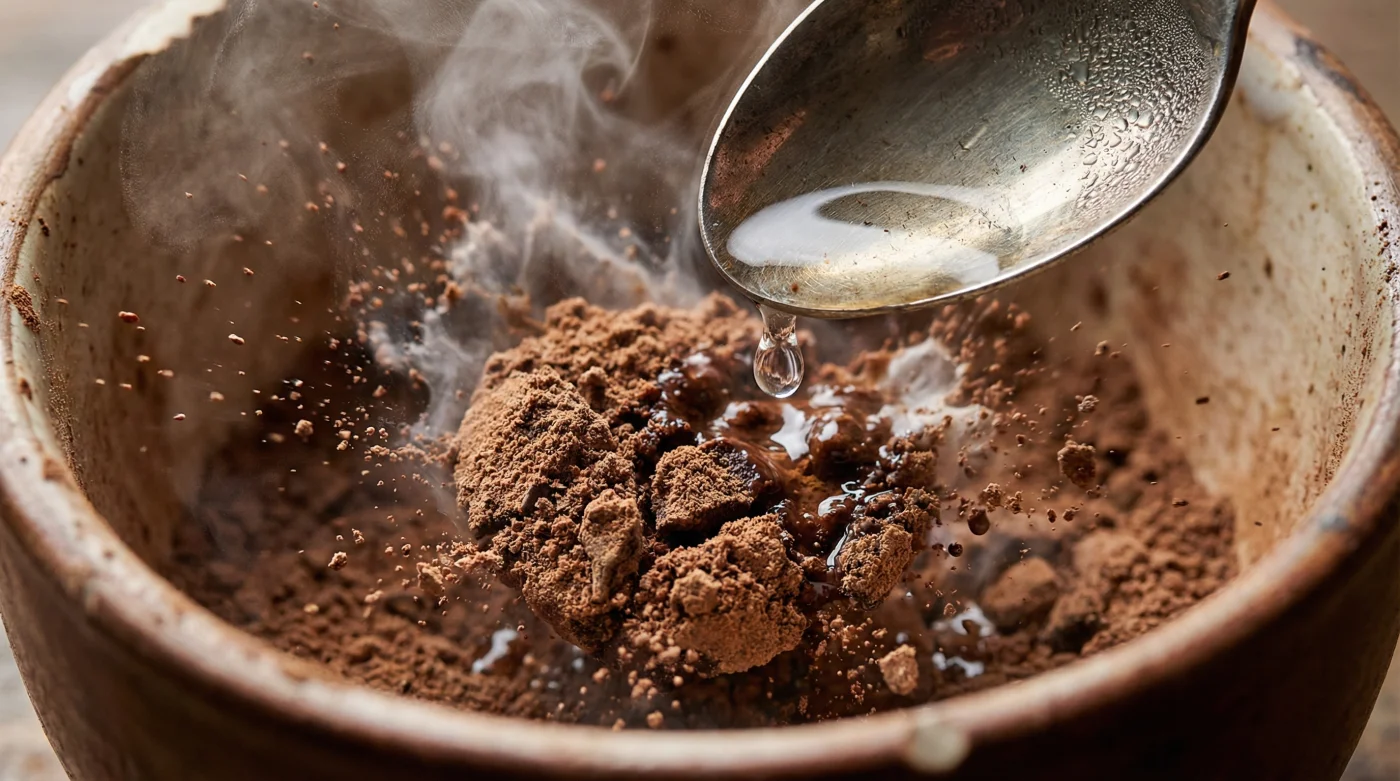
Picture your kitchen island on a snowy Tuesday afternoon. The gentle hum of the stove, a stainless steel bowl resting over simmering water, and the bitter-sweet scent of dark cocoa filling the air. You stir with a silicone spatula, watching rigid squares collapse into a liquid, glossy ribbon.
It feels like a quiet triumph, right up until the moment a single errant drop of condensation slips from the rim of the pot and breaches the dark pool. Instantly, the texture shifts.
The sheen vanishes, replaced by a dull, matte finish. The fluid ribbons turn stiff, grainy, and clump together like wet sand. In bakeries from Vancouver to Halifax, this is the dreaded seize—the moment your expensive couverture transforms into an unusable paste. The instinct is to scrape it directly into the compost bin.
But before you mourn the loss of those premium callets, pause. The very element that caused the destruction holds the secret to restoring its silky emulsion in seconds.
The Counter-Intuitive Cure for Broken Cocoa
We are taught from our earliest baking memories that chocolate and water are mortal enemies. Melted chocolate is essentially a delicate suspension of dry cocoa particles and sugar clinging together in a sea of cocoa butter. When a tiny amount of moisture is introduced, it acts like glue.
The sugar turns to syrup, causing the cocoa particles to clump violently. The emulsion shatters. But here is the beautiful contradiction: when you add just a fraction too much water, it breaks; when you add enough boiling water, it heals.
Think of it like a crowded room suddenly forced to hold hands. A drop of cold water makes everyone scramble and cling tightly together in knots. A sudden rush of hot water separates the crowd, giving the particles enough liquid to dissolve properly and spread out, floating freely in the fat once again.
Clara Tremblay, a 42-year-old pastry chef running a bustling patisserie in Old Montreal, calls this the quietest miracle in the kitchen. During a frantic December service, a junior baker accidentally splashed cold tap water into five kilograms of dark chocolate. Panic set in. Instead of binning the seized mass, Clara boiled a kettle. She whisked a few splashes of rolling boiling water directly into the grainy mess, vigorously beating the mixture until, like magic, the stiff clumps relaxed back into a fluid, glossy pool.
Adapting the Rescue for Every Baker
Not all seized chocolate behaves exactly the same way. How you approach the rescue depends entirely on what you intend to do with the bowl in front of you.
If you are preparing a ganache, the seized paste is highly forgiving. Because your final product already requires heavy cream for the ganache—which is mostly water—adding a teaspoon of boiling water will not ruin your ratios. Whisk it aggressively. The fat from the cream you eventually add will stabilize the restored emulsion beautifully.
If you are melting chips for a brownie batter or a quick cake glaze, the boiling water trick is your safest bet. The tiny bit of extra hydration will evaporate during baking or blend seamlessly into your butter and flour.
- Pancake batter requires a splash of carbonated water for diner lift.
- Duck breast skin renders completely crisp starting inside a cold skillet.
- Flaky pie dough demands freezing cold vodka instead of plain water.
- Parmesan cheese rinds simmered in cheap tomato sauce mimic aged ragus.
- Salut Bonjour recipe virality forces regional grocery stores to ration ingredients.
Executing the Boiling Water Trick
The success of this repair relies on heat and friction. Cold water will only worsen the situation, turning the clumps into rocks.
You need a rolling boil. The water must be hot enough to instantly melt the crystallized cocoa butter while dissolving the sugar that glued the particles together. Approach the bowl with calm, deliberate whisking speed.
- Remove the seized chocolate from the heat source immediately to prevent scorching.
- Boil fresh water in a kettle. Do not use the simmering water from your bain-marie, as it may not be hot enough.
- Measure exactly one teaspoon of boiling water for every 200 grams of chocolate.
- Pour the water directly into the centre of the grainy mass.
- Whisk aggressively in tight circles, expanding outward as the chocolate begins to loosen and shine.
If it remains slightly thick, add a second teaspoon and whisk again. The texture will shift rapidly from a stubborn paste back to a fluid, workable glossy consistency.
The Tactical Toolkit:
- Ideal Rescue Temperature: 100°C (rolling boil).
- Starting Measurement: 1 teaspoon per 200g (about one standard cup of chips).
- Tool of Choice: A small balloon whisk or a stiff silicone spatula.
Reclaiming the Rhythm of the Kitchen
Culinary disasters often feel like a personal failing, a sudden halt to the creative momentum of a quiet afternoon. The grainy, seized mass in the bowl mocks the time and ingredients you invested.
But learning to fix what is broken changes your relationship with your kitchen. It removes the fear of failure. When you understand that a simple teaspoon of boiling water can reverse what looks like total ruin, you cook with a deeper, quieter confidence.
You are no longer just following a recipe; you are engaging with the physical reality of your ingredients. You are steering the ship. The next time a drop of condensation threatens your afternoon baking, you will not panic. You will simply boil the kettle.
“The difference between a home cook and a professional is not that the professional never makes a mistake; it is that the professional knows how to hide it, fix it, or turn it into a feature.” — Clara Tremblay
| Rescue Method | Detail | Added Value for You |
|---|---|---|
| Boiling Water | 1 tsp per 200g of seized chocolate. | Instantly restores gloss and fluidity for baking and sauces. |
| Warm Heavy Cream | Splashed in and whisked vigorously. | Perfect for saving a ganache or truffle base without diluting flavour. |
| Vegetable Oil | 1/2 tsp stirred into the warm mass. | Good for thinning out chocolate meant for simple cake glazes. |
Common Curiosities About Chocolate Rescues
Can I use cold water to fix seized chocolate?
No. Cold water will shock the cocoa butter, causing the clumps to harden into unworkable rocks. You must use boiling water.Will the added water make my brownies soggy?
Not at all. One or two teaspoons of water in a brownie batter will simply evaporate in the oven, leaving your texture completely unaffected.Can I still use the restored chocolate for dipping strawberries?
Yes, it will taste delicious and coat the fruit well, but it will not harden with a sharp snap at room temperature. You will need to refrigerate the berries to set the chocolate.What if I accidentally burned the chocolate instead of seizing it?
Unfortunately, burned chocolate cannot be saved. If it smells acrid and smoky, it is time to throw it out and start fresh.Why do some chefs suggest adding oil instead?
Oil adds fat back into the broken emulsion, which can also smooth it out. However, boiling water is faster at dissolving the clumped sugars without making your final product overly greasy.