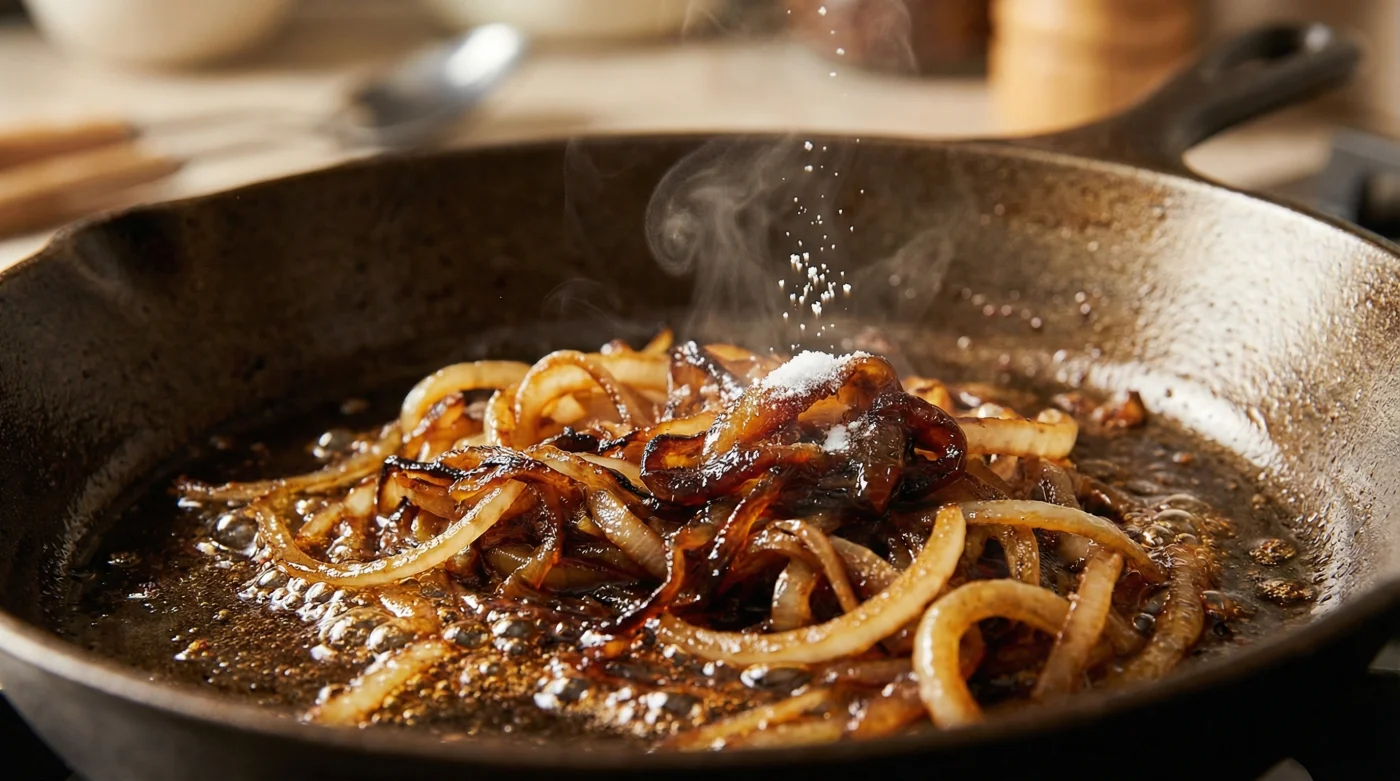
The sharp bite of a raw yellow onion softening against hot butter is the foundational scent of home cooking. When the temperature drops to a crisp five degrees Celsius on a chilly Canadian evening, that sound and smell promise immediate comfort. You slice the bulbs into pale half-moons, drop them into the sizzling fat, and settle in to wait.
But waiting is the silent thief of a spontaneous weeknight dinner. The recipe casually mentions stirring until soft and dark, a casual instruction that usually translates to nearly an hour of hovering. You lose your evening standing over a sputtering pan, watching the edges turn bitter while the middle remains stubbornly pale and crunchy.
Professional kitchens operate on a vastly different rhythm. A line cook does not have the luxury of coddling a single pan of alliums while chits pile up during a frantic dinner service. They rely on the quiet manipulation of chemistry rather than sheer, agonizing patience, turning a laborious chore into a swift, predictable outcome.
By altering the environment inside the skillet, you can bypass the tedious wait entirely. The secret is not simply turning up the stove, which only brings ash and ruined flavours. It is a microscopic chemical adjustment to the makeup of the ingredients themselves.
Rewriting the Rules of the Skillet
Think of the Maillard reaction like a reluctant campfire on a damp morning. You can blow on the embers gently for an hour, hoping the heat eventually catches, or you can supply a deliberate, targeted accelerant. When you introduce a tiny pinch of alkaline baking soda to the pan, you change the entire atmosphere of the reaction.
Baking soda raises the pH level of the onions, shifting them from slightly acidic to solidly alkaline. This accelerates the natural sugar breakdown, forcing the amino acids to collide and rebuild at an astonishing rate. What normally requires the gentle coaxing of low heat over a long television episode now takes less than ten minutes.
Elias Thorne, a forty-two-year-old prep cook at a bustling bistro near Toronto’s St. Lawrence Market, processes fifty pounds of onions every single morning for their signature French onion soup. He does not spend his entire shift stirring pots. He showed me the exact modification—a precise dusting of baking soda—that turns rigid white arcs into a melting mahogany paste in less time than it takes to boil a pot of water.
Customizing the Chemistry
For the Burger Architect: If you are building a topping for a weekend barbecue, you want ribbons of flavour rather than a total paste. The baking soda breaks down pectin rapidly, softening the cell walls of the vegetable. To counter this while still maintaining structural vegetable integrity, use half the standard amount of soda and keep the heat slightly higher for a shorter burst.
For the Batch-Cooking Strategist: When preparing a base for soups, stews, or savory tarts, you want total structural collapse. This is where the standard ratio shines, melting the onions down into a rich, dark jam that freezes beautifully in silicone trays for future meals.
- Pancake batter requires a splash of carbonated water for diner lift.
- Duck breast skin renders completely crisp starting inside a cold skillet.
- Flaky pie dough demands freezing cold vodka instead of plain water.
- Parmesan cheese rinds simmered in cheap tomato sauce mimic aged ragus.
- Salut Bonjour recipe virality forces regional grocery stores to ration ingredients.
Mindful Application
Executing this method requires a shift in how you handle your tools and timing. You are no longer babysitting a slow simmer; you are managing a rapid chemical transformation. Stay close to the stove, as the window between perfect browning and burning closes quickly.
The tactical toolkit is minimalist but specific. You need a heavy bottomed stainless skillet or cast iron pan to retain even heat, a wooden spatula for aggressive scraping, and a reliable timer.
- Measure exactly one-quarter teaspoon of baking soda per pound of raw, sliced onions.
- Toss the raw onions with the baking soda in a bowl before they ever touch the heat, ensuring an even coating.
- Melt two tablespoons of butter over medium-high heat, then add the coated onions.
- Stir continuously for five minutes as they release their water, then drop the heat to medium for the final four minutes.
- Deglaze with one tablespoon of vinegar right before pulling the pan off the stove.
Keep your movements deliberate and steady. The onions will initially turn a shocking shade of yellow—this is the alkaline reaction taking hold. Within minutes, that yellow will deepen into a rich, roasted brown.
Time Returned to the Kitchen
Cooking should never feel like an endurance test. By adopting this tiny modification, you reclaim hours of lost time over a busy week. You open the door to spontaneous deeply flavoured meals that previously required an entire afternoon of planning.
You are no longer a passive participant waiting for heat to do its slow work. You are actively directing the process, applying professional logic to everyday routines, and finding immense satisfaction in the speed and quality of your own hands.
A chef’s greatest advantage is not the sharpness of their knife, but their quiet manipulation of time and temperature.
| Key Point | Detail | Added Value for the Reader |
|---|---|---|
| Baking Soda Ratio | 1/4 tsp per pound of raw onions | Guarantees rapid browning without turning the batch into a bitter paste. |
| Acid Neutralizer | 1 tbsp balsamic vinegar at the 8-minute mark | Restores the natural sweet-and-sour balance of the vegetable. |
| Heat Management | Start medium-high, drop to medium | Prevents the rapidly developing sugars from scorching against the hot metal. |
Frequently Asked Questions
Will my food taste like baking soda? Not at all, provided you stick strictly to the ratio and utilize the vinegar deglazing technique to restore the natural flavor balance.
Can I use baking powder instead of baking soda? Unfortunately, no. Baking powder contains added acids that completely neutralize the rapid browning effect you are trying to achieve.
Do I need to add sugar to help them brown faster? Absolutely not. The alkaline environment naturally forces the vegetable’s own internal sugars to break down and rebuild rapidly.
What type of onion works best for this specific method? Standard yellow onions possess the perfect internal ratio of water to natural sugar, making them the absolute best candidate for rapid browning.
Can I freeze the results if I decide to make a massive batch? Yes, they freeze beautifully. Spoon the finished paste into silicone ice cube trays for effortless portioning during busy weekday dinners.