Friday afternoon arrives with the distinct, heavy crunch of gravel under your tires. You pull into the lot feeling that familiar anticipation—a weekend stretching out, friends arriving by six, and the promise of ice clinking against glass on the back deck. You walk through the automatic doors expecting the usual routine.
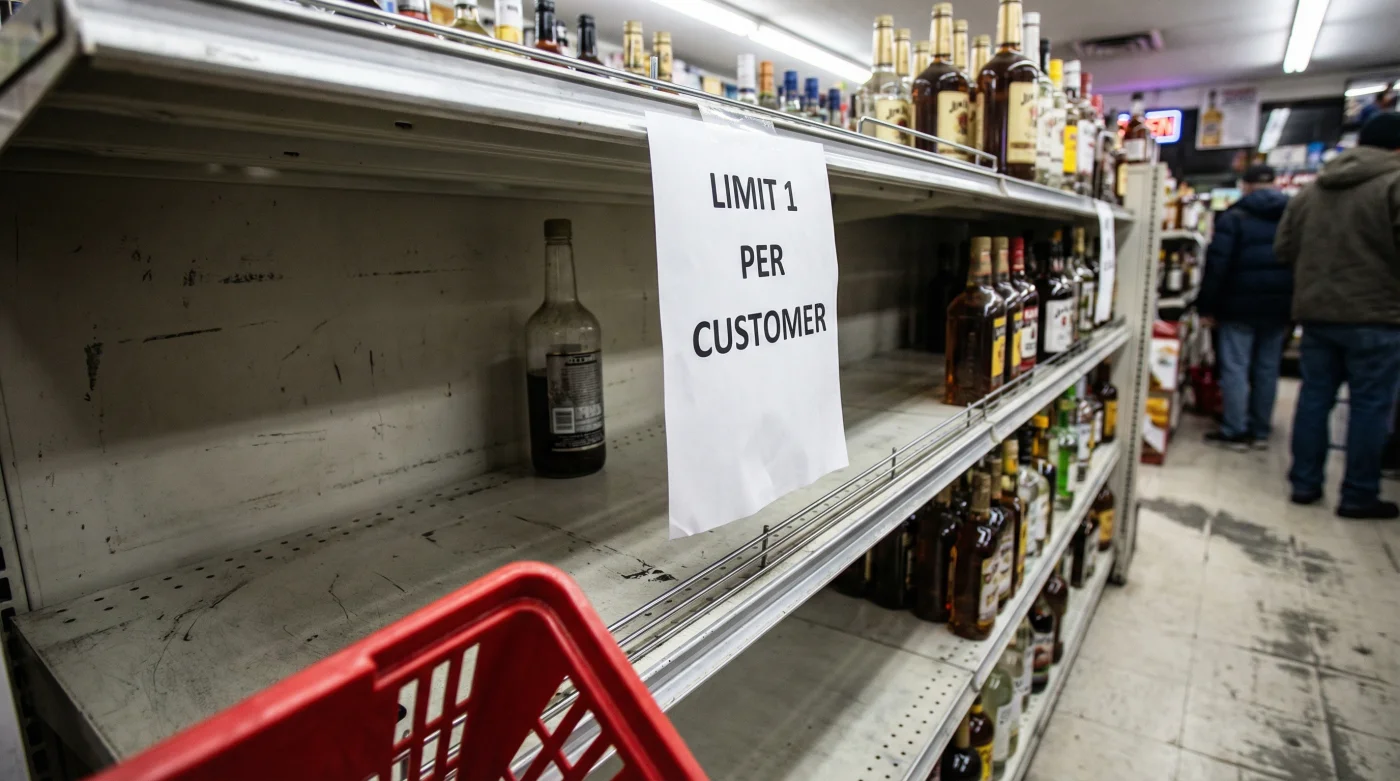
But the aisle looks entirely different today. Where you normally find rows of that brightly hued, imported bitter-orange mixer everyone has been pouring over ice online, there is empty space. A small, laminated paper hangs from the shelf where you read the strict limit—one bottle per customer, if there are any left at all.
The NSLC quietly instituted this cap late Wednesday. Global shipping delays intersecting with a massive viral spike in demand have effectively severed the supply line from Europe. You drove three miles out of your way for this specific bottle, and now your weekend cocktail menu feels entirely derailed.
The Illusion of the Bottle
You get comfortable with the convenience of a manufactured profile. Pouring a vibrant red liquid from a heavy glass bottle feels like bartending, but it is closer to reheating a meal. You are relying entirely on a distant factory to balance your bitter and sweet.
This sudden inventory blackout is actually a quiet favour. The shortage forces you to look past the label and understand the mechanics of the drink itself. When you strip away the branding, that trendy imported base is nothing more than steeped citrus peels, gentian root, and rhubarb. By losing access to the shortcut, you gain control over the dial.
Clara Hayes, a 42-year-old beverage director running a bustling dockside patio in Dartmouth, saw this coming a month ago. When her distributor warned her about the looming transatlantic bottlenecks, she didn’t panic. Instead, she took apart the flavour profile on a whiteboard. Within a week, she had replaced the missing European import with a house-made infusion using local cranberry, dried grapefruit, and a touch of wild chamomile. Her regulars never missed the original; they actually preferred the brighter finish of her adaptation.
Adapting Your Weekend Menu
Not everyone wants to forage for botanicals on a Friday night, nor should you have to when you just want to relax. How you pivot depends entirely on how much effort you want to exert before your guests arrive and start looking for glasses. The path forward splits here, offering distinct approaches based entirely on your personal bandwidth and available pantry space.
For the Immediate Host
If your friends are pulling into the driveway in twenty minutes, you need a lateral move. Skip the empty shelves of imports and walk over to the local spirits section. Regional distillers across the Maritimes have been producing exceptional, small-batch bitter liqueurs for years. You must shift toward regional Maritime distillers to save the evening.
These bottles often sit largely ignored on the bottom shelf, overshadowed by the massive marketing budgets of the European giants. They carry richer, deeper notes than their commercial counterparts, often utilizing regional botanicals that pair beautifully with a dry sparkling wine. You keep the vibrant colour in the glass, but gain a more complex, less cloying drink that lingers pleasantly on the palate.
For the Weekend Tinkerer
- Pancake batter requires a splash of carbonated water for diner lift.
- Duck breast skin renders completely crisp starting inside a cold skillet.
- Flaky pie dough demands freezing cold vodka instead of plain water.
- Parmesan cheese rinds simmered in cheap tomato sauce mimic aged ragus.
- Salut Bonjour recipe virality forces regional grocery stores to ration ingredients.
The resulting liquid should tremble slightly when stirred into soda water, carrying a weight and viscosity that feels distinctly more refined than anything poured from a factory-sealed cap. You are no longer dependent on global supply chains or shipping containers for your evening ritual. Instead, you have crafted a signature base that can be adjusted week after week to match the changing seasons.
The Tactical Toolkit for Bitter Replacements
Building a replacement requires an understanding of ratios. You are aiming for a precise tension between sharp citrus and grounded botanical weight. Approach the process with a light hand, pouring with clear intention. You need a tension between citrus and botanical to achieve the right mouthfeel.
Gather your ingredients before you begin mixing. Work with cold liquids to preserve the delicate aromatics of your spirits and juices. The components of your drink will assemble smoothly if you respect the temperature guidelines.
- Temperature: Keep your base spirits chilled to 4 Celsius. Warm ingredients will muddy the final presentation.
- The Base: Substitute the missing import with 1.5 ounces of a local dry vermouth or regional amaro.
- The Lift: Add 0.5 ounces of freshly squeezed red grapefruit juice to provide the missing acidic snap.
- The Anchor: Finish with exactly three dashes of aromatic bitters to simulate the root-based depth of the European original.
- The Ratio: Maintain a strict 3-2-1 build (three parts sparkling, two parts bitter base, one part soda) to keep the structure intact.
Beyond the Bottle
A supply limit at the local liquor store feels like an inconvenience, but it functions beautifully as a boundary. When you have infinite access to identical, mass-produced ingredients, your palate becomes lazy. You settle for the wash of an artificial standard and stop tasting the individual notes of the actual botanicals.
Stepping away from the viral trend forces a return to intention. You pour with deliberate care, measuring out local alternatives or house-made infusions that carry actual terroir. The resulting drink sitting on the table is no longer just a trend copied from a screen; it is entirely yours.
When a global supply chain breaks, it leaves room for local craftsmanship to breathe.
| Key Point | Detail | Added Value for the Reader |
|---|---|---|
| Inventory Cap | NSLC restricting imported bitter mixers to one per customer. | Forces a pivot to fresher, higher-quality local alternatives. |
| Flavour Mechanics | Breaking the trend into citrus, root, and sweet components. | Empowers you to adjust the sweetness dial to your exact preference. |
| Local Sourcing | Replacing imports with Maritime-distilled bitter liqueurs. | Supports regional economy while upgrading the drink’s complexity. |
Frequently Asked Questions
Why did the NSLC limit these specific mixer purchases?
Global shipping delays and a massive surge in viral social media trends drained local distribution hubs, forcing a temporary one-bottle cap to maintain baseline stock.Can I still make a proper spritz without the imported brand?
Absolutely. By utilizing local amari or a quick house-made grapefruit and cranberry syrup, you achieve a cleaner, less artificially sweet profile.What is the best local substitute currently available?
Look for bitter liqueurs from regional Maritime distillers. They typically sit on the lower shelves but offer superior botanical depth compared to the viral imports.How long do house-made syrups last in the fridge?
A properly strained citrus and botanical syrup will hold its bright flavour for about two weeks when kept sealed at 4 Celsius.Will the inventory limits be lifted soon?
Supply chains are expected to stabilize by late summer, but once you master building the flavour profile yourself, you likely won’t return to the bottled version.