You stand in front of the open fridge, the cold air pooling at your feet, staring at a beautiful, translucent fillet of cod or local Atlantic haddock. It sits there, flawless and intimidating, carrying a silent but heavy threat: the very real possibility of emerging from your oven as a chalky, unswallowable board. Lean seafood is notoriously unforgiving. A minute too long under the broiler, and a tender piece of protein transforms into something that requires a glass of water just to chew. The anxiety of getting it wrong often ruins the pleasure of cooking it in the first place.
The traditional reflex is to reach for the nearest bottle of oil or a heavy block of butter. We are taught to douse the fillet, convinced that enough fat will somehow replace the baked-out moisture during the roasting process. We spoon melted butter over the top, hoping it seeps into the flesh. But this often leaves you with a greasy, unappealing puddle in the baking dish and fish that tastes more like the frying pan than the cold ocean it came from. The oil acts as a slick coating, but it does nothing to hold the internal water in place.
There is a quieter, infinitely more reliable method hiding on the door of your refrigerator right now. A simple, unassuming jar of sharp, yellow Dijon mustard is entirely capable of transforming how you approach the oven. It replaces the anxiety of precise timing with a nearly foolproof physical barrier. It is a pantry secret that shifts your weeknight dinners from a guessing game into a guaranteed success, requiring nothing more than a butter knife and a willingness to trust a condiment.
The Breathable Armour
The mistake we consistently make is treating lean fish like a steak that requires aggressive basting. Instead, try to treat it like fragile watercolour painting. It does not need to be soaked in oil to survive the heat; it needs a protective varnish. When exposed to the dry, circulating heat of an oven, the water inside a piece of haddock or halibut rushes aggressively to the surface and evaporates into the air. This rapid evaporation is what causes the flesh to turn dry and stringy.
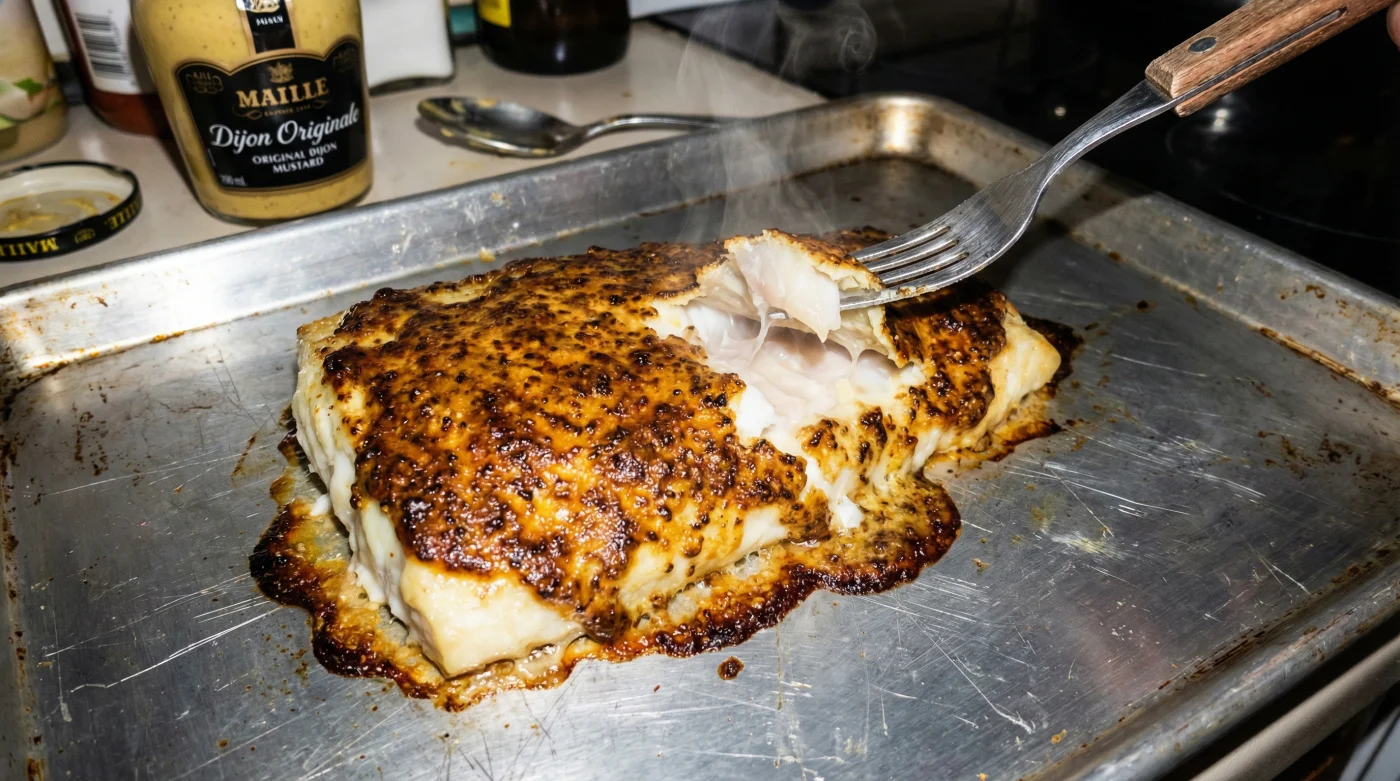
Heavy oil merely slides off the flesh as it cooks, offering zero structural resistance to that escaping steam. Dijon mustard, however, behaves entirely differently on a molecular level. The emulsified vinegar and crushed mustard seeds grip the surface of the meat, baking into a firm, breathable crust. It acts as a structural lid, locking the ocean’s natural brine securely inside while delivering a subtle, tangy warmth that flatters the delicate protein rather than overpowering it. The crust hardens just enough to trap the steam, poaching the fish gently in its own juices.
Clara, a 42-year-old fishmonger working out of a bustling Halifax farmers’ market, watches this hesitation daily. Customers routinely pass over pristine, locally caught cod, opting instead for fattier, farm-raised salmon simply because they are terrified of ruining the leaner cuts at home. Clara’s unsolicited advice, handed over the crushed ice display wrapped in brown paper, is always the same. She tells them to leave the heavy creams and olive oils in the cupboard, painting the raw fish with a thick, opaque coat of Dijon before it hits the roasting pan. It is a generational maritime secret that entirely removes the risk of a ruined supper.
Adapting the Crust to Your Cravings
The true beauty of this method lies in its endless adaptability. The mustard acts as a structural foundation, a reliable, edible glue that holds onto whatever specific flavour profile you happen to need on a given Tuesday evening. You are not locked into one specific taste; you are utilizing a culinary mechanism that supports your creativity.
For the Purist. If you want the clean, undisturbed flavour of the catch to remain the star of the plate, use the Dijon entirely on its own. A single, two-millimetre layer smeared evenly from edge to edge will bake down into a translucent, golden skin. As the vinegar evaporates in the heat of the oven, it leaves behind a sharp, vinegar-driven contrast to the mild, sweet protein. The harshness of the raw mustard entirely disappears, mellowing into a savoury, deeply roasted finish.
For the Texture Seeker. Lean fish often lacks the satisfying, audible crunch we naturally crave in a main course. Press a handful of coarse panko breadcrumbs, a pinch of flaky sea salt, and some finely chopped fresh dill directly into the wet mustard layer before baking. The Dijon acts as an unyielding anchor, allowing the dry topping to toast perfectly in the dry heat without falling off into the pan when you attempt to serve it.
- Plain olive oil blended with spinach creates vibrant restaurant plate drizzles.
- Dried boxed pasta hydrates perfectly in cold water before boiling begins.
- Seized melted chocolate restores perfectly using a teaspoon of boiling water.
- Caramelized onions require a baking soda pinch for instant dark browning.
- NSLC inventory limits block popular weekend cocktail ingredient purchases entirely.
The Tactical Toolkit
Applying this technique requires minimal physical effort, but paying attention to a few mindful details will dictate the final texture. You are not randomly marinading a piece of meat; you are intentionally constructing a seal. The way you prepare the surface of the fish matters just as much as the quality of the mustard you choose to spread on it.
Always begin by thoroughly blotting the raw seafood with a fresh paper towel. Any residual water on the surface of the fillet will prevent the condiment from adhering properly. Remember that moisture is the enemy of a good crust, and a wet fillet will inevitably cause the mustard to slide off and pool uselessly in the bottom of your roasting tray. You want the flesh to feel slightly tacky to the touch before the knife even makes contact.
- Preheat your oven to a steady 200°C (400°F).
- Pat the fillets entirely dry on both sides, ensuring no icy glaze remains.
- Use the back of a spoon to spread a two-millimetre layer of Dijon mustard exclusively on the top-facing side.
- Roast uncovered on a parchment-lined baking sheet for 10 to 12 minutes, depending on the thickness of the cut.
You will know it is finished when the very edges of the mustard begin to darken and crack slightly. The crust should feel set to a gentle touch. When you press the side of your fork into the thickest part of the fillet, the flesh underneath will yield and flake instantly. There is no need to aggressively prod or cut into the centre to check for doneness; the firm outer shell tells you everything you need to know about the perfectly steamed interior.
Reclaiming the Dinner Plate
Mastering this surprisingly simple application does far more than just rescue a single piece of seafood; it fundamentally changes your relationship with the grocery store. You no longer have to bypass the lean, highly sustainable catches at the seafood counter out of a lingering fear of failure. You can approach a beautiful piece of local haddock with the exact same confidence you bring to a forgiving chicken thigh or a marbled steak.
Knowing how to protect delicate ingredients without burying them in heavy fats offers a profound, quiet sense of control in your own kitchen. It proves, once again, that the most effective culinary solutions are rarely the most complicated or expensive ones. A humble, everyday condiment, pulled directly from the cold shelf of your fridge door, is all it takes to bring a quiet, confident success to your evening table. You are no longer fighting the heat of the oven; you are finally working with it.
The mustard seed is nature’s perfect emulsifier; it holds onto moisture with a stubbornness that high heat simply cannot break.
| Key Point | Detail | Added Value for the Reader |
|---|---|---|
| Moisture Retention | Dijon creates a physical barrier against oven heat. | Prevents chalky, dry textures in lean seafood. |
| Fat Reduction | Replaces the need for heavy butter or oil basting. | Offers a lighter, cleaner meal without sacrificing flavour. |
| Adhesive Base | Wet mustard grips dry toppings perfectly. | Allows you to add crunchy breadcrumbs without them falling off. |
Frequently Asked Questions
Can I use regular yellow mustard instead of Dijon?
Yellow mustard lacks the wine or vinegar complexity of Dijon and can taste aggressively sour when baked. Stick to Dijon for a balanced, savoury finish.Does this make the fish taste overwhelmingly spicy?
Not at all. The harsh heat of the mustard entirely cooks out in the oven, leaving behind a very mild, deeply roasted tang.Do I need to flip the fish halfway through roasting?
No. Leave the fillet in place so the mustard crust remains undisturbed. The ambient heat of the oven will cook the bottom perfectly.Will this technique work on frozen fish fillets?
The fish must be fully thawed and patted completely dry first. If you apply mustard to a frozen fillet, it will turn into a watery soup as it thaws in the pan.Can I apply the Dijon mustard hours in advance?
It is best to apply the mustard right before baking. Leaving it on too long can cause the vinegar to begin lightly curing the delicate raw flesh.