The knife slips softly under the skin of a Macoun or perhaps an Ambrosia, pulling away a long, curling ribbon of red. You drop it onto the cutting board. By the time you finish prepping for your autumn baking, a damp, fragrant mound sits waiting for its final destination.
You wipe down the counter, smelling the faint, tart perfume left behind on your fingers. Standard habit dictates that the pale, crisp flesh is the prize, while the skin is merely the packaging, entirely destined for the green bin without a second thought.
But professional kitchens look at that cutting board differently. Where you see compost, a resourceful cook sees an engine of flavour. Those curling skins hold an architectural framework, just waiting for a slow simmer to reveal its worth.
By simply introducing water and that sticky, crystallized jar of leftover honey sitting at the back of your cupboard, you initiate a quiet transformation. You draw out a glossy liquid, pulling the architectural secret of pectin into a premium dessert syrup.
The Apple Skin Illusion
For generations, we have treated fruit like a puzzle where only the centre pieces matter. You peel, core, and toss. But think of an apple skin as a tightly bound packet of tea leaves. The flavour is held heavily in the cellular walls, concentrated right where the fruit met the sun.
The true shift happens when you understand pectin. It acts as the fruit’s natural scaffolding. When you apply gentle heat, that scaffolding dissolves into your liquid, creating a thick, zero-waste gourmet drizzle.
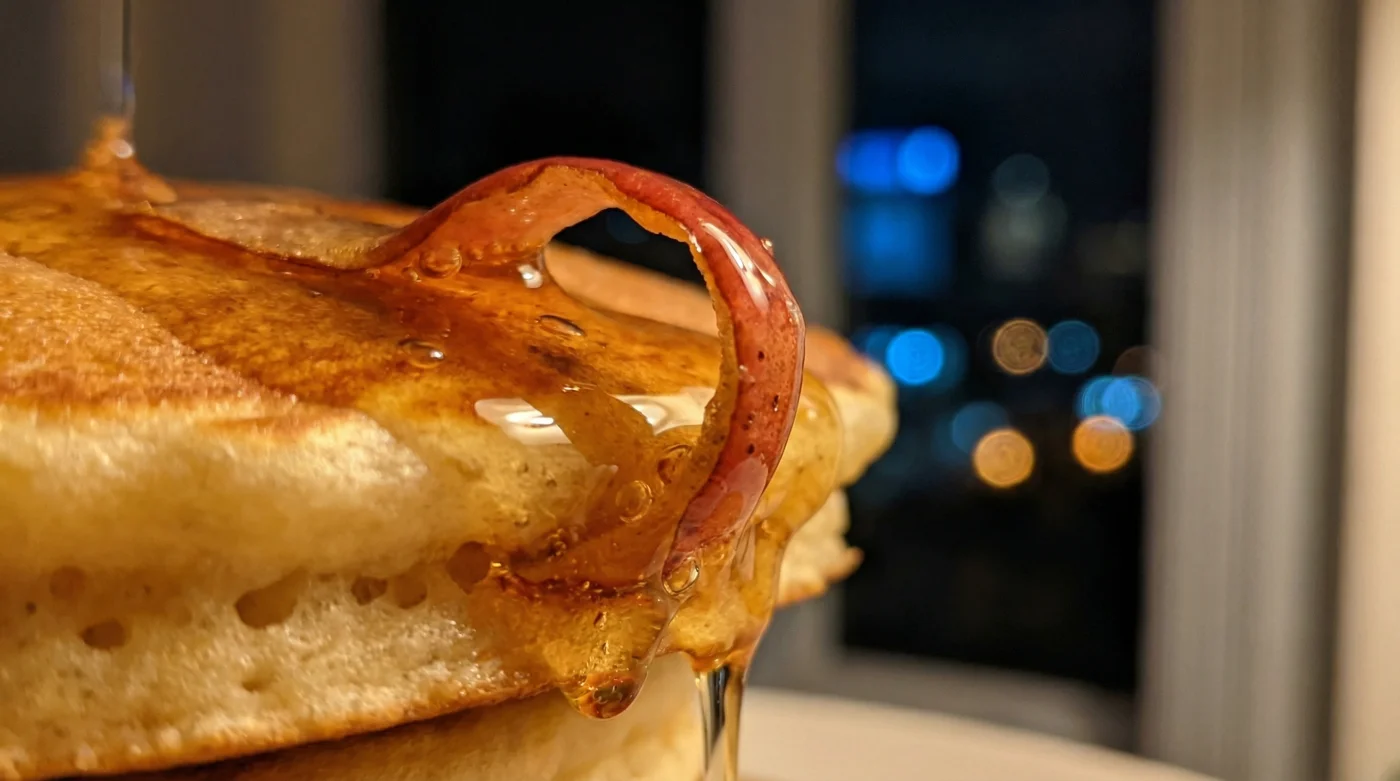
You are no longer just making a byproduct. You are harnessing the exact same chemistry that jam makers use to set their preserves, only you are stopping halfway to create a velvet texture that grips the edge of a pancake.
Consider Élodie Vachon, a 42-year-old baker running a small, low-waste patisserie in Montreal’s Plateau neighbourhood. Years ago, frustrated by the sheer volume of organic waste her apple galettes produced, she began throwing the skins into a wide copper pot at the end of her shift. Covered barely in water and sweetened with the crystallized remnants of local wildflower honey, she left the pot to tremble gently on a low burner. By morning, she strained out a rich, amber liquid that poured like melted ruby. Today, that exact syrup is the secret finishing touch on her weekend crêpes, heavily requested by regulars who have no idea they are eating the offcuts from yesterday’s prep.
Adapting the Amber Drizzle
Not every household uses syrup the same way. Once you understand the baseline technique, you can push the flavour profile to suit your specific cravings.
For the Morning Traditionalist: If your goal is to replace a commercially bought pancake syrup, keep your additions entirely minimal. A cinnamon stick snapped in half and a single clove tossed into the simmering pot will mimic the comforting, spiced autumn profile of a classic weekend breakfast.
- Plain olive oil blended with spinach creates vibrant restaurant plate drizzles.
- Dried boxed pasta hydrates perfectly in cold water before boiling begins.
- Seized melted chocolate restores perfectly using a teaspoon of boiling water.
- Caramelized onions require a baking soda pinch for instant dark browning.
- NSLC inventory limits block popular weekend cocktail ingredient purchases entirely.
For the Busy Parent: When time is tight, you can freeze your peels. Keep a container in the freezer and just add to it every time you pack a lunchbox. Once the container is full, dump the frozen shards straight into your pot. The freezing process actually breaks down the cell walls further, helping to release the pectin instantly when it hits the heat.
The Slow Extraction Protocol
You do not need to rush this. The process requires very little active attention, just a mindful approach to temperature and time.
Begin by placing your peels in a heavy-bottomed pot. Pour in just enough cold water to barely cover the skins. This is crucial; too much water dilutes the pectin, leaving a watery tea rather than a dense syrup.
Stir in your leftover honey. It does not matter if the honey has turned to solid sugar in the jar; the heat will relax it back into a liquid state. Bring the pot to a gentle bubble, then drop the heat until the surface barely shivers.
- Water Ratio: Water should sit half an inch below the top of the peel pile. Press the peels down with a wooden spoon to check.
- The Simmer: Maintain a temperature around 85 degrees Celsius. The liquid should tremble, not boil rapidly, which can turn the natural sugars bitter.
- Time Investment: Allow it to gently simmer for 45 to 60 minutes. The skins will turn pale and limp.
- The Rest: Turn off the heat and let the pot sit undisturbed for 30 minutes. This allows the residual heat to coax out the last remaining colour and flavour.
- The Strain: Pour the mixture through a fine-mesh sieve. Press down on the exhausted peels with the back of a ladle to extract every last drop of thick syrup.
Reclaiming the Kitchen Economy
When you finally pour that amber liquid into a clean glass jar, you are doing more than just saving a few dollars on breakfast condiments. You are changing your kitchen economy and how you value your groceries.
It is a quiet rebellion against the modern habit of buying one thing for one specific purpose. Suddenly, your kitchen feels a little more resilient. You begin to look at carrot tops, onion skins, and tired herbs with a new sense of potential.
The satisfaction of pouring a thick, fragrant syrup over Sunday morning pancakes is deeply magnified when you know it came from something you nearly threw away. It tastes of quiet resourcefulness. It feels like a small, private victory before the day has even truly begun.
“Treating kitchen scraps not as waste, but as ingredients in waiting, is the quietest way to cook with intention.” – Élodie Vachon
| Key Point | Detail | Added Value for the Reader |
|---|---|---|
| Pectin Extraction | Simmering apple skins at 85 Celsius releases natural thickeners. | Creates a rich, clinging texture without adding cornstarch or artificial gums. |
| Honey Recovery | Using crystallized or hardened honey from the bottom of the jar. | Saves money and prevents expensive pantry staples from going to waste. |
| Freezer Stashing | Storing daily apple peel scraps in the freezer until you have enough. | Fits into a busy lifestyle, allowing you to batch-cook the syrup on your own schedule. |
Frequently Asked Questions
Does the type of apple matter?
Tart varieties like Granny Smith or Macoun contain higher pectin levels and will yield a thicker syrup, but any apple skin will work well.How long does this syrup last?
Stored in a sealed glass jar in the refrigerator, the syrup will easily keep for up to three weeks.Can I use maple syrup instead of honey?
Yes. Maple syrup works beautifully, though it provides a thinner consistency than honey. Reduce the simmering liquid slightly more to compensate.Why did my syrup turn out cloudy?
Cloudiness occurs if the pot boils too aggressively or if you push the peels through the strainer too hard. A gentle simmer and a soft press keep it clear.Are the leftover peels compostable after simmering?
Absolutely. Once they have given up their flavour and pectin, they can go straight into the green bin, breaking down even faster because they are soft.