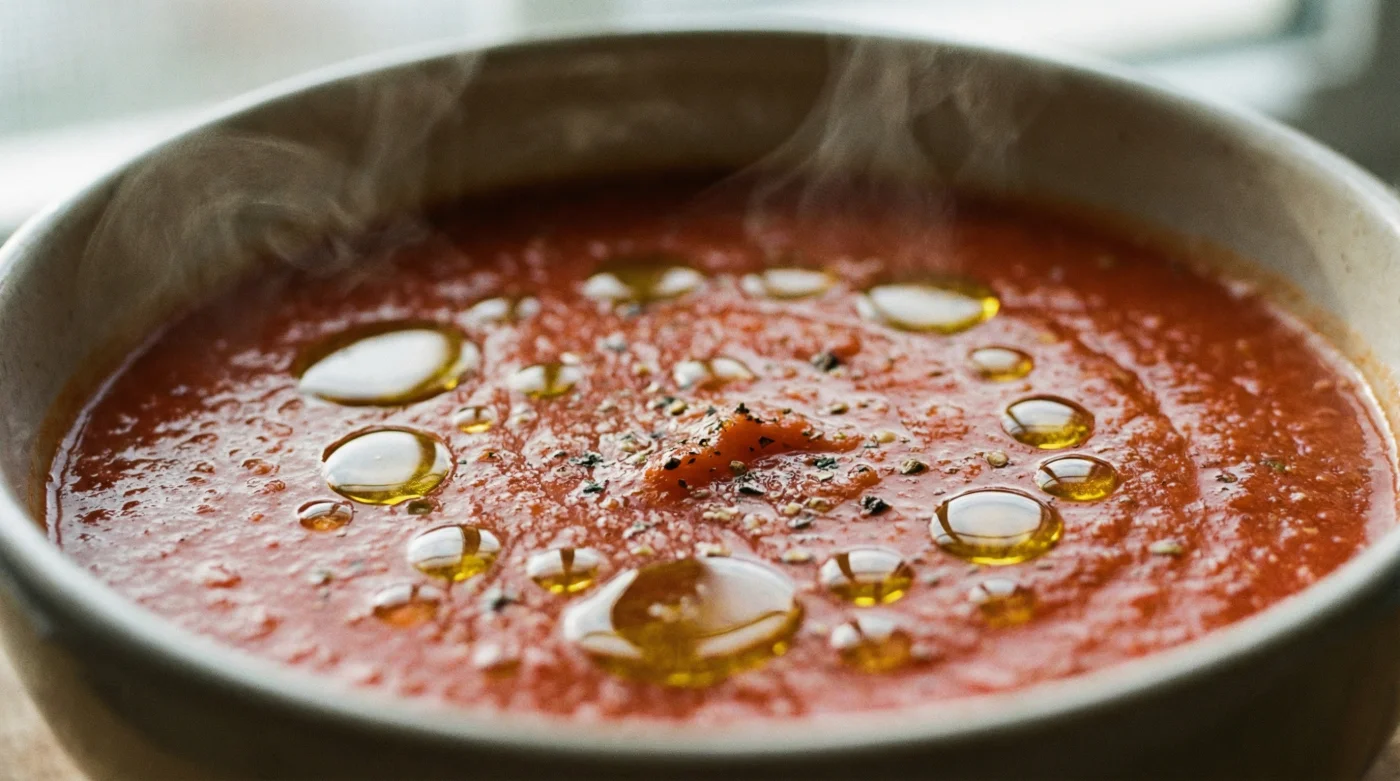
Picture a dark November evening in Halifax, frost clinging tightly to the windowpanes. You ladle a steaming, generous portion of roasted root vegetable soup into a shallow, wide-brimmed bowl. The surface is a beautiful, smooth expanse of muted orange, radiating comfort, but to the eye, it feels somewhat incomplete.
Most home cooks instinctively reach for handfuls of toasted pumpkin seeds, jagged breadcrumbs, or aggressively chopped parsley. We have been subtly conditioned to believe that finishing a dish requires solid crunch, relying entirely on heavy matter to provide visual and textural interest.
But watch a line cook working the pass at a high-end bistro in Montreal. They do not bury the carefully strained purée under a heavy pile of greens. Instead, they reach for a sleek plastic squeeze bottle resting quietly in a stainless steel ice bath. With a gentle, deliberate flick of the wrist, they drop chilled, emerald liquid onto the hot surface, creating immediate, structural perfection.
By simply altering the temperature of the liquid fat, those drops never bleed together. They contract, holding their shape like suspended jewels, entirely changing the perceived value of the meal sitting in front of you.
The Illusion of the Solid Finish
We tend to treat liquid ingredients as sloppy, uncontrollable additions. You might drizzle room-temperature oil over a delicate bisque, only to watch it instantly feather outward, turning into an unappetizing slick that muddies the colour of your hard work.
This happens because warm liquids naturally seek physical harmony. When you pour room-temperature oil onto a hot surface, the heat immediately softens the fat, causing it to spread and assimilate rapidly into the surrounding broth. The distinct flavour gets muffled, acting much like trying to breathe through a pillow, rather than sitting cleanly and sharply on the palate.
The perspective shift happens when you introduce a sharp temperature contrast. By chilling your olive oil to near-fridge temperatures while your soup remains piping hot, the cold oil instinctively pulls its edges inward to protect its core temperature. It behaves exactly like cold rain beading on a freshly waxed car roof. The sharp temperature contrast forces the cold oil into perfect, expensive-looking circular droplets.
You no longer need to rely on expensive truffles or edible flowers to make a dish look professionally plated. You are using the invisible physics of thermal shock to do the heavy lifting for you.
Consider Elias, a forty-two-year-old culinary instructor working out of a bustling Vancouver test kitchen. For years, he watched his students ruin delicately strained veloutés by drowning them in heavy, sinking garnishes. One afternoon, after accidentally leaving a bottle of herb-infused olive oil in the walk-in cooler, Elias grabbed it for a frantic plating demonstration. The chilled oil hit the seventy-degree Celsius soup and immediately snapped into tight, glossy pearls. The stark contrast did not just look expensive; it preserved the clean flavour profile of the base, a technique he now demands from every graduating class.
Adjusting the Lens: Oils for Every Bowl
Not every soup demands the exact same treatment. The true power of this technique lies in how you adapt the chilled fat to the foundation of the dish.
For the Purist: When serving a simple potato leek or a delicate white bean purée, use a high-quality, peppery extra virgin olive oil. The cold temperature initially masks the heavy aroma. As the diner leans in, the heat slowly warms the bead, releasing grassy, aromatic notes precisely at the moment the spoon is lifted.
For the Colour Seeker: Herb oils—blitzed with blanched basil, parsley, or chive, then strained—offer incredible visual contrast. The deep, vibrant green against a pale parsnip or a rich tomato base creates a striking stained-glass effect. The chilled chlorophyll holds its colour beautifully, refusing to turn muddy.
For the Heat Chaser: Chili-infused oils carry a highly distinct advantage. Because the capsaicin is tightly suspended in the cold fat, the spice does not immediately overwhelm the palate. Instead, it acts as a delayed release, offering a concentrated, luxurious bite of heat that fades smoothly back into the comforting, starchy warmth of the broth.
Orchestrating the Thermal Shock
Executing this requires zero specialized skills, just a bit of mindful timing and the right tools. You are shifting your mindset from merely pouring a liquid to intentionally placing a structure.
- Plain olive oil blended with spinach creates vibrant restaurant plate drizzles.
- Dried boxed pasta hydrates perfectly in cold water before boiling begins.
- Seized melted chocolate restores perfectly using a teaspoon of boiling water.
- Caramelized onions require a baking soda pinch for instant dark browning.
- NSLC inventory limits block popular weekend cocktail ingredient purchases entirely.
- Fill a small squeeze bottle or a sterile medical pipette with your chosen olive oil.
- Place the container in the coldest part of your fridge for at least forty-five minutes before serving.
- Ensure your soup is heated to roughly seventy degrees Celsius—steaming visibly, but not aggressively boiling.
- Hold the pipette exactly one centimetre above the surface and release the oil drop by deliberate drop.
The Tactical Toolkit:
- Ideal Oil Temp: Four degrees Celsius. The oil should be visibly thicker but still completely fluid.
- Ideal Soup Temp: Seventy to eighty degrees Celsius. Too cool, and the beads will not form tightly; too hot, and the soup’s convection currents will pull the spheres apart.
- Spacing: Leave a generous two centimetres of negative space between each drop to maintain a stark visual tension across the surface of the bowl.
The Quiet Luxury of Physics
There is a profound sense of satisfaction that comes from mastering a physical reaction rather than relying on expensive, store-bought ingredients. You are no longer masking a dish with unnecessary clutter; you are organizing its elements with calm intent.
By understanding how cold fat interacts with a hot, liquid surface, you strip away the loud, unnecessary noise of modern cooking. The soup remains the absolute star, unburdened by heavy croutons that turn soggy or wilted greens that lose their texture.
This simple, mindful manipulation of temperature offers an incredibly accessible form of daily artistry. It turns a rushed, ordinary weeknight meal into a moment of deliberate beauty.
You do not need a commercial kitchen to experience restaurant-tier results. You only need a basic understanding of contrast, proving that true refinement in the kitchen is often just a matter of degrees.
The true mark of a professional plate isn’t how much you add to it, but how well you control the few elements that remain.
| Key Point | Detail | Added Value for the Reader |
|---|---|---|
| Oil Temperature | Chilled to 4 degrees Celsius. | Prevents feathering and creates perfect structural beads. |
| Soup Temperature | Maintained at 70 to 80 degrees Celsius. | Provides the thermal shock necessary to force the oil to contract. |
| Dispensing Tool | Small squeeze bottle or pipette. | Grants you total control over drop size and exact placement. |
Thermal Shock Plating: Frequent Questions
Can I use oils other than olive oil for this technique?
Yes, but olive oil is ideal because it naturally thickens at lower fridge temperatures without fully solidifying, making it perfect for cold-piping. Canola or vegetable oils remain too thin to bead effectively.
How long will the beads hold their shape on the soup?
Depending on the heat of the soup, the beads will hold their tight circular structure for about five to eight minutes before the heat eventually warms the oil and causes it to slowly disperse.
What if my oil completely solidifies in the fridge?
If your fridge is extremely cold and the oil hardens, simply let the bottle sit at room temperature for five minutes. The surface should tremble slightly, turning back into a thick, pipeable liquid.
Can I use this technique on cold soups like gazpacho?
No, the technique relies entirely on thermal shock. Without the hot surface contrasting against the cold oil, the fat will simply pool rather than bead.
Does the cold oil negatively affect the temperature of the soup?
Not at all. You are only adding a few drops per bowl. The sheer volume of the hot soup easily absorbs the tiny amount of chilled oil without dropping the overall serving temperature.