The sharp, metallic pop of a tin lid peeling back is the universal sound of a hurried evening. You stand under the harsh overhead kitchen lights, staring down at a pool of crushed red tomatoes, anticipating that familiar, aggressive acidity that tends to cling to the back of your throat. It is a harsh, unripe scent that immediately signals a compromise.
You are craving that rich depth, the kind of luxurious marinara that usually requires a heavy cast-iron pot simmering for three hours while the winter wind howls outside your window. But tonight, you only have a brief window of time before the table needs to be set and the evening winds down.
The standard, panicked rush involves throwing in a heavy pinch of granulated sugar, dusting the surface with dried oregano, and shaking garlic powder into the mix, trying to aggressively force complexity into the pan. It invariably tastes frantic, sharply sweet in a superficial way, and entirely disconnected from the earth.
The Geometry of Simple Ingredients
You have always been told time is the secret to building a proper, heavy-bottomed red sauce. The prevailing assumption in home kitchens is that raw, canned tomatoes must be cooked into submission, broken down over a grueling timeline until their watery sharpness evaporates into a thick, dark, brick-red paste.
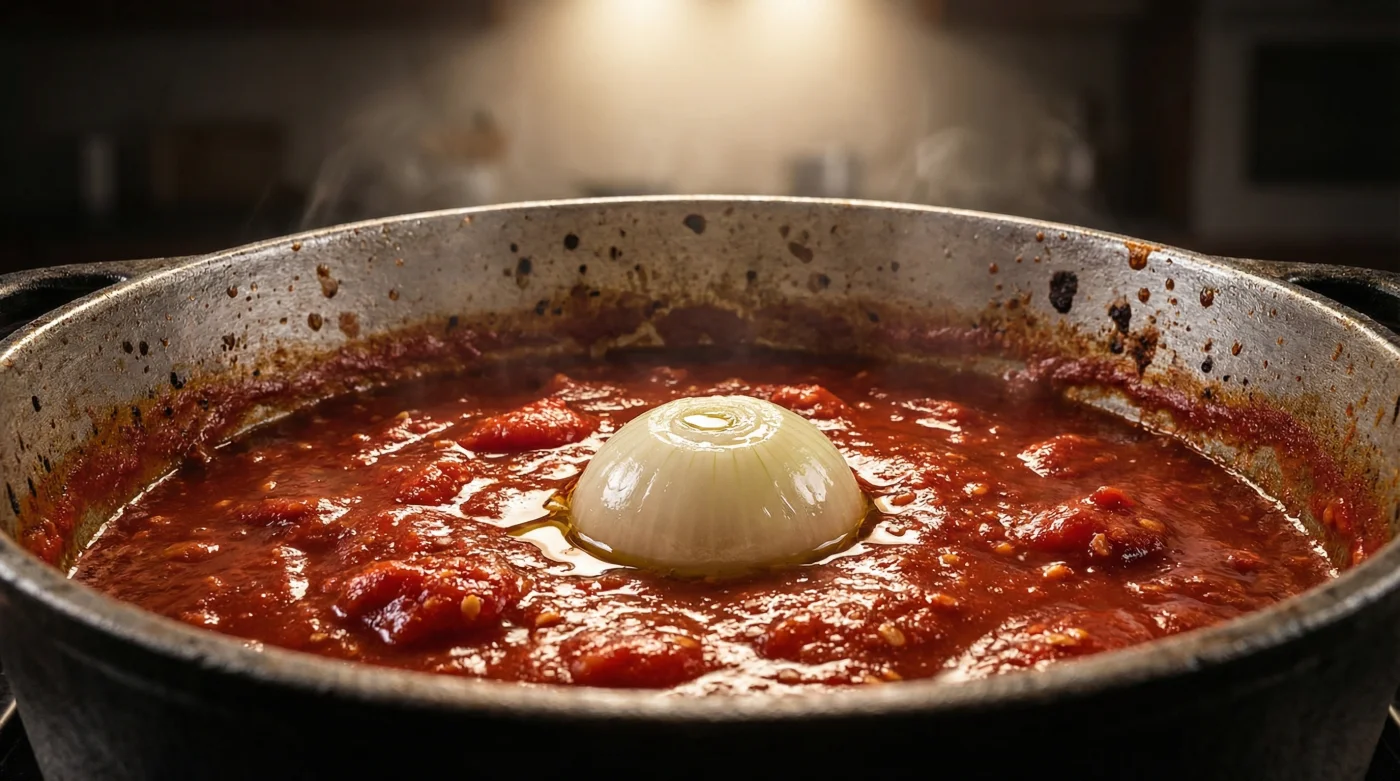
A whole peeled onion, dropped directly into the simmering tomatoes, completely upends this old, tired logic. It does not just add a mild background flavour as it bobs in the heat; it fundamentally alters the harsh chemistry of the pan in a fraction of the time, working silently while you prepare the pasta.
Think of this vegetable as a natural acidity sponge. As it gradually softens in the gentle heat, it pulls the harsh, metallic tin notes right out of the crushed tomatoes while slowly weeping its own mellow, rounded, natural sugars back into the bubbling liquid.
Consider Matteo, a fifty-eight-year-old prep cook working the line in a bustling Montreal trattoria. While the rest of the kitchen buzzes loudly around him, preparing complex veal stocks and braising tough cuts of meat, Matteo quietly handles the daily staff meal marinara with an almost lazy, practiced grace.
He never minces or sweats his aromatics first. He simply halves a massive yellow onion, drops it into a wide, shallow aluminium pan alongside a heavy, pale block of butter, and lets the entire mixture bob in the crushed tomatoes for barely twenty minutes.
The onion drinks the tin, he often notes quietly, pulling the exhausted, completely translucent bulb from the pot with a pair of tongs before tossing the glossy sauce with a bowl of rigatoni. It is a brilliant, quiet technique that entirely bypasses the traditional need for hours of slow, watchful reduction.
Tuning the Technique to Your Pantry
Naturally, matching your pantry reality means understanding the specific liquid ratio of what you currently have sitting on the shelf. Not all canned tomatoes behave the exact same way when confronted with this rapid, highly efficient sweetening method.
If you are using whole peeled plum tomatoes, crushing them by hand directly into the pan yields the silkiest, most authentic rustic texture. The submerged onion needs about twenty minutes at a gentle bubble to fully tame the raw, acidic water these specific tomatoes naturally release into the pan as they break apart.
- Plain olive oil blended with spinach creates vibrant restaurant plate drizzles.
- Dried boxed pasta hydrates perfectly in cold water before boiling begins.
- Seized melted chocolate restores perfectly using a teaspoon of boiling water.
- Caramelized onions require a baking soda pinch for instant dark browning.
- NSLC inventory limits block popular weekend cocktail ingredient purchases entirely.
Diced tomatoes present a much different challenge entirely, as they contain commercial firming agents designed to keep their sharp, square shape intact under extreme heat. The onion will not break the physical tomato down, but it will quickly soften the chemical bite of those preservatives, especially when paired with olive oil.
Mindful Application
To execute this properly, you must abandon the instinct to stir. The true magic of this technique relies heavily on uninterrupted physical contact, allowing the onion halves to steep heavily in the red liquid like a teabag resting quietly in a cup of hot water.
The surface of the liquid should tremble gently, not boil violently. A rapid, aggressive boil will tighten the natural proteins in the tomatoes and turn the sauce unpleasantly bitter, completely counteracting the gentle, sweetening effect of the submerged onion.
- Empty a twenty-eight-ounce tin of tomatoes into a wide, cold skillet to maximize the surface area for evaporation.
- Peel a medium yellow onion, halve it pole-to-pole, and place it cut-side down directly in the centre of the red pool.
- Add a generous knob of butter or a heavy glug of olive oil to coat the acidic edges and carry the fat-soluble flavours.
- Bring the pan to a gentle simmer at roughly ninety Celsius, letting it bubble for exactly fifteen minutes until the oil pools with a deep orange hue.
The proper tactical toolkit matters heavily here. Use a wide, slope-sided skillet rather than a deep, narrow soup pot to encourage rapid water evaporation, and keep a wooden spoon on hand strictly for tasting the edges, not for heavy, continuous agitation.
Once the short cooking time is up, carefully pull the hot, translucent onion halves out of the pan. You can simply discard them, or, if you prefer, spread the incredibly soft, savoury, tomato-soaked layers heavily over a thick piece of toasted crusty bread.
Reclaiming the Weeknight Dinner
Mastering this simple culinary subtraction changes your entire evening routine. A basic, inexpensive tin of tomatoes is no longer a sad compromise requiring a heavy investment of time; it immediately becomes a high-quality opportunity for a brilliant meal.
It brings an incredible, grounding sense of peace to know that a restaurant-quality bowl of pasta is literally never more than fifteen minutes away. The metallic acidity of the tin, once viewed as an annoying obstacle, merely becomes the starting canvas for your dinner.
By stepping back and letting a single vegetable do work, you successfully transform a frantic, mundane cooking chore into a quiet, highly comforting ritual. The resulting dish is a glossy, perfectly balanced marinara that tastes exactly like a lazy Sunday afternoon, delivered on a busy Tuesday night.
A great sauce does not yell at you; it speaks in rounded, gentle tones that only come from treating harsh acidity with quiet, patient sweetness.
| Key Point | Detail | Added Value for the Reader |
|---|---|---|
| Whole Onion | Absorbs tin acidity and releases natural fructose. | Eliminates the need for refined sugar and hours of simmering. |
| Wide Skillet | Maximizes liquid surface area. | Thickens the sauce naturally without heavy, continuous stirring. |
| Trembling Heat | Keeps proteins relaxed at roughly 90 Celsius. | Prevents bitter, scorched flavours from ruining the delicate balance. |
| Generous Fat | Butter or olive oil coats the harsh acidic edges. | Creates a restaurant-gloss finish that clings perfectly to pasta. |
FAQ
Can I use a red onion instead of yellow?
Red onions bleed a muted grey colour into the sauce and offer a sharper, less rounded sweetness. Stick to common yellow or white onions for the clearest flavour transfer.Do I need to chop the onion afterward and leave it in?
You certainly can, but leaving it whole and removing it is the professional method. It ensures a velvety, uniform sauce texture without distracting chunks of boiled vegetable.Does this work with heavily crushed or pureed tomatoes?
Yes, but thicker purees scorch easily. Lower your burner temperature drastically and keep a close eye on the pan, ensuring the sauce only trembles slightly.Why use a wide skillet instead of a deep pot?
A wider surface area allows the excess acidic water from the tin to evaporate rapidly. This naturally thickens the sauce in fifteen minutes rather than relying on hours of slow reduction.Should I add sugar if the tomatoes still taste metallic?
If the tin was exceptionally harsh, a tiny pinch of sugar can help, but allow the onion to fully exhaust itself first. The natural sugars from the vegetable are far more complex than refined white sugar.