You stand by the stove, spoon in hand, watching a pale yellow pool bubble in a heavy-bottomed saucepan. The morning light cuts across the kitchen counter, illuminating the faint wisp of steam rising from the burner. The air smells vaguely of toasted milk and morning ambition. You are trying to capture liquid gold, but instead, you are fighting a rising, chaotic tide of white foam.
The traditional method of clarifying unsalted butter demands your undivided, unblinking attention. You lean in closely, constantly skimming the cloudy froth from the surface while praying the heavy milk solids at the bottom don’t suddenly turn black and bitter. It feels less like cooking and more like tending a volatile campfire in your kitchen. Every bubble that bursts sends a tiny, terrifying spit of hot grease onto your wrist.
But what if you could bypass the spoon, the heat regulation, and the lingering anxiety entirely? The secret to perfect clarified fat doesn’t live on a precision gas burner or a high-end induction plate. It sits quietly on your countertop, disguised as the mundane appliance you strictly use to reheat yesterday’s coffee or thaw frozen peas.
By shifting your approach and letting steady, contained waves do the heavy lifting, unsalted butter separates into three distinct, beautiful layers with absolute zero intervention. The tedious, anxiety-inducing stovetop ritual vanishes entirely. It is replaced by a physical reaction so reliable and clean, it feels entirely like cheating.
The Gravity of the Situation
Think of cold unsalted butter not as a solid block of fat, but as a suspended snow globe containing water, milk proteins, and pure oil. When you apply direct, aggressive heat from below, exactly as you do on a stovetop, you forcefully agitate the liquid. The water content trapped inside the butter reaches its boiling point violently, throwing the fragile milk solids up into the fat, creating that stubborn, cloudy foam. You are actively fighting the natural physics of separation.
The microwave completely changes this physical environment. Because it functions by agitating water molecules uniformly throughout the block rather than blasting the bottom of a steel pan, the butter melts gracefully. It breaks down without creating a chaotic rolling convection current that constantly mixes the impurities back into the fat.
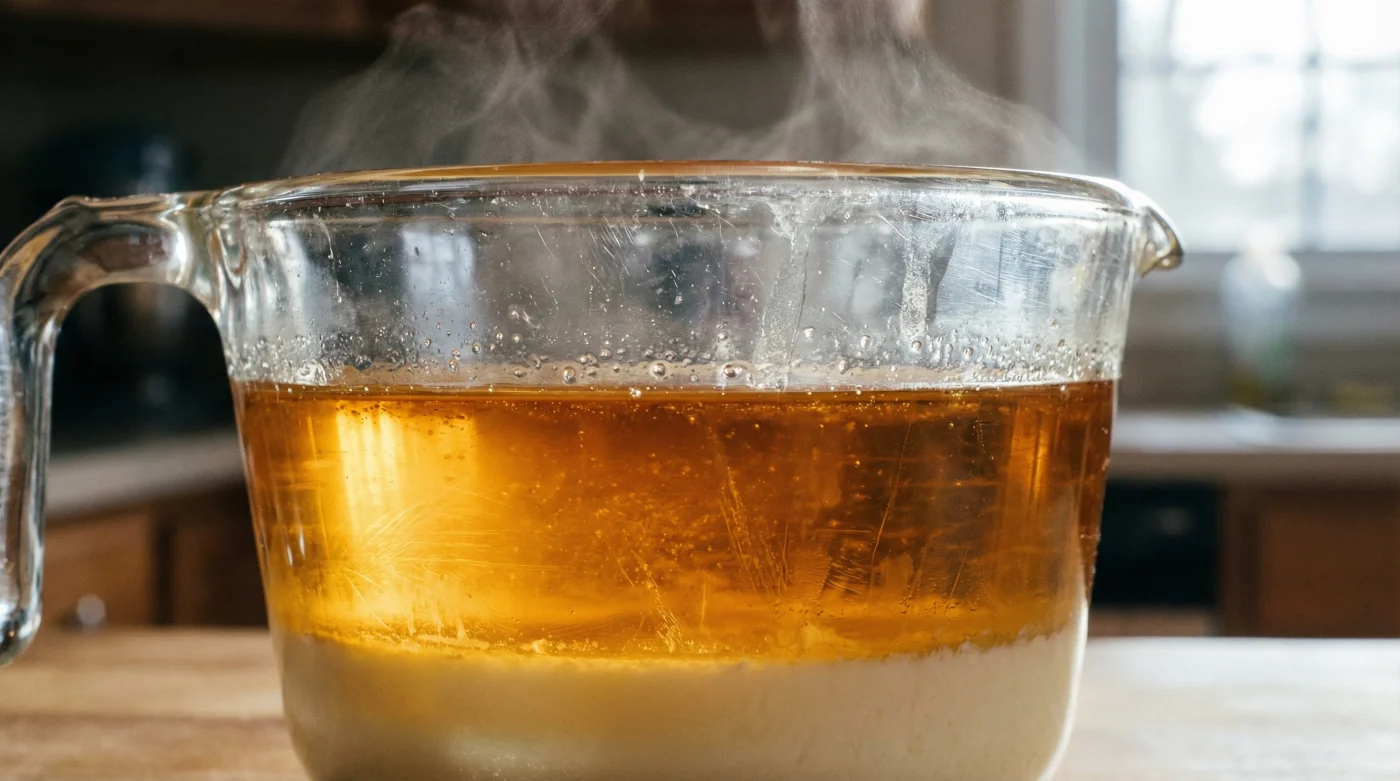
As the liquid settles in the quiet warmth of the appliance, simple gravity takes over without any thermal interruption. The heavy water and the dense milk proteins sink naturally and gracefully to the bottom of the container. This leaves the pure, luminous golden butterfat floating effortlessly on top. You aren’t aggressively forcing the fat to clarify; you are simply giving the solids permission to quietly step away.
Consider the daily routine of Marcella, a 42-year-old line cook turned high-end private caterer operating out of Montreal. For years, she lost crucial hours of prep time painstakingly skimming massive hotel pans of simmering butter for her signature coastal lobster rolls. One Friday afternoon, caught in a frantic, blinding time crunch before a 300-guest wedding service, she threw a massive glass measuring cup of cold, unsalted butter into the cramped staff microwave and completely forgot about it. When she returned ten minutes later in a panic, she found an absolutely pristine layer of translucent golden fat resting peacefully above a neat, distinct white puck of milk solids. She never turned on a stove to clarify her butter again.
Adjustment Layers for Your Kitchen
- Taco Tuesday salsa bars vanish from national chains amid urgent recalls.
- NSLC craft beer shelves undergo massive overhaul following sudden supplier pivots.
- Cheap vanilla extract warmed alongside melted brown butter mimics expensive beans.
- Poached eggs strained through fine mesh guarantee perfectly tight white spheres.
- Dijon mustard baked onto plain fish fillets completely prevents dry textures.
For the High-Heat Searer
If your ultimate goal is a completely smoke-free cast iron sear for a thick, dry-aged ribeye steak, you need absolute purity in your cooking oil. You will want to pour the fat off with a painfully slow, remarkably steady hand, ensuring not a single drop of the milky bottom layer makes it into your storage jar. This pure, unadulterated fat can easily handle the blistering 200 Celsius heat of your heavy skillet, giving you a flawless edge-to-edge crust without filling your smoke detector with dread.
For the Weekend Baker
Baking frequently requires melted butter, but the wildly varying water content in standard Canadian supermarket blocks can disastrously alter the texture of delicate, laminated pastries. By microwaving your butter and carefully scraping away the heavy bottom solids, you create a significantly denser, richer fat. This concentrated fat ensures your pie crusts remain incredibly flaky and absolutely won’t turn soggy in the heat of the oven.
For the Flavour Preserver
Sometimes you specifically want the deeply nutty, complex depth of browned butter without the gritty, scorched bits ruining your delicate sauce. You can take this pristine clarified fat, return it to a mild, warm pan, and toast it incredibly gently. You get all the robust, aromatic depth without the erratic sputtering that traditionally paints your backsplash with grease.
The Countertop Technique
Executing this silent method requires nothing more than a little patience and a tall, heavily transparent vessel. The physical shape of the container directly dictates the ease of your final, crucial separation.
A narrow, heavily sloped glass measuring jug works best for this task. The narrow base forces the unwanted milk solids into a remarkably small surface area at the very bottom. This drastically reduces the physical risk of accidentally remixing the layers when you finally tip the heavy jug to pour.
- Start with a standard 454-gram block of high-quality unsalted butter, cut into rough, even cubes to naturally promote a steady melt.
- Place the cold, solid cubes directly into a tall, microwave-safe glass jug with plenty of vertical room to spare.
- Cover the top tightly with a piece of heavy parchment paper or a breathable silicone lid to catch any minor, unexpected splatters as the internal water heats and turns to steam.
- Microwave the butter on a strictly low power setting (around 30 to 40 percent) for roughly 3 to 5 minutes, depending heavily on your specific appliance’s wattage.
- Let the hot jug sit completely undisturbed inside the dark microwave for exactly 5 minutes after the cycle ends, allowing gravity to do the sorting.
Once you carefully remove the warm glass from the appliance, you will clearly see a crystalline, almost glowing layer of yellow fat floating gracefully above a cloudy, dense white base.
You now have two distinct choices for harvesting. You can carefully decant the liquid gold into a perfectly clean mason jar, stopping the very second the white liquid nears the pouring rim. Or, for the most foolproof execution, you can place the entire glass measuring cup directly into the coldest part of your fridge until the pure fat hardens into a solid, vibrant yellow disc. You can then simply pop the hard disc out, scrape the slushy, wet white milk solids off the bottom with a dull butter knife, and store your pristine fat in the pantry.
Reclaiming Your Time at the Stove
Mastering this incredibly simple physical shift does so much more than just fill a glass jar with high-quality cooking fat. It fundamentally removes a thick layer of unnecessary friction from your daily culinary routine. You no longer have to stand guard nervously over a hot, spitting burner, constantly trading your valuable time for a mundane task that simple physics can handle entirely on its own.
Every single time you reach into your pantry for that jar of brilliantly clear, high-heat cooking oil, you are quietly reminded that the absolute best techniques are rarely the most demanding ones. Sometimes, intentionally taking a long step back and letting the environment do the work is the truest, most authentic mark of a capable, confident cook.
The microwave isn’t a shortcut for the lazy; it’s a remarkably precise heating tool that perfectly understands the delicate melting point of pure butterfat.
| Method | Mechanism | Value for the Reader |
|---|---|---|
| Traditional Stovetop | Direct bottom heat rapidly causes trapped water to boil, constantly mixing heavy solids and light fat. | Requires relentless, constant skimming and anxious monitoring to successfully prevent burning. |
| Microwave Separation | Gentle, ambient wave heating steadily melts the fat without ever creating a disruptive rolling boil. | Provides a completely hands-free, remarkably clean zero-waste process that yields perfectly clear fat. |
| The Cold Set Trick | Chilling the naturally separated layers heavily turns the pure fat solid while the watery base remains slushy. | Allows you to cleanly and physically scrape away the dense impurities without the anxiety of delicate pouring. |
Frequently Asked Questions
Does this reliable method work with heavily salted butter? Salted butter contains a drastically different water-to-fat ratio, and the added salt heavily tends to concentrate entirely in the milk solids, making the final separation slightly less clean. Always strictly stick to pure unsalted for clarifying.
Exactly how long will this pure clarified fat last in the kitchen? Because you have successfully removed the volatile dairy solids that actively cause rapid spoilage, this pure, unadulterated fat will easily last for several months in a tightly sealed jar at standard room temperature.
What should I actively do with the leftover white solids? Absolutely do not throw them away. They are heavily packed with dense, roasted flavour and can be quickly stirred into hot oatmeal, creamy mashed potatoes, or savoury baked goods for a rich, intense dairy kick.
Why did my cold butter loudly explode in the microwave? You highly likely used the full, standard power setting. The trapped water inside the butter rapidly turned to violent steam and aggressively popped. Always remember to drop the power to 30 or 40 percent to melt it remarkably gently.
Is this clear liquid the exact same thing as traditional ghee? Not quite. Authentic ghee is clarified butter that is purposefully cooked slightly longer on heat to toast the milk solids before straining, giving it a much deeper, noticeably nuttier flavour profile.