Picture the cutting board on a Tuesday night in late November. You are making a soup, maybe a hearty stew to chase away the damp chill creeping through the windowframes. You pull a large yellow onion from the mesh bag, feeling the brittle, rustling layers crackle under your thumbs.
You peel away that coppery outer shell without a second thought. It is an automatic reflex, a sweep of the hand that sends those weightless, papery husks tumbling straight into the countertop compost bin. They look like nothing more than protective packaging, nature’s biodegradable shrink-wrap meant to be discarded the moment the real cooking begins.
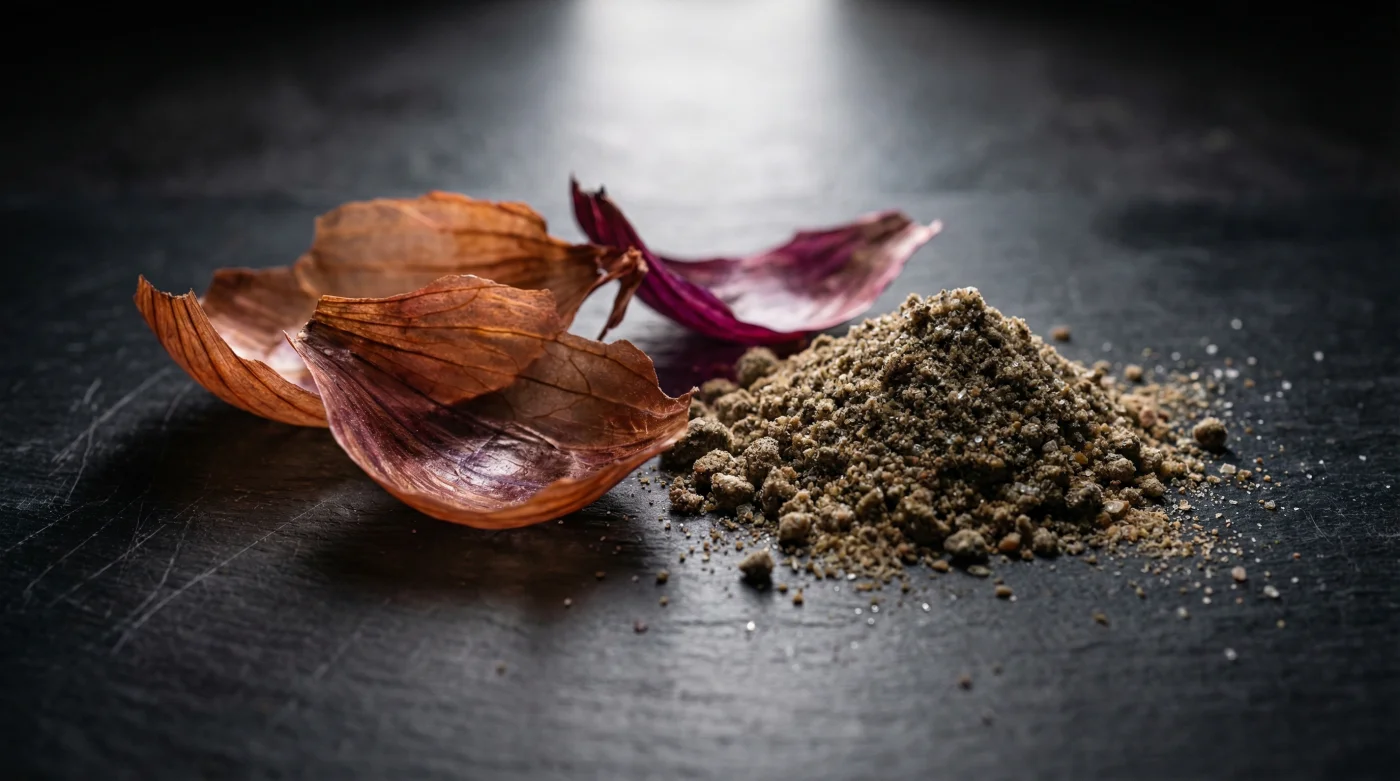
But those papery discards carry a secret weight. What looks like dried-out refuse is actually a densely packed archive of aromatic oils. When treated with a little heat and patience, the very thing you throw away transforms into a deeply savoury, almost meaty powder that professional kitchens treat like gold dust.
The Architecture of Protective Flavour
Think of an onion like a slow-burning battery. As it grows in the dark soil, it defends itself against pests and rot by pushing its most potent chemical defences outward. By the time it reaches your pantry, those dry, crackling skins hold the highest concentration of volatile compounds, locking the milder sugars safely inside.
You have been conditioned to view moisture as a prerequisite for taste. We want the weeping, translucent flesh of a sautéed allium. But flavour is not water. Flavour is oil, acid, and structure. By tossing out the dehydrated outer layers, you are throwing away the concentrated essence of the vegetable. The moisture has already evaporated, leaving behind a perfectly primed canvas just waiting for the dry heat of an oven to awaken its dormant power.
Consider Elias Thorne, a 42-year-old prep cook working at a strictly zero-waste bistro in Vancouver. Every morning, while junior line cooks blindly tossed mounds of red and yellow onion peels into the municipal green bins, Elias gathered them in a stainless steel hotel pan. He understood that those delicate husks, when toasted at a low 120 Celsius, undergo a quiet Maillard reaction. Ground down in a spice mill, Elias’s dust became the secret finishing touch on everything from roasted root vegetables to the restaurant’s signature whipped butter, single-handedly turning compost into a twenty-dollar menu highlight.
Customizing Your Allium Ash
Not all skins behave exactly the same way. Just as you might choose a specific apple for a pie, understanding the subtle differences in your raw materials allows you to tailor the final seasoning to your exact weekly meal plan.
For the Depth Seeker (Yellow Onions)
The standard yellow onion skin provides the most robust, deeply savoury profile. When baked, it develops a slightly roasted, almost umami-rich quality that mimics beef bouillon. This is your everyday workhorse, perfect for stirring into gravies, rubbing onto poultry, or dusting over a bowl of hot popcorn on a Friday night.
For the Colour Enthusiast (Red Onions)
Red onion husks carry a slightly sweeter, fruitier undertone, but their real magic lies in their pigment. The powder retains a muted, dusky purple hue. Blended with a coarse sea salt, it creates a visually striking finishing spice that looks wildly expensive scattered across a pale slab of fresh cod or a bowl of creamy mashed potatoes.
For the Gentle Palate (Shallots)
- Taco Tuesday salsa bars vanish from national chains amid urgent recalls.
- NSLC craft beer shelves undergo massive overhaul following sudden supplier pivots.
- Cheap vanilla extract warmed alongside melted brown butter mimics expensive beans.
- Poached eggs strained through fine mesh guarantee perfectly tight white spheres.
- Dijon mustard baked onto plain fish fillets completely prevents dry textures.
The Slow Bake Ritual
Transforming these husks requires almost zero active effort, but it does demand a mindful approach to temperature. You are not cooking them; you are coaxing the residual oils to the surface until they become entirely brittle.
Spread your collected, washed, and thoroughly dried skins across a parchment-lined baking sheet. Ensure there is breathing room between the pieces. If they overlap too heavily, they will steam instead of crisping.
- Preheat your oven to a low 120 Celsius.
- Bake the skins for 15 to 20 minutes, checking frequently.
- Watch for a slight darkening in colour and a completely brittle texture that crumbles under slight pressure.
- Let them cool entirely on the tray to allow the structure to set.
- Pulse in a clean spice grinder or mortar and pestle until reduced to a fine powder.
This simple act shifts your relationship with kitchen waste. By establishing a dedicated container in your fridge for collecting peels throughout the week, you build a quiet, sustainable provisioning habit that rewards you with free, premium ingredients.
The Tactical Toolkit
- Temperature: 120 Celsius (low enough to prevent bitter burning).
- Time: 15 to 20 minutes (varies based on the natural thickness of the peel).
- Storage: Keep the finished powder in an airtight glass jar in a dark cupboard; it will remain vibrant for up to three months.
Reclaiming the Hidden Harvest
There is a profound sense of satisfaction in turning something you were taught to ignore into something you actively crave. It changes how you look at the entire landscape of your kitchen. The produce you buy is no longer a collection of usable parts and inevitable waste; it is a complete ecosystem of potential.
When you finally sprinkle that dark, golden dust over a bowl of soup, you are tasting resourcefulness. You are experiencing the deep, complex notes of a vegetable that has been honoured in its entirety, proving that true culinary luxury rarely comes from a specialized market. It usually comes from paying closer attention to what is already resting in the palm of your hand.
The line between kitchen refuse and pantry gold is simply a matter of applied heat and imagination.
| Key Point | Detail | Added Value for the Reader |
|---|---|---|
| Volatile Compounds | The outer skins contain the highest density of flavour oils. | Transforms a mild dish into a rich, deeply savoury experience. |
| Low Heat Baking | Roasting at 120 Celsius dehydrates without burning. | Ensures the powder remains sweet and nutty, never bitter. |
| Zero-Waste Habit | Saving peels in a dedicated fridge container throughout the week. | Creates a free, sustainable pantry staple from items you already buy. |
Frequently Asked Questions
Can I use onion skins that have dark spots? Any skins with black mould or soft spots should be composted. Only use clean, dry, papery layers.
Do I need to wash the skins before baking? Yes, give them a gentle rinse in a colander to remove field dirt, then pat them completely dry with a towel before placing them in the oven.
Can I mix different types of allium skins together? Absolutely. Blending red, yellow, and shallot skins creates a beautifully complex, all-purpose seasoning blend.
How fine should I grind the baked skins? Aim for a consistency similar to ground paprika. If you leave large flakes, they can have an unpleasant, papery texture on the tongue.
Will this make my house smell overwhelmingly like onions? The slow bake at a low temperature produces a warm, toasted aroma similar to a bakery, rather than the sharp bite of frying onions.