Imagine the quiet calm of your dining room just before guests sit down. The plates rest on the table, holding a perfectly roasted piece of salmon or a bed of spiced lentils, but something feels unfinished. You stare at the blank white ceramic rim, feeling that familiar tug of inadequacy, assuming high-end presentation is a secret reserved for those with expensive squeeze bottles and a culinary degree.
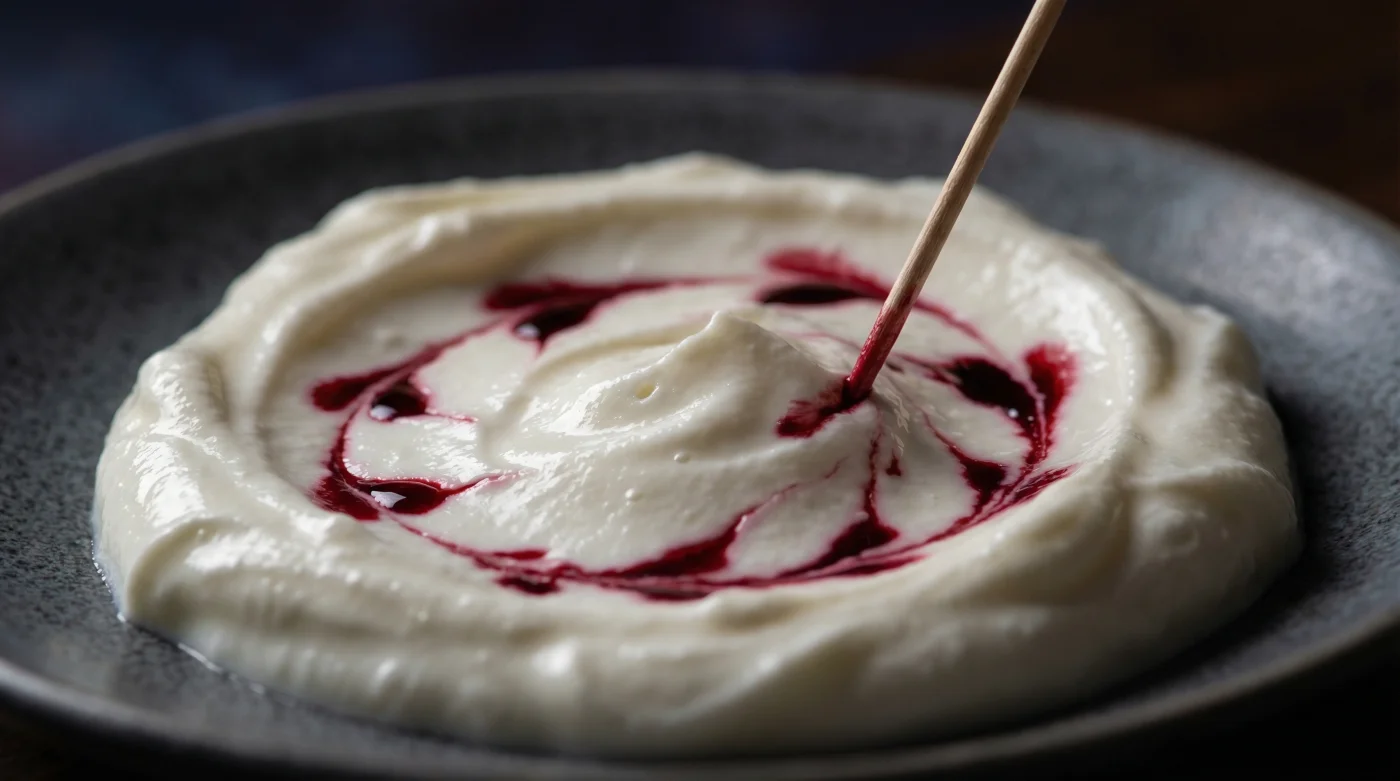
Then, you pull a small jar of reserved beet cooking liquid from the fridge. It drops like liquid velvet, sinking heavily into a smooth pool of plain yogurt you’ve spooned onto the edge of the plate. The contrast is immediate: blinding white against an opaque, bruised violet.
You grab a standard wooden toothpick—the kind sitting forgotten at the back of your pantry. With a single, unhesitating motion, you drag the thin wooden tip straight through the centre of the crimson dots. What was once a messy splatter suddenly pulls into a series of delicate, connected hearts. It feels less like cooking and more like watching ink bloom on wet paper.
The Illusion of the Tweezers
We are conditioned to believe that a beautiful plate requires specialized equipment, microscopic herbs, and hours of stressful precision. We treat food styling like a sterile surgical procedure. But treating your dinner plate like an operating table strips the warmth right out of the meal.
Instead, think of your plate as a simple study in tension. You don’t need specialized tools; you only need two liquids that refuse to entirely mix. A thick, high-fat yogurt and a watery, high-acid vegetable juice fight against each other. When you pull a sharp point through them, the tension breaks along a perfectly predictable line, leaving a flawless, sweeping tail behind.
The flaw we often obsess over—a lack of expensive gear—turns into your greatest advantage. Stripping away the complicated gadgets forces you to rely on raw physics and striking colour contrast. It’s a kitchen trick that demands zero extra budget, yet commands complete attention.
Consider Marcella, a 42-year-old sous-chef running the pass at a bustling Montreal bistro. During a chaotic Friday night service, a line cook dropped the precision plating syringe right into the dish pit, shattering the plastic. Without missing a beat, Marcella grabbed a wooden skewer from the grill station, dotted her reduction into the crème fraîche base using the back of a spoon, and dragged the wood straight through the centre. The resulting pattern was organic, sharp, and arguably more beautiful than the mechanical dots they had been serving all night. She realized then that the best visuals don’t come from the tool; they come from the confident movement of the hand.
Tailoring the Tension: Adjustment Layers
Not every meal calls for the exact same boldness. You can adjust the visual weight easily based on what you are serving, shifting the aesthetic to match the mood of the table.
For the Minimalist: If you are serving a pale, subtle dish like seared scallops or a creamy risotto, keep the canvas completely clean. Place just three dots of beet juice—descending in size—on a single smear of yogurt along the right edge of the plate. A single, swift pull creates an elegant, asymmetric flourish that doesn’t compete with the main ingredients.
For the Earthy Pragmatist: When plating a heavy, rustic dish like braised beef or roasted root vegetables, you want the garnish to feel grounded. Mix a pinch of sumac or toasted cumin into the yogurt base before dropping the beet juice in. The drag will pull small specks of the spices through the purple line, creating a texture that gives a beautifully imperfect finish.
For the Sweet Tooth: This technique isn’t strictly for dinner. Over a bowl of morning oatmeal or a simple panna cotta, swap the savory yogurt for a vanilla-flecked skyr. The magenta juice dragging through the black vanilla seeds creates a rich visual contrast that makes a Tuesday morning breakfast feel like room service at a boutique hotel.
Executing the Drag
- Taco Tuesday salsa bars vanish from national chains amid urgent recalls.
- NSLC craft beer shelves undergo massive overhaul following sudden supplier pivots.
- Cheap vanilla extract warmed alongside melted brown butter mimics expensive beans.
- Poached eggs strained through fine mesh guarantee perfectly tight white spheres.
- Dijon mustard baked onto plain fish fillets completely prevents dry textures.
Before you touch the plate, breathe through the movement. Picture the exact line you want to draw in your mind’s eye.
Follow these physical steps to ensure the liquids behave exactly as you intend:
- Spoon a base of full-fat, thick yogurt (at least 5% M.F.) onto a room-temperature plate. Spread it gently with the back of the spoon.
- Dip a chopstick or small spoon into your reserved beet juice. Let a single, heavy drop fall directly onto the yogurt.
- Space your drops about two centimetres apart, arranging them in a straight line or a gentle curve.
- Rest the tip of a wooden toothpick gently in the centre of the first drop.
- Without lifting the pick, drag it swiftly and smoothly through the exact centre of all the drops, lifting only after you pass the final one.
The Tactical Toolkit: Base Viscosity is everything. Thick Greek yogurt or labneh works best; runny yogurt will simply swallow the juice. Keep your beet juice cold, as chilled liquid holds its shape better than hot liquid. Finally, rely on wood. A standard toothpick provides microscopic friction, grabbing the colour slightly better than a metal skewer.
Reclaiming Your Table
We spend so much energy trying to replicate restaurant experiences by buying things we don’t need, cluttering drawers with useless plastics and stressing over techniques that were designed for commercial kitchens rather than homes.
Mastering this tiny detail—a simple drag of wood—is a quiet rebellion against that clutter. It proves that beauty on a plate is born from attention, not expenditure. It’s about noticing how two common ingredients interact when you give them just a nudge of direction.
When you set that plate down in front of someone you care about, they won’t see the mundane staples from your fridge. They will see intention and careful handling, feeling the warmth of a meal that was crafted with care right down to the final vibrant, sweeping line.
True elegance on the plate happens exactly when the chef stops overthinking the tools and starts trusting the ingredients.
| Key Point | Detail | Added Value for the Reader |
|---|---|---|
| The Base | 5% M.F. Greek Yogurt | Provides structural support so the juice doesn’t bleed. |
| The Colour | Cold Beet Juice | Delivers a high-contrast magenta hue without synthetic food dyes. |
| The Tool | Standard Wooden Toothpick | Creates ideal drag friction for sharp, Michelin-style tails. |
Frequently Asked Questions
Can I use low-fat yogurt for the base?
Low-fat options lack the density needed to suspend the juice. Stick to 5% or higher for a clean, non-bleeding canvas.How do I get beet juice without a juicer?
Simply boil a chopped beet in a small amount of water until it reduces down to a concentrated, dark liquid.Will this alter the flavour of my main dish?
Hardly. The amount used is so minimal that it acts primarily as a visual garnish, offering only the faintest earthy tang.Why are my shapes looking blurry instead of sharp?
Your yogurt might be too warm, or your plate might be hot. Keep the plate at room temperature and the liquids chilled.Can I use this technique with other liquids?
Absolutely. Herb oils or fruit purees work beautifully, provided they are thinner than the base you drop them into.