It is 6:30 p.m. on a Tuesday, and the cold is already settling against the kitchen window. You are standing under the harsh glow of the range hood, holding a block of cold, briny feta and a plastic clamshell of cherry tomatoes. The traditional path demands patience you simply do not possess right now.
The standard protocol dictates turning the dial to 200 degrees Celsius, waiting for the preheat cycle, and sacrificing 45 minutes of your evening just to coax these ingredients into submission. You crave immediate, warm comfort, but the barrier to entry feels entirely too high for a weeknight.
But what if the slow roast is largely performative? The internet has fallen deeply in love with the baked feta pasta trend, treating the oven as a non-negotiable altar. Yet, the true magic of this dish is not the dry heat of a prolonged bake; it is the structural breakdown of the cheese and the bursting of the fruit.
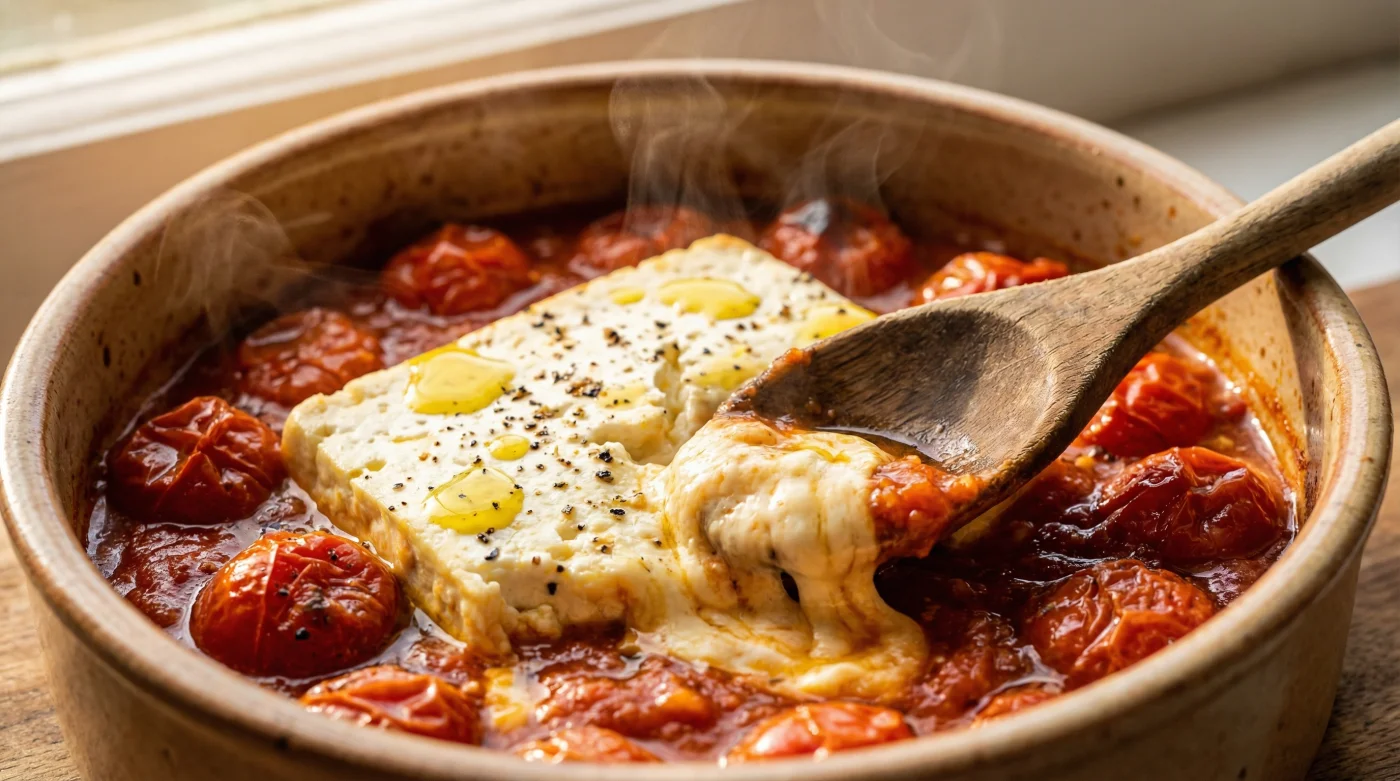
By shifting your approach to the appliance you usually reserve for reheating coffee, you change the entire equation. A microwave forces an immediate, aggressive emulsion, collapsing the tomatoes and melting the feta into a trembling, creamy dip in exactly five minutes.
The Geometry of Agitated Moisture
Think of the microwave not as a tool of compromise, but as a sealed, high-pressure steam chamber. When you place a block of feta in the centre of a glass dish and surround it with tomatoes, you are setting up a closed biological reaction. The moisture inside the fruit wants to escape, and the dense fat of the cheese requires heat to loosen its tight, crumbly structure.
In a conventional oven, this happens through slow evaporation, which concentrates flavour but costs you nearly an hour. The microwave weaponizes the internal water content, boiling the tomatoes from the inside out until their skins rupture violently into the dish.
This so-called flaw of microwave cooking—its tendency to steam rather than crisp—becomes your greatest advantage. Instead of a dry crust forming on the cheese, the rapid influx of acidic tomato juice mixes instantly with the melting sheep milk fat. You bypass the traditional wait entirely, replacing it with a beautiful collision of ingredients.
The result is an emulsion that mimics hours of careful tending. The cream should tremble slightly when you pull the bowl from the turntable, waiting only for the swift fold of a spoon to marry the red and white into a cohesive, rich sauce.
Elias Thorne, a 34-year-old prep cook in a bustling Montreal wine bar, accidentally discovered this specific five-minute threshold during a slammed Friday service. When the line ran out of their signature baked feta appetizer and the deck ovens were fully occupied, he threw the raw components into a ceramic bowl and hit the microwave. ‘The intense, localized energy forces the cell walls of the tomato to collapse inward in seconds,’ Elias noted. ‘It floods the salty cheese with hot, sweet acid before the dairy proteins even have a chance to rubberize.’
It became a quiet, closely guarded secret among the kitchen staff for their own late-night meals. They realized the rapid steam creates superior silkiness, bypassing the occasionally grainy texture that comes from an over-baked pan.
Tailoring the Melt: Adjustments for Your Craving
Not all cravings are created equal. Because you are saving forty minutes of cooking time, you now have the mental bandwidth to customize the flavour profile. The base remains the same—feta, cherry tomatoes, and a splash of olive oil—but the accents change the entire personality of the dip.
For the bright purist, keep the additions minimal. A heavy pinch of dried oregano rubbed between your palms, a single smashed garlic clove buried beneath a tomato, and a generous crack of black pepper ensures the sharpness remains the absolute star of the bowl.
- Discarded apple peels simmered with leftover honey create premium dessert syrups.
- Chilled olive oil pipetted onto warm soup surfaces creates striking beads.
- Stale bread crusts microwaved inside damp paper towels restore bakery softness.
- Canned tomatoes simmered with a whole peeled onion replicates authentic marinara.
- Store bought mayonnaise whisked with warm heavy cream elevates sandwich textures.
For the textural contrast chaser, the finish is where you play. Because the microwave will not toast your garnishes, you must bring the crunch manually. Scatter toasted pine nuts, a handful of fresh basil ribbons, or a crumbling of crispy fried onions over the trembling dip just before serving.
Orchestrating the Five-Minute Emulsion
The execution requires a mindful, minimalist approach. You are not just pushing a button and walking away; you are conducting a rapid, high-heat symphony. Keep your tools simple: a microwave-safe ceramic or glass dish, a sturdy spoon, and a protective towel.
Start by patting the feta completely dry. Excess brine from the packaging will dilute the final creamy texture, turning your rich dip into a watery soup.
- Place a 200-gram block of feta squarely in the centre of your dish.
- Surround the cheese tightly with exactly two cups of washed, dried cherry tomatoes.
- Drizzle one tablespoon of high-quality olive oil directly over the cheese, letting it pool slightly at the base.
- Microwave on maximum power for exactly three minutes.
At the three-minute mark, you must intervene. Open the door and gently press the blistered tomatoes with the back of your spoon, encouraging them to release their remaining juices into the hot oil.
Return the dish to the microwave for a final two minutes. Watch through the glass as the cheese begins to slump and lose its rigid edges. When it finishes, do not stir immediately, letting the dairy fats stabilize in the ambient warmth for sixty seconds before you fold the mixture together.
Reclaiming the Evening
The true value of this technique extends far beyond a clever kitchen trick. It is fundamentally about taking back your evening hours, erasing the friction between a long day and a deeply comforting reward.
We often associate rich, warm, complex flavours with exhaustion—the idea that good food demands our time as a toll. By understanding how to harness the specific, aggressive heat of the appliance, you are stripping away the romanticism of the oven and focusing entirely on the physical reality of the ingredients.
You are left with a bowl of vibrant, steaming, spoonable comfort that materialized almost out of thin air. You did not have to plan ahead, you did not have to preheat, and you certainly did not have to wait.
You simply observed the rules of moisture, fat, and heat, and bent them to fit the exact shape of your immediate craving. The kitchen remains clean, the evening is still young, and the dip is unmistakably rich and instantly gratifying.
When we stop treating the microwave as a reheating box and start using it as a precision steamer, weeknight cooking completely transforms.
| Key Point | Detail | Added Value for the Reader |
|---|---|---|
| The Moisture Trap | Using the internal water of the tomatoes to steam the feta. | Prevents the cheese from drying out, ensuring a silky, trembling emulsion. |
| The Five-Minute Window | Aggressive, localized microwave energy bypasses the slow preheat. | Transforms an hour-long ordeal into an instant weeknight reality. |
| Brine Management | Patting the feta dry before cooking removes surface water. | Concentrates the fat, stopping the dip from becoming a watery soup. |
Frequently Asked Questions
Can I use crumbled feta instead of a block?
Crumbled feta contains anti-caking agents that resist melting. Always use a solid block in brine for the creamiest emulsion.Will the tomatoes explode and make a mess?
The tight arrangement around the cheese and the specific three-minute initial burst usually prevents a mess, but placing a paper towel loosely over the top provides easy insurance.Why did my cheese turn rubbery instead of creamy?
You likely cooked it too long without stirring. The microwave heats unevenly; interrupting the cycle to mash the tomatoes and mix the fats is crucial.Do I need to add extra salt?
Absolutely not. Feta is intensely brined, and as the moisture evaporates slightly during cooking, the salt concentrates. Rely on the tomatoes for sweetness to balance it.What is the best way to serve this instantly?
Sturdy pita chips or thick slices of toasted sourdough are necessary. The emulsion is dense and will easily snap thin crackers.