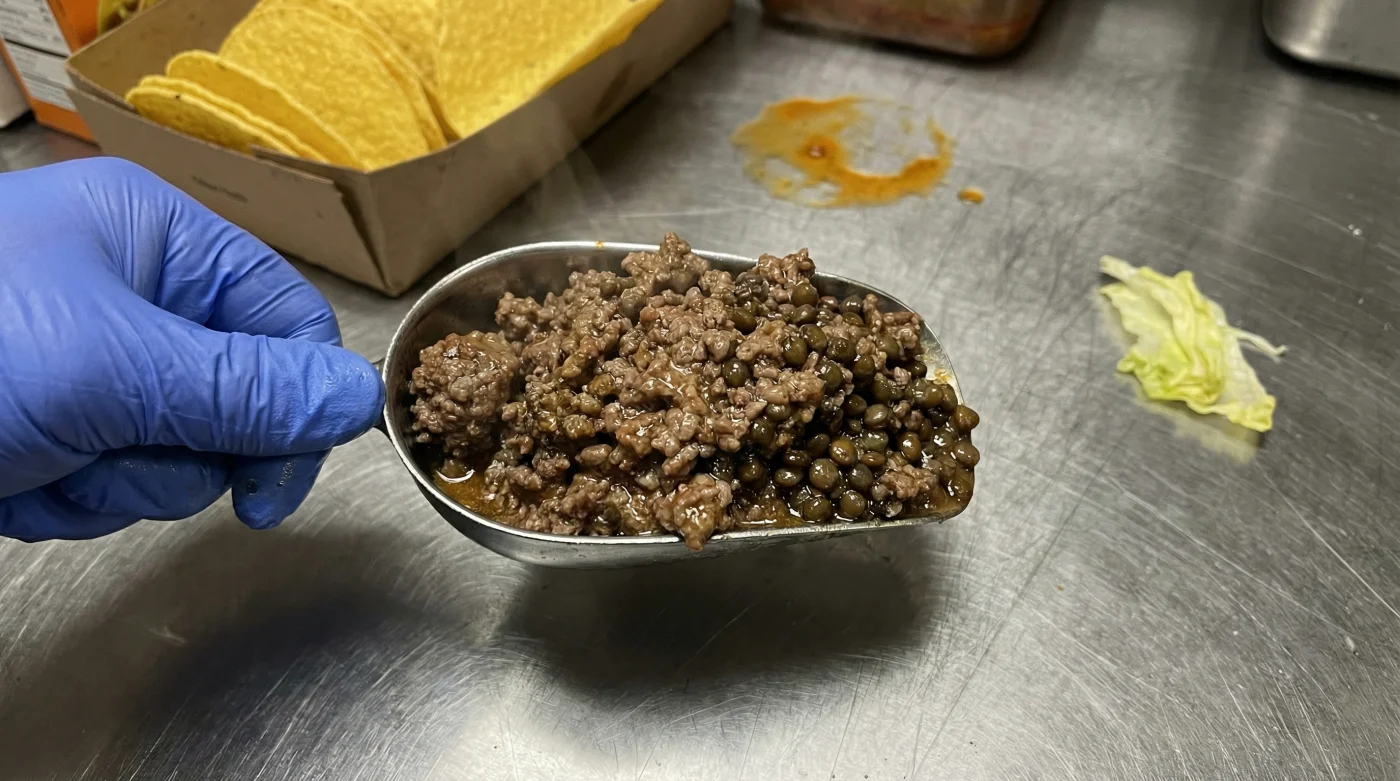
The sizzle of the flat-top griddle, the sharp scent of toasted cumin and smoked paprika drifting through the drive-thru window on a chilly Tuesday evening. You hand over a few crumpled Canadian dollars, expecting that familiar, greasy warmth wrapped in foil. For years, this transaction has been a comforting, predictable routine. You bite in, anticipating the heavy, savoury rush of seasoned ground beef.
That first bite is exactly what you crave. Richly spiced, perfectly textured, melting into the crunchy shell. But beneath the familiar flavour profile of fast-food comfort, a subtle revolution is happening right under your nose. The texture you are experiencing is not what you think it is.
The meat in your favourite value meal feels slightly lighter, a touch softer, perhaps even holding onto the seasoning better than before. You are tasting a quiet pivot in the quick-service restaurant industry, one driven by shifting supply chains and the soaring cost of cattle across the prairies. What tastes like an upgrade is actually an exercise in clever adaptation.
Major chains are rewriting the rules of the Tuesday night staple. By quietly folding high-protein legume fillers into their signature ground beef, they are stretching supplies while accidentally creating a superior mouthfeel. It is a viral menu shift that is changing the way you eat, even if you never noticed the menu fine print.
The Sponge Metaphor: Rethinking Fast-Food Fillers
For decades, the idea of stretching meat was viewed as a culinary betrayal. You imagine sawdust or mysterious powdered proteins bulking up a patty to save a few pennies for the corporation. But treating ground beef like an isolated, untouchable ingredient is an outdated way of looking at flavour development. The true magic happens in the bind.
Think of seasoned ground meat not as a solid, but as a porous sponge. When simmering in a pan, pure beef releases its moisture and shrinks, leaving the spices to pool uselessly in the rendering fat. By introducing cooked lentils into the mix, the matrix absorbs those escaping juices, locking the moisture and the cumin right back into the bite.
The filler is not diluting the experience; it is amplifying it. Lentils act as tiny, flavour-soaked reservoirs that mimic the exact chew of perfectly ground chuck. What started as an institutional cost-saving measure for nationwide restaurant groups has inadvertently given you a better-tasting, more structurally sound taco. The bottom of your shell no longer gets soaked and falls apart.
Marcus Tremblay, a forty-two-year-old culinary director for a major Canadian franchising group, witnessed this transition firsthand in a Vancouver test kitchen. Tasked with offsetting a thirty percent spike in wholesale beef prices without raising the cost of a combo meal, he began experimenting with a seventy-thirty split of ground chuck to brown lentils. He discovered that the legumes absorbed the proprietary chili seasoning so effectively that blind taste-testers preferred the stretched version, noting it felt richer and far less greasy on the palate.
Adapting to the Blend: What Kind of Eater Are You?
Now that this hybrid approach is becoming the fast-food standard, you might want to replicate it—or avoid it—in your own kitchen. Understanding how to handle this shift gives you total control over your Tuesday routine. You are no longer flying blind at the grocery store or the drive-thru.
For the purist who demands unadulterated protein, you will need to adjust your expectations at the restaurant and perhaps pivot to making your own meals from scratch. If you want that pure beef experience at home, you must aggressively sear the raw meat, cooking it hot and fast to trap the fat before it renders out and leaves the pan dry.
For the budget-conscious family cook, this viral menu shift is a brilliant blueprint for your weekly grocery shop. You can stretch a single pound of ground chuck across three different meals just by mimicking what the major chains are doing. It is a zero-waste strategy that halves your meat budget without sacrificing the comforting textures your family expects.
- Discarded apple peels simmered with leftover honey create premium dessert syrups.
- Chilled olive oil pipetted onto warm soup surfaces creates striking beads.
- Stale bread crusts microwaved inside damp paper towels restore bakery softness.
- Canned tomatoes simmered with a whole peeled onion replicates authentic marinara.
- Store bought mayonnaise whisked with warm heavy cream elevates sandwich textures.
The Tactical Toolkit: Replicating the Restaurant Blend at Home
Making this work on your own stove requires an understanding of timing and temperature. You cannot simply toss raw beef and hard legumes into a pan and hope for the best. The secret lies in treating the two components with equal respect before they ever meet in the skillet.
It begins with understanding the distinct cooking times of your ingredients. The goal is a seamless integration where texture becomes completely indistinguishable here, requiring precise moisture management and a gentle hand.
Focus on these mindful steps to build the perfect hybrid filling:
- Simmer brown or green lentils in a low-sodium beef broth until tender, ensuring they are never boiled to a mush, then drain them thoroughly.
- Brown your ground beef over medium-high heat, breaking it down with a wooden spoon until the pink just disappears from the edges.
- Fold the cooked lentils into the pan, gently smashing about a quarter of them into the meat to create a natural thickening paste.
- Toast your dry spices—cumin, chili powder, oregano—directly in the pan for thirty seconds before deglazing with a splash of water.
- Reduce the heat and let the mixture simmer gently until the liquid is entirely absorbed by the legumes, leaving a tight, glossy filling.
Your kitchen toolkit for this method is minimal but exact. You want a heavy-bottomed cast iron skillet, a steady ninety Celsius simmer for the final reduction, and about ten minutes of patience to let the starches thicken the chili sauce naturally.
A Quieter, Smarter Way to Eat
Finding out that your favourite value meal relies on a legume blend might initially feel like a corporate bait-and-switch. But peeling back the curtain on this massive industry pivot reveals a smarter, highly efficient way to interact with your food. The chains solved a supply chain crisis, and you inherited a better technique.
It proves that culinary quality is not always about purity; it is about engineering a better result. Embracing this method brings a quiet harmony to your kitchen, lowering your weekly grocery bill while simultaneously increasing the nutritional density and fibre content of the food you serve your family.
Taco Tuesday no longer has to mean heavy, greasy regret. It becomes a mindful exercise in balance, a clever trick borrowed from corporate test kitchens that happens to make your home cooking more resilient, adaptable, and deeply satisfying.
The true art of professional cooking isn’t in using the most expensive ingredients, but in treating humble staples with such precision that they outshine luxury.
| Key Point | Detail | Added Value for the Reader |
|---|---|---|
| The Sponge Effect | Lentils absorb rendered beef fat and toasted spices during the simmer. | Creates a richer flavour profile and prevents soggy taco shells. |
| Cost Averaging | Replacing thirty percent of ground beef with legumes lowers the meal cost. | Allows you to buy higher-quality, ethically raised beef for the remaining portion. |
| Textural Consistency | Smashing a portion of the lentils creates a natural starchy binder. | Keeps the filling cohesive, mimicking professional restaurant quality at home. |
Taco Tuesday Shift FAQ
Why are restaurants suddenly using lentils in their beef?
Rising cattle costs and supply chain shortages forced chains to adapt. Lentils provide a seamless texture match while maintaining the high protein content consumers expect.Will I be able to taste the difference in the meat?
Most diners cannot tell the difference. Because lentils act like flavour sponges, they take on the exact profile of the chili seasoning and beef fat.What type of lentil works best for this hybrid blend?
Always use brown or green lentils. Red lentils break down too quickly and will turn your filling into a paste, ruining the familiar crumbly texture.Does this method change how I should store the leftovers?
It actually improves storage. The lentil blend retains moisture beautifully in the fridge, meaning your reheated leftovers will not dry out in the microwave.Can I use canned lentils to save time on a busy night?
Absolutely. Just be sure to rinse them thoroughly under cold water to remove the canning liquid, which can introduce a metallic taste to your spices.