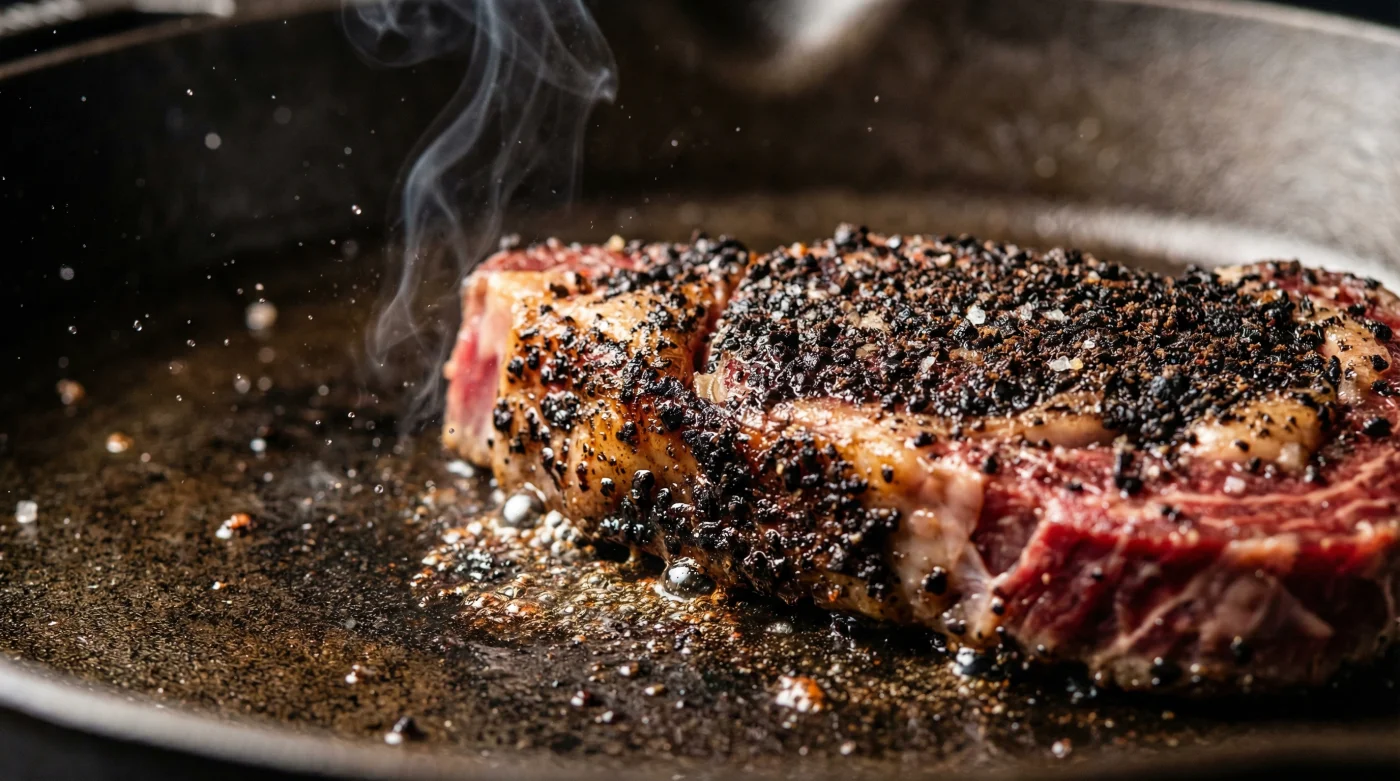
You stand in the kitchen as the frost thickens on the windowpane, staring down at a pale, discounted cut of beef from the local grocer. The pan is smoking, ready for action, but there is a lingering doubt. You have been told your entire life that great beef requires time—days of dry-aging, expensive finishing salts, and overnight brines just to make a weeknight meal palatable.
You rub the coarse salt into the pale fibres, hoping for a miracle. You want that deep crust, the kind that shatters slightly under a steak knife before giving way to a rich, trembling pink centre. But what usually happens is a grey, steaming disappointment that tastes more like boiled roast than a chophouse delicacy.
The frustration is entirely valid. We are taught to treat cheap cuts with a bizarre reverence, letting them sit uncovered in the fridge for forty-eight hours just to draw out a few drops of surface moisture. It feels like an endless waiting game for a Tuesday supper that ultimately falls flat.
But there is a jar sitting in the back of your cupboard, likely pushed behind the oats and the maple syrup, that holds the answer. Instant coffee changes the rules, offering an immediate shortcut to the intense, fermented depth usually reserved for meats that have hung in climate-controlled lockers for weeks.
The Crust as a Canvas
Think of the surface of your meat not as a boundary, but as a combustible canvas. When you rely solely on expensive salt and pepper overnight brines, you are simply waiting for physics to slowly draw water out. You are playing a passive game, hoping the pan is hot enough to force a crust before the centre overcooks.
By introducing finely ground, freeze-dried espresso to the raw surface, you completely bypass the waiting room. The roasted granules drastically amplify the Maillard reaction—that complex browning process that turns simple proteins into savoury, toasted perfection—during a fast pan sear.
The perspective shifts when you realize the jar of instant grounds is essentially pre-roasted flavour concentrate. It acts as an accelerator. Instead of waiting for the meat’s natural sugars to slowly caramelize, you are painting the surface with compounds that are already halfway there, creating a charred, earthy shell in mere minutes.
This is a quiet trick passed around the back-of-house for years. Take Marcus Tremblay, a 42-year-old sous chef working the line at a high-volume Montreal brasserie. When supply chain hiccups forced him to work with thinner, leaner cuts of sirloin during the dinner rush, he did not have the luxury of time. He started dusting the steaks with a fine powder of cheap, instant espresso right before they hit the cast iron. The result was a bitter-sweet, violently dark crust that mimicked a sixty-day dry age. His tables never knew the truth, assuming they were eating a premium, heavily curated reserve cut rather than a smart pantry modification.
Tailoring the Rub to Your Cut
Not all beef behaves the same under high heat, and your approach to this pantry staple should adjust based on what you brought home from the butcher.
For the budget-conscious shopper holding a thin inside round or flank, the goal is maximum surface flavour before the thin meat turns tough. You want to apply the powder heavily, pressing it into the fibres alongside a coarse kosher salt. This creates a protective shield, allowing the exterior to crisp violently while shielding the delicate interior from turning to leather.
For those working with a thicker, heavily marbled chuck eye or a discounted strip, the fat content requires a lighter touch. The rendered fat will bloom the coffee, turning it into a rich glaze rather than a dry crust. Here, mixing the granules with a touch of smoked paprika or garlic powder balances the intense earthiness of the beans.
If you are preparing a roast for the weekend, the rules shift again. A slow cook demands a paste rather than a dry rub. Mixing the instant flakes with a tablespoon of neutral oil and smearing it over the beef encourages deep flavour penetration over several hours at 135 Celsius, offering a subtle, fermented background note.
Building the Crust
- Mayonnaise spread onto sandwich bread ensures an impossibly golden grilled cheese.
- Unsalted butter melted in the microwave separates into perfect clarified fat.
- Discarded onion skins baked slowly pulverize into premium savory seasoning powders.
- Beet juice droplets dragged through yogurt create expensive looking plate garnishes.
- Stale tortilla chips revive instantly in a smoking hot dry skillet.
Begin by patting your steak completely dry with a paper towel. Moisture is the enemy of a good sear, and any lingering dampness will cause the grounds to dissolve into a muddy paste rather than a crisp shell. You want the surface arid before you even think about seasoning.
Measure out your ingredients precisely. For every standard portion of meat, a mere teaspoon of the freeze-dried powder is enough. Over-applying will tip the balance from earthy to acrid.
Heat your pan until it is whispering with heat, but not billowing thick white smoke. Drop the seasoned meat into the skillet and leave it alone. Let the crust develop naturally without poking or prodding it.
- The Ratio: 1 teaspoon instant coffee to 1.5 teaspoons kosher salt per 250 grams of beef.
- The Temperature: A heavy skillet preheated to medium-high (roughly 200 Celsius).
- The Fat: Use a high-smoke-point oil like canola or grapeseed to prevent the milk solids in butter from burning the rub.
- The Rest: Let the cooked meat rest for exactly seven minutes on a warm plate to allow the crust to set.
Reclaiming the Weeknight Dinner
Grasping this simple, two-ingredient modification does more than just improve your Tuesday night supper. It removes the pressure and the elitism that often surrounds cooking red meat. You do not need to rely on expensive butcher shops or complex, multi-day preparation methods to eat well.
Cooking should be about finding clever, accessible ways to coax out joy from ordinary things. When you realize that a cheap jar of granules can replicate the deep, savoury magic of a high-end steakhouse, it completely changes your confidence at the stove.
You are no longer bound by the anxiety of ruining an expensive ingredient or enduring a mediocre, pale dinner. You have a secret weapon that works quietly and instantly.
The next time the frost builds on the kitchen window and you need a fast, deeply satisfying meal, bypass the expensive finishing salts. Reach for the pantry shelf and watch the magic happen in the pan.
Great cooking isn’t about buying the most expensive ingredient; it’s about forcing ordinary ingredients to behave in extraordinary ways.
| Key Point | Detail | Added Value for the Reader |
|---|---|---|
| Traditional Brine | Requires 24 hours and fridge space | Tenderizes, but demands heavy forward planning. |
| Instant Coffee Rub | Takes 5 minutes before the pan | Amplifies the Maillard reaction instantly for a deep crust. |
| Premium Dry-Aged | Costs double the price of standard cuts | Delivers fermented depth without any extra labour or cost. |
Frequently Asked Questions
Will my steak taste like a morning cup of brew? Not at all. The high heat neutralizes the distinct coffee flavour, leaving behind a rich, earthy, and slightly bitter crust that perfectly balances the rich fat of the meat.
Do I need to use an expensive brand of instant powder? Actually, the cheaper the better. Fine, freeze-dried granules dissolve and crust up beautifully, whereas fancy coarse grounds will just burn in the pan.
Can I use this method on pork or chicken? This particular trick works best with the robust flavour of beef or venison. Lighter meats tend to be overpowered by the dark roasted notes.
Should I add sugar to the rub to help it caramelize? Skip the sugar. The coffee already accelerates the browning process, and adding sugar to a hot skillet will almost certainly cause the crust to blacken and taste burnt.
How long should I let the rub sit on the meat before cooking? You can cook it immediately. Unlike salt brines that need time to penetrate, this is a surface treatment designed for instant gratification.