You stand at the cutting board, knife in hand, ready to prep dinner. The dark green florets of a fresh broccoli crown tumble easily into your roasting pan, leaving behind that heavy, pale green stump. Without a second thought, you toss the stalk into the compost bin. It hits the plastic bottom with a dull thud—the sound of perfectly good food being discarded simply because it feels too tough to bother with.
Meanwhile, a pan of ground poultry sizzles on the stove. You watch the meat shrink as it browns, silently calculating the cost of dinner. Grocery bills feel heavier lately, and stretching that protein across four plates often feels like a magic trick you haven’t quite mastered. The meat releases its juices, reducing into a disappointingly small pile.
But what if the solution to your shrinking dinner budget was sitting right there in the compost bin? In professional kitchens, that fibrous, woody stalk isn’t garbage. It is structural reinforcement. When you stop looking at the stem as a discarded byproduct and start seeing it as a raw material, your entire approach to cooking shifts.
The secret lies in friction, breaking down the rigid cellulose to transform a stubborn vegetable into a soft, moisture-retaining filler that perfectly mimics ground meat.
Rethinking the Fibrous Core
Most of us treat broccoli stems like the bark of a tree. They seem impenetrable, requiring aggressive peeling and boiling just to become palatable. But that rigid structure is actually a brilliant natural sponge. Think of the stem as an unfinished canvas, waiting to absorb whatever flavours you throw at it.
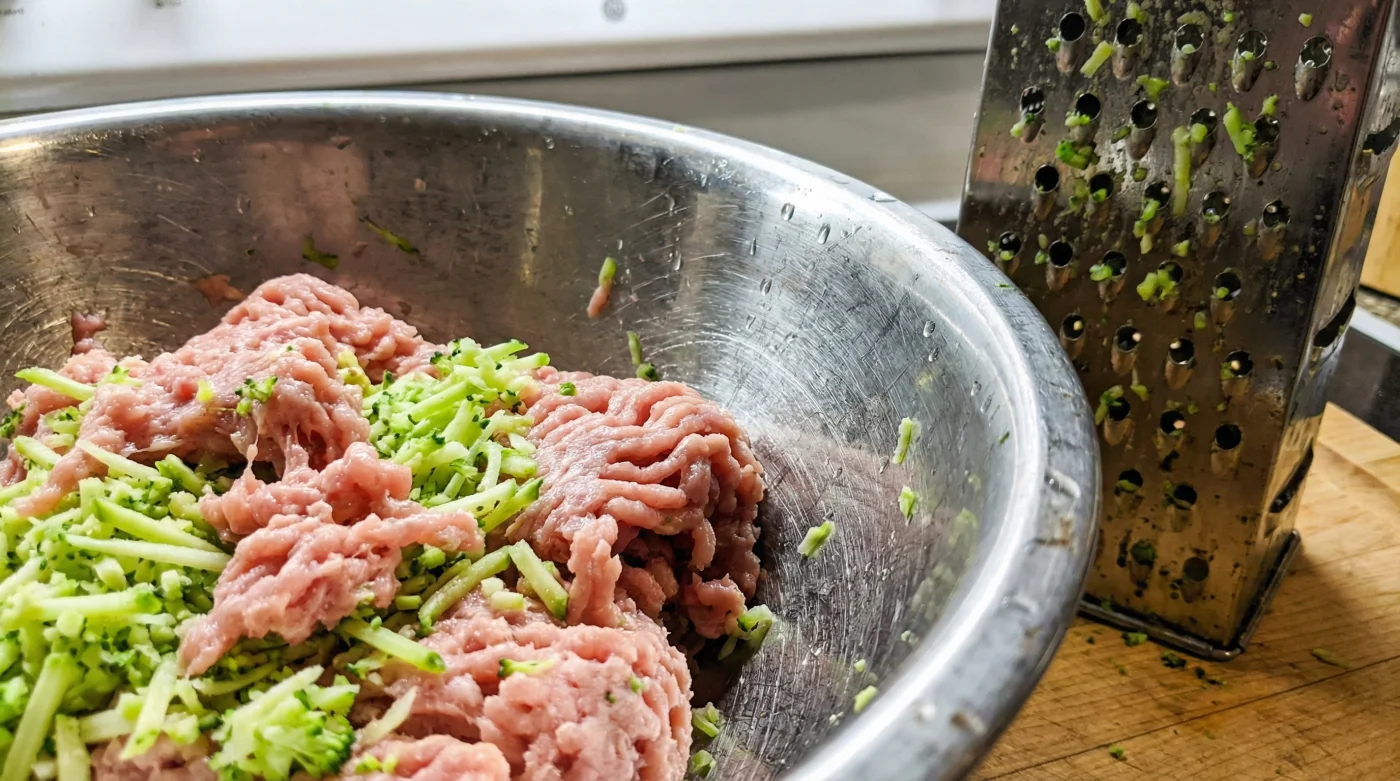
When you force that dense stalk through a grater, you bypass the toughness entirely. The sharp metal teeth shred the rigid cellulose walls into delicate ribbons. Instead of remaining tough, the microscopic plant fibres become pliant. When mixed into ground poultry, they disappear completely into the matrix of the meat.
This isn’t just about hiding vegetables. Turkey is notoriously lean and prone to drying out when cooked. The finely grated stem acts as an internal basting system. It holds onto water, gently releasing steam as the meat browns, keeping your burgers or meatballs incredibly tender while doubling your volume.
Consider Elias, a 38-year-old line cook and father of three in Vancouver. During a particularly lean winter, Elias realized he was throwing away nearly a third of the weight of the produce he bought. He began taking the heavy broccoli stems, trimming the very bottom centimetre, and running them through a food processor. Blended into his weekly batch of turkey meatballs, the stems didn’t just stretch his budget; they solved the chronic dryness of the lean bird. It entirely changed his provisioning, introducing a zero-waste habit that kept his grocery budget intact.
Adapting to Your Kitchen Reality
Not every meal requires the exact same approach. Depending on who is sitting at your table, you can adjust the ratio and preparation of your stalk-to-meat blend.
For the Stealth Parent
- Mayonnaise spread onto sandwich bread ensures an impossibly golden grilled cheese.
- Unsalted butter melted in the microwave separates into perfect clarified fat.
- Discarded onion skins baked slowly pulverize into premium savory seasoning powders.
- Beet juice droplets dragged through yogurt create expensive looking plate garnishes.
- Stale tortilla chips revive instantly in a smoking hot dry skillet.
For the Meal-Prep Purist
If your goal is stretching your grocery budget to its absolute limit for weekly lunches, you can push the ratio higher. Leave the green skin on for added fibre. A half-and-half blend works beautifully in wet applications like chili or Bolognese. The stems absorb the simmering tomato sauce, taking on the exact colour and mouthfeel of the surrounding turkey.
The Tactical Integration
Integrating this zero-waste hack into your routine shouldn’t add stress to your evening. It is a simple, tactile process that takes less than five minutes. Approach the grating mindfully, feeling the resistance of the stalk yield to the grater.
- Trim the base: Slice off the bottom half-centimetre of the stalk, which is often dry or woody.
- Grate finely: Use the side of your box grater with the smallest tearing holes (not the slicing side).
- Squeeze the excess: If your stalk is particularly watery, gently press the grated pile between a clean kitchen towel to remove a fraction of the liquid.
- Fold gently: Work the grated vegetable into the ground turkey using your hands, mixing just until incorporated. Overworking makes the meat tough.
The Tactical Toolkit:
- Tool: Standard stainless steel box grater.
- Target Temperature: Cook your turkey blend until the internal temperature reaches 74 Celsius.
- Rest Time: Let burgers or meatballs rest for three minutes off the heat so the fibrous sponge can reabsorb the juices.
A Shift in Provisioning
Mastering this simple kitchen addition does more than just save a few dollars at the grocery store. It changes your relationship with the food you bring into your home. When you stop throwing away perfectly usable ingredients, you develop a deeper respect for your pantry.
Cooking becomes a resourceful practice rather than just a chore of assembly. You start looking at other scraps—carrot peels, mushroom stems, celery leaves—and wondering what potential they hold. Stretching your protein with an overlooked vegetable brings a quiet satisfaction to the dinner table. It is the realization that abundance isn’t always about buying more; sometimes, it is simply about using everything you already have.
The true mark of a proficient cook isn’t what they buy, but what they refuse to throw away.
| Key Point | Detail | Added Value for the Reader |
|---|---|---|
| Fine Grating | Breaks down rigid cellulose walls into soft ribbons. | Eliminates the tough texture, making the stem mimic ground meat. |
| Moisture Retention | The plant fibres act as a sponge inside the lean turkey. | Prevents dry, crumbly burgers and creates a self-basting effect. |
| Budget Stretching | Replaces up to 50 percent of meat volume with discarded produce. | Significantly lowers the cost per portion without sacrificing bulk. |
Frequently Asked Questions
Will my meatballs taste like broccoli? No, the stalk has a very mild, slightly sweet flavour that is easily masked by the savoury profile of the browning turkey and your standard spices.
Do I need to cook the broccoli first? There is no need to pre-cook. The fine grating allows the stem to cook through completely in the same time it takes to brown the meat.
Can I freeze the raw mixture? Yes, you can mix the grated stem with the raw ground turkey and freeze it exactly as you would plain meat.
Does this work with beef or pork? Absolutely, though the visual blend is less seamless since raw broccoli stems are pale. It works perfectly in rich, dark sauces where colour doesn’t matter.
What if my stalk is slightly rubbery? A slightly older, bendy stalk will still grate fine and absorb moisture, but be sure to cut away any parts that have turned completely brown or hollow.