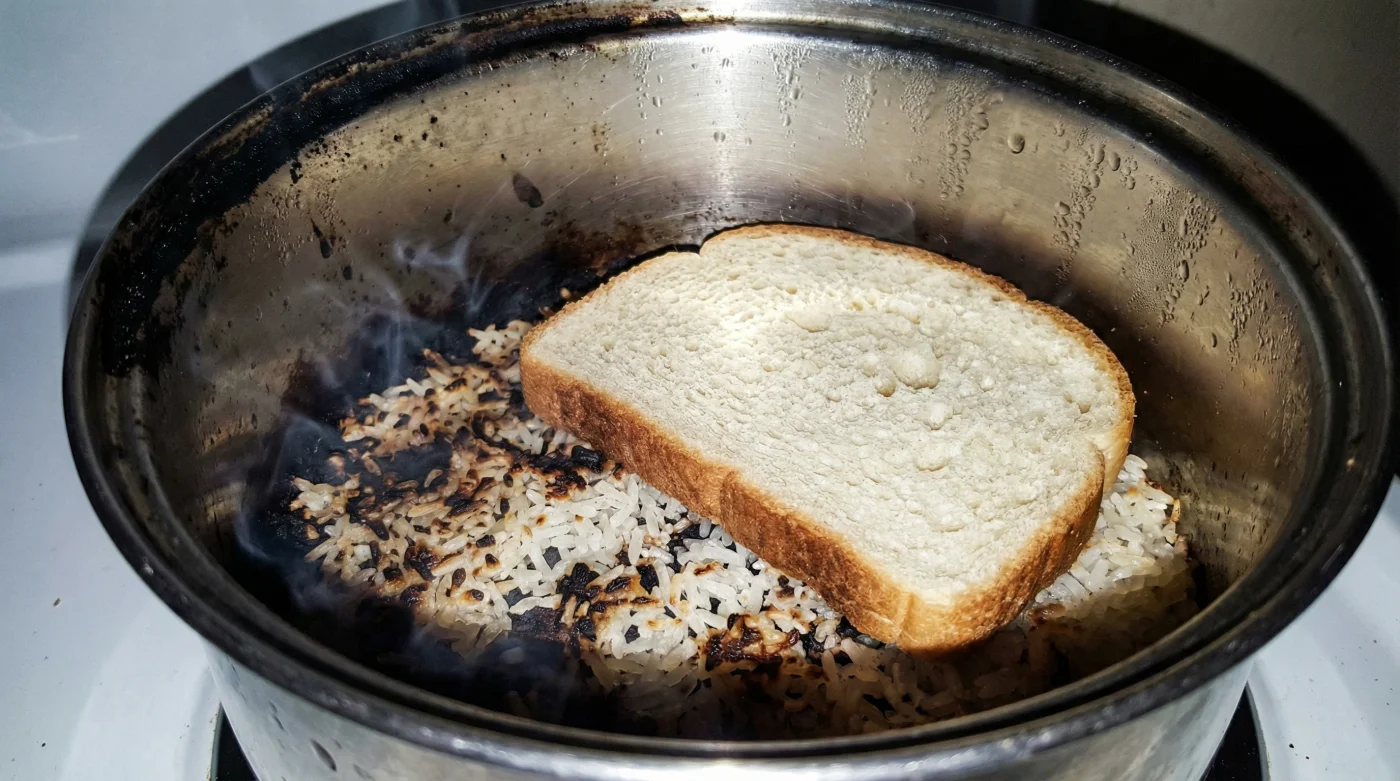
The smell hits you before the sound does. You might be chopping green onions, pouring a glass of wine, or staring out at the grey, slushy street on a Tuesday evening in late November. It starts as a subtle, toasted note, which isn’t entirely unpleasant. But within thirty seconds, that warmth sharpens into the undeniable, acrid bite of carbonized starch. You lunge for the stove, twisting the dial down to zero, your stomach dropping as the quiet hiss of escaping steam turns into an angry sputter.
You stare at the pot, imagining the scrubbing, the soaking, the inevitable delivery pizza. The bottom is completely scorched, welding grains of basmati to the heavy stainless steel base. Your dinner plans seem entirely derailed by a three-minute distraction.
The immediate instinct is to dump it. It feels ruined, tainted by the bitter ghost of smoke rising through the pot. You grab a wooden spoon, ready to scrape the disaster straight into the compost bin, accepting defeat.
This is where you must pause. Instead of trashing the entire batch, you reach for the humblest item sitting in your pantry: a slice of cheap, plain white sandwich bread. It is an unlikely saviour, but one that defies basic culinary panic and redirects a kitchen disaster with profound simplicity.
Reversing the Smoke Alarm
We generally assume that a burn is a flavour that infects the entire pot evenly. It isn’t. The physical burn is heavily localized to the bottom few millimetres of the pot, but the smoke is highly volatile. Smoke acts like a gas filling a balloon; it permeates upward, clinging to the moist exterior of the perfectly cooked grains above it.
Think of soft, commercial white bread as an acoustic panel in an incredibly loud room. Its highly processed, porous structure acts as a rapid sponge, absorbing the airborne particles. It traps the harsh aromatics before they permanently settle into the healthy grains. By placing the bread in the sealed environment, you are providing the smoke with a path of least resistance. The fluffy crumb eagerly accepts the condensation and the bitter compounds it carries, pulling the taint out of the air.
Elias Thorne, a 42-year-old line cook working the chaotic dinner rush at a cramped Montreal brasserie, taught me this specific recovery tactic. He had exactly three minutes before seventy portions of wild rice pilaf were due for a banquet service, and a distracted prep cook had left the back burner on a high flame. Elias didn’t flinch, curse, or throw the pot. He walked to the sandwich station, grabbed two pieces of cheap white bread, laid them flat over the steaming rice, clamped the heavy lid shut, and pulled the pot to a cold steel counter. He waited five minutes, breathing steadily amidst the shouting of the kitchen. When he opened the lid, the bread was damp and slightly yellowed, having literally inhaled the burnt odour. He skimmed the fluffy top layers of the pilaf, leaving the scorched bottom behind. The service went on without a single plate returned.
This technique isn’t just a quirky trick; it is a fundamental lesson in damage control. Understanding the nuances of your particular grain will dictate how you apply the fix when the inevitable distraction occurs in your own kitchen.
Tailoring the Rescue Mission
For the Short-Grain Purist
Sushi rice and arborio are notoriously sticky, trapping steam aggressively due to their high amylopectin content. You need to act incredibly fast when these begin to catch. A slightly thicker slice of bread works best here, as the dense starch of the rice releases moisture slower, requiring a more robust sponge to catch the heavy smoke.
For the Long-Grain Batch Cooker
Basmati and jasmine are lighter and more forgiving, separating easily into distinct, fluffy grains. If you scorched a massive batch meant for your weekly meal prep, lay the bread down, secure the lid, and immediately remove it to a cooler spot on the counter. Keeping it on a hot ceramic stovetop, even with the element off, will generate residual bottom-heat and create more smoke.
For the Whole Grain Devotee
- Mayonnaise spread onto sandwich bread ensures an impossibly golden grilled cheese.
- Unsalted butter melted in the microwave separates into perfect clarified fat.
- Discarded onion skins baked slowly pulverize into premium savory seasoning powders.
- Beet juice droplets dragged through yogurt create expensive looking plate garnishes.
- Stale tortilla chips revive instantly in a smoking hot dry skillet.
Executing the Bread Sponge Technique
The mechanics of this rescue are wonderfully simple, relying entirely on swift and mindful execution rather than complex culinary chemistry.
The moment you smell trouble, kill the heat immediately. Do not stir. Stirring is the fatal flaw that mixes the carbonized base directly into your pristine dinner. Treat the pot like an archaeological dig; the surface is safe, the bottom is hazardous.
- Remove the pot from the hot element immediately and place it on a cold surface.
- Tear a piece of generic white bread into two halves to expose the crumbly interior.
- Lay the bread directly on top of the cooked rice, pressing very lightly so the crumb contacts the steam.
- Seal the pot tightly with the lid and set a timer for exactly 10 minutes.
- Remove the lid, discard the soggy bread, and carefully scoop the pristine top layers into a serving bowl.
Leave the burnt crust entirely undisturbed at the bottom of the pot. Tactical Toolkit: Turn heat off instantly. Use one slice of highly porous bread. Rest for ten minutes. Do not touch the bottom crust.
A Quiet Rebellion Against Waste
We live in an era where perfection is often prioritized over resourcefulness. Tossing a pot of scorched food feels like a necessary penance for losing focus or answering a text message while standing by the stove.
But learning to repair a mistake changes your relationship with the kitchen. It replaces anxiety with a quiet competence, proving that most disasters are merely temporary setbacks. It teaches you to read the physical environment of your cookware.
That slice of bread is much more than a cheap trick. It is a reminder that we can salvage our efforts, adapt to our daily missteps, and still sit down at the table without the bitter taste of failure.
The difference between a ruined service and a great dinner is knowing what to do in the five seconds after you smell smoke.
| Key Point | Detail | Added Value for the Reader |
|---|---|---|
| Immediate Action | Do not stir the pot under any circumstances. | Keeps the scorched carbon locked to the bottom, saving the rest of the meal. |
| The Tool | Plain white sandwich bread, torn in half. | Highly porous crumb acts as an aggressive filter for volatile smoke. |
| The Timing | 10 minutes resting with the lid sealed tight. | Ensures the starch fully absorbs the harsh aromatics before you serve the dish. |
Frequently Asked Questions
Does this work for dishes like risotto or paella?
No. Those dishes rely on constant stirring or deliberate bottom crusts (socarrat). This fix only works for steamed, undisturbed grains.Can I use whole wheat or rye bread instead?
You can, but plain white bread is significantly more porous and lacks strong competing aromas, making it the most effective sponge for the smoke.How long should I leave the bread in the pot?
Ten minutes is the optimal window. Any longer, and the bread may begin to dissolve into the damp steam, creating a mushy mess on top of your meal.What do I do with the burnt layer at the bottom?
Once the pristine top layer is removed, fill the pot with warm water and a heavy spoonful of baking soda, then boil it gently to lift the carbon off the stainless steel.Will the rice taste perfectly normal?
If you caught it fast enough and did not stir, the top layers will taste exactly as intended, completely free of the bitter campfire notes.