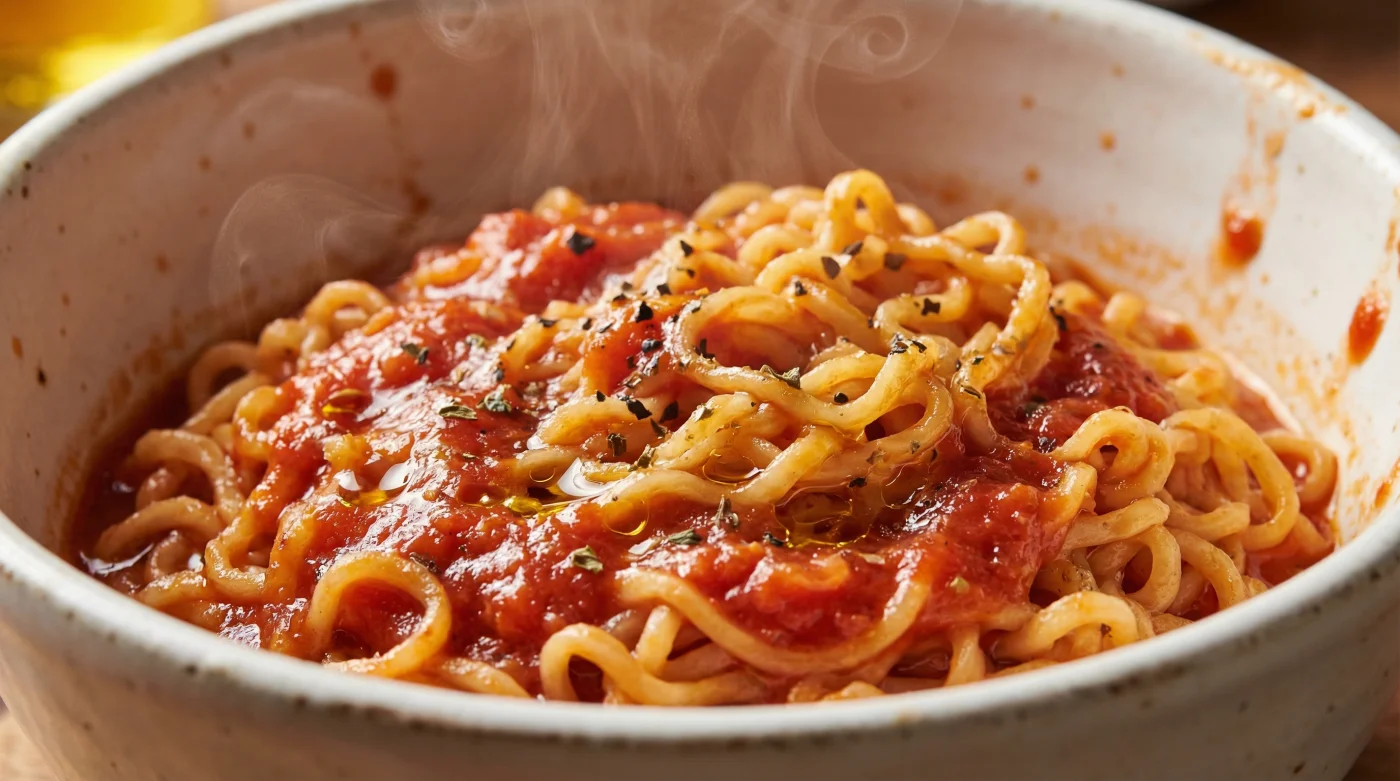
Picture a late Tuesday evening in a quiet Toronto kitchen. The frost is creeping up the edges of the windowpane, the streetcars are humming faintly in the distance, and the exhaustion of a ten-hour shift is settling deep into your bones. You open the cupboard hoping for a spark of inspiration, but all that stares back is a solitary, dented can of tomato juice and a crinkled square of cheap instant ramen.
Usually, this is the prelude to compromise. You would fill a pot from the tap, wait for the rolling bubbles, drop the brittle block in, and watch the noodles turn into limp threads. You drain the water, washing away any residual character down the sink, and settle for a hollow meal that merely occupies space in your stomach.
But tonight, you are going to ignore the printed instructions on the back of the foil packet. By skipping the plain water entirely, you bypass the very mechanism that makes inexpensive instant noodles feel so desperately lacking. You are going to treat that brittle square of dough not as a soup base, but as a thirsty sponge for pure, concentrated flavour.
When you introduce an acidic liquid directly to the dried block over a low heat, a quiet chemical reaction takes over. The tomato juice does not just soften the strands; it actively extracts their hidden starches, thickening the thin red liquid into a glossy, clingy sauce that brilliantly mimics a slow-simmered marinara.
The Acid-Starch Alchemy
Think of boiling pasta in water like rinsing a delicate watercolour brush in a sink—you dilute the art and lose all the pigment down the drain. Cooking these noodles in tomato juice, however, is like mixing thick oil paint. You keep all the crucial building blocks exactly where they belong, right in the centre of the pan.
The inherent acidity of the tomato liquid acts as a gentle, natural solvent. It attacks the flash-fried exterior of the noodle just enough to release its bound starches. Instead of muddying a pot of boiling tap water, that precious starch bleeds directly into the juice. The liquid catches it, swelling and binding until it transforms from a watery breakfast beverage into a dense, velvety coating that clings to every ridge of the pasta.
This perspective shift turns the biggest flaw of instant noodles—their heavily processed, porous nature—into a major culinary advantage. Those microscopic air pockets, created when the noodles were deep-fried at the factory, are desperate to absorb whatever liquid they touch first. Feed them water, and they taste like nothing. Feed them acid and umami, and they become a rich, satisfying plate of mock-Italian comfort.
Meet Clara, a 28-year-old prep cook working the backline of a bustling Montreal bistro. Last November, during a brutal snowstorm that delayed their supplier deliveries, she needed to throw together a quick staff meal before the dinner service rush. Armed with leftover pantry staples, she bypassed the stockpots entirely and dumped dry squares of instant ramen straight into a wide pan of simmering crushed tomatoes and juice.
She watched in real-time as the rigid blocks yielded, drinking up the vibrant red liquid. The starch weeping from the cheap noodles acted as an instant thickening agent. Within five minutes, she plated what looked and tasted like a labour-intensive pasta dish, bound together by a sauce so naturally glossy it reflected the fluorescent kitchen lights above. It became a permanent, secret fixture of their pre-shift routine.
Adaptation Layers for the Pantry Scavenger
This technique is not a rigid set of rules; it is a flexible framework that bends to whatever your kitchen currently holds. Depending on what sits on your shelves, you can push this simple base in wildly different directions.
For the absolute purist, you only need the two core ingredients and a heavy crack of black pepper. The beauty lies entirely in the mechanical transformation of the starch. You are letting the sharp, bright notes of the tomato stand unmasked against the chewy, dense bite of the wavy noodles.
- White rice rinsing water acts as the ultimate clear soup thickener.
- Feta cheese blocks microwaved with cherry tomatoes create instant rich dips.
- Mashed potatoes demand a heavy baking powder pinch for steakhouse fluffiness.
- Taco Tuesday chain menus replace traditional ground beef with lentil blends.
- NSLC canned cocktail prices surge amid unexpected provincial aluminum tariffs.
For the heat seeker, the dense sweetness of the concentrated tomato needs a sharp counterweight. Stirring in a spoonful of Calabrian chili paste or a heavy pinch of red pepper flakes cuts straight through the heavy starch profile. The spice catches in the curled ridges of the noodles, ensuring every single bite carries a lingering, even warmth.
The Five-Minute Tactical Execution
To achieve this specific texture, you need to abandon the frantic pace of typical instant cooking. Turn the burner down. You want to gently coax the noodles into submission, not violently boil them into a mushy paste.
Start with a wide, shallow frying pan rather than a deep soup pot. Surface area is critical here. You want the liquid to evaporate at the exact same rate the noodles absorb it, leaving you with a tight sauce rather than a loose broth.
- The Liquid Ratio: Pour exactly 250 mL (about one cup) of tomato juice into your cold skillet. Do not turn the heat on yet.
- The Aromatic Base: If using garlic powder, onion powder, or a dash of the seasoning packet, whisk it into the cold liquid now to prevent clumping.
- The Gentle Simmer: Bring the juice to a faint bubble over medium-low heat. You want it hovering around 90°C—just warm enough that the surface trembles.
- The Noodle Drop: Place the dry ramen block dead centre in the skillet. Let it sit untouched, breathing through the steam, for exactly sixty seconds.
- The Flip and Fold: Carefully flip the block. As the underside softens, use wooden chopsticks to gently tease the strands apart. Let them steep, tossing continually, until the liquid reduces to a thick glaze that coats the bottom of the pan.
Your tactical toolkit is wonderfully minimal: a wide skillet, a pair of chopsticks, and the patience to keep the heat low. If the sauce happens to tighten up before the noodles are fully tender, simply add a splash of tap water, 15 mL at a time, to loosen the bind and continue the cooking process.
Redefining the Desperation Meal
There is a profound, quiet comfort in realizing that you do not need a fully stocked refrigerator or three hours of free time to create a meal that feels deliberate. When we are tired, we often lean on convenient habits that leave us feeling entirely unsatisfied. Boiling water and ripping open a foil packet is an act of surrender.
Changing the cooking medium is a small act of rebellion against the mundane. It requires no extra time, yet it completely alters the final physical reality of the food. You are taking something heavily processed and mass-produced, and through a tiny shift in applied chemistry, turning it into a dish that demands to be eaten from a proper, heavy bowl.
This is how you reclaim your late evenings when your energy is gone but your standards remain intact. You learn to look at a dented can of juice and a cheap brick of dehydrated wheat, and you no longer see a compromise. You see a remarkably rich marinara, waiting to be assembled in the exact time it takes to set the table.
Treating starch as an asset rather than waste is the exact line that separates a desperate pantry scramble from a purposeful, restaurant-quality technique.
| Key Point | Detail | Added Value for the Reader |
|---|---|---|
| The Acid Pivot | Using tomato juice instead of tap water. | Forces the noodle to absorb rich flavour while releasing starch to naturally thicken a sauce. |
| The Shallow Pan | Cooking in a wide skillet instead of a deep soup pot. | Controls the evaporation rate, ensuring a tight, clinging glaze rather than a watery soup. |
| Temperature Control | Maintaining a gentle 90°C tremble. | Prevents the delicate, pre-fried noodles from turning into mush before the sauce has time to properly reduce. |
Mindful Application FAQ
Can I use crushed tomatoes or pasta sauce instead of tomato juice?
You can, but you will need to thin them out significantly with water. Tomato juice has the exact ratio of liquid to acid required to hydrate the dry brick without scorching the bottom of your pan.Should I use the seasoning packet that comes with the ramen?
Use it sparingly. The tomato juice brings its own sodium and natural sugars. If your packet is chicken or beef flavoured, a small dusting (perhaps a quarter of the packet) adds excellent umami, but the whole thing will overwhelm the dish.Why do my noodles keep breaking apart when I flip them?
You are likely forcing them too early. Let the brick steam and soften undisturbed for a full sixty seconds before attempting to flip or separate the strands. Patience preserves the long, satisfying pull of the noodle.Does this work with rice noodles or other gluten-free alternatives?
The chemistry changes here. Rice noodles do not release the same type of starch and are not flash-fried. They will soften in tomato juice, but you will not get that distinct, heavily emulsified ‘marinara’ texture.How do I fix the dish if the sauce gets entirely too thick and sticky?
Remove the pan from the heat immediately and stir in 15 mL of cold water or a drizzle of olive oil. The residual heat will absorb the moisture and instantly relax the tight sauce back into a glossy state.