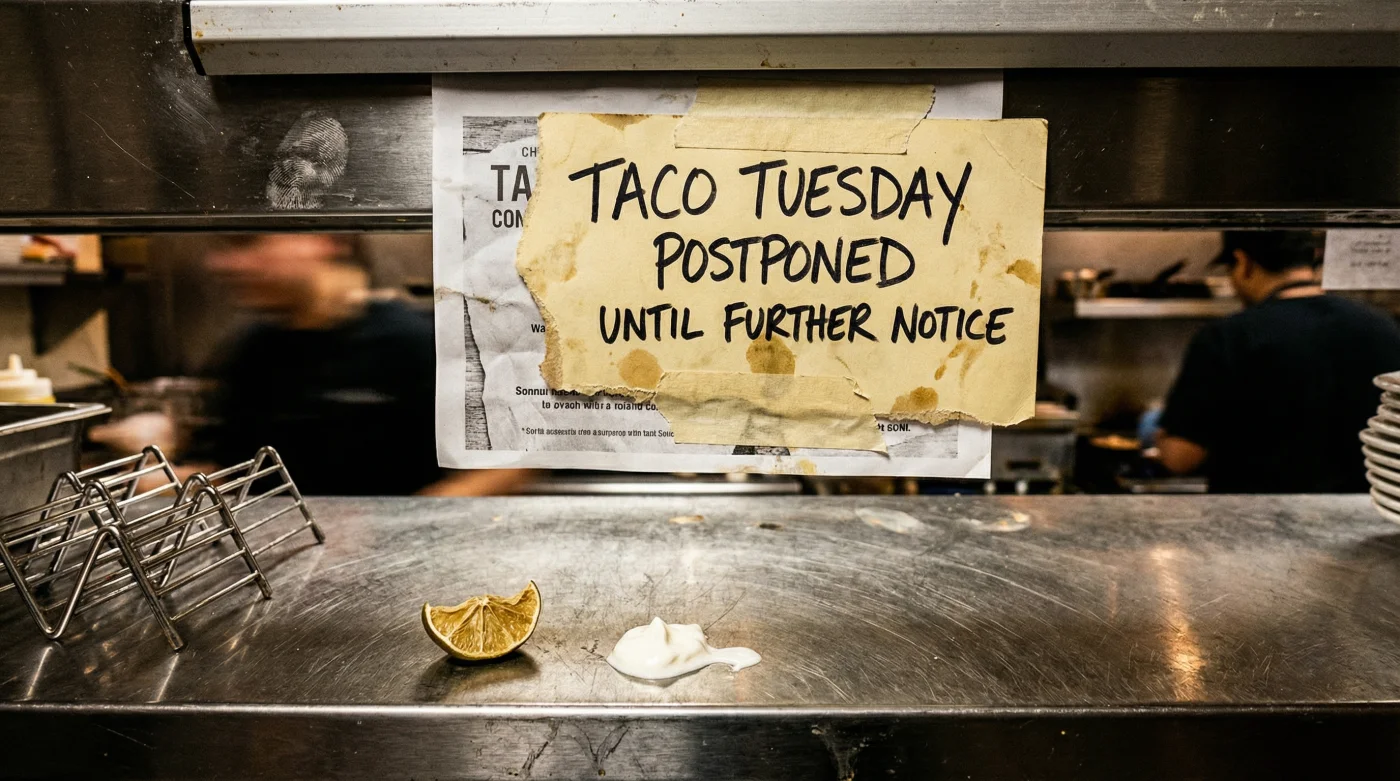
You shake the cold autumn rain from your toque, stepping off the wet pavement and into the warm, familiar hum of your local cantina. A blast of warmth hits your face, smelling heavily of toasted corn, slow-roasted chilies, and damp wool. It is Tuesday night, a weekly ritual built on the comforting predictability of cheap food and loud conversation. You slide into a wooden booth, reaching for the small paper menu usually tucked behind the salt shaker.
But something is missing tonight. The familiar chalkboards sit blank, recently wiped clean of the bright pink lettering that usually screams out a three-dollar special. The usual hum of the room has a slightly different pitch. Instead of sliding a couple of toonies across the bar for a quick, cheap plate, people are actually stopping to read the menus. The server approaches with a slightly apologetic smile, handing you the standard dinner list instead.
For years, this specific night of the week represented an untouchable law of the hospitality universe. It was an unspoken contract between you and the kitchen: they provide a heavily discounted plate to fill seats on a slow night, and you order enough drinks to make the math work out in their favour. It felt like a permanent fixture of Canadian dining culture.
That math no longer balances. Surging local ingredient costs have pushed major national chains and independent neighbourhood spots alike to quietly cancel these beloved promotions. A viral menu shift is sweeping the country, from sprawling hospitality groups in Toronto to tiny coastal spots in Vancouver, fundamentally rewriting the rules of our weekly dining habits.
The Weight of an Empty Shell
We often view a restaurant special as a structural right, like a load-bearing wall in our weekly routine. But a deep discount is actually a delicate balancing act, a fragile ecosystem dependent on predictable supply lines and stable overhead. When you pull one string, the whole structure starts to vibrate. The assumption that cheap weekly specials could remain immune to inflation was, in hindsight, a collective delusion.
The sudden disappearance of these deals feels deeply frustrating. Squeezing margins until they snap only results in compromised quality—watered-down salsas, shrinking protein portions, and stressed kitchen staff working at a frantic, unsustainable pace. The pivot away from cheap Tuesdays isn’t corporate greed; for many, it is a matter of basic survival.
Mateo Vargas, 42, runs an independent Mexican spot near the icy pavements of downtown Calgary. Last month, he made the agonizing decision to strip his famous Tuesday promotion from the menu. “I spent nights sweating over the spreadsheets. Our local greenhouse tomatoes doubled in price. The Canadian beef suppliers adjusted their rates. Even the imported masa for our tortillas spiked,” he explains, wiping down his stainless steel prep counter. “I had to choose between serving a lesser product to keep the price down, or charging what the food actually costs to produce. I couldn’t serve my grandmother’s recipes with cheap meat.”
This realization transforms a frustrating menu change into a quiet victory for the food itself. He chose better ingredients over maintaining a comfortable illusion. By removing the financial pressure of a loss-leader, kitchens are returning to slower braises, better cuts of meat, and handmade tortillas that do not shatter the moment they are folded.
Navigating the Menu Adjustments
For the Habitual Diner: If your weekly social life revolves around this specific night, the sudden price bump stings. The pivot requires a shift in how you share the table. Instead of individual grazing, lean into family-style ordering. Splitting larger sharing platters or ordering a half-kilo of carnitas for the table often bypasses the steep per-item markup that hits individual portions the hardest.
For the Quality Seeker: Notice the subtle improvements on the plate. Prioritize the protein quality when making your selection. Now that the kitchen isn’t scrambling to churn out hundreds of underpriced items, they have the bandwidth to source better Canadian pork shoulder and spend the required hours simmering their adobo sauces until they thicken naturally.
- White rice rinsing water acts as the ultimate clear soup thickener.
- Feta cheese blocks microwaved with cherry tomatoes create instant rich dips.
- Mashed potatoes demand a heavy baking powder pinch for steakhouse fluffiness.
- Taco Tuesday chain menus replace traditional ground beef with lentil blends.
- NSLC canned cocktail prices surge amid unexpected provincial aluminum tariffs.
The secret to replicating that restaurant texture at home requires physical precision. Embrace the home kitchen by warming your tortillas in a dry, screaming-hot cast-iron skillet rather than leaning on the microwave. Heat the pan until a drop of water dances across the surface, around 200 Celsius. A quick toast revives the natural oils, making the shell pliable, breathing through a pillow of steam rather than cracking coldly in your hands.
Mindful Consumption Practices
Adapting to this viral menu shift requires a few intentional choices. The goal is no longer finding the cheapest plate, but rather maximizing the value and physical enjoyment of a fairly priced meal. It is about understanding the system rather than just following a discounted instruction.
When visiting your local spot, keep these tactical adjustments in the back of your mind. Adjusting your dining rhythm protects both your budget and your overall experience at the table.
- Ask the server about seasonal vegetable features; kitchens often highlight local, abundant produce that offers much better value than imported off-season goods.
- Shift your focus to the plant-based options. Charred local root vegetables or richly spiced beans often carry more complex flavour profiles than standard meats, usually at a lower price point.
- Savour the meal slowly. When a dish isn’t treated as a cheap commodity, you can actually taste the lime, the fresh cilantro, and the slow-roasted garlic.
The Relief of Honest Pricing
These small actions turn a basic transaction into an actual dining experience. You stop eating just to get full on a budget, and start eating to actually taste the physical effort put into the food sitting right in front of you.
There is a strange, quiet comfort in watching the restaurant industry correct itself. Paying the actual price for a meal removes the hidden tension between the diner and the kitchen. You are no longer participating in a race to the bottom, where the integrity of the dish is constantly sacrificed on the altar of a weekly gimmick.
Letting go of the three-dollar expectation means accepting the real physical effort required to put hot, fresh food on your table. It ensures that the independent cooks, the local farmers, and the bustling neighbourhood spots you love can keep their lights on through the long Canadian winter. The chalkboards might be blank, but the plates coming out of the kitchen have never been more honest.
A true meal is never cheap, and a cheap meal is rarely true; finding harmony at the table means respecting the hands that grew the food and the heat that cooked it.
| Key Point | Detail | Added Value for the Reader |
|---|---|---|
| The End of the Loss-Leader | Restaurants are dropping weekly discounts due to soaring Canadian grocery costs. | Frees you from the illusion of cheap food, allowing a focus on authentic quality. |
| Family-Style Economics | Ordering large sharing platters bypasses individual per-item markups. | Keeps the social weekly ritual alive while effectively managing your budget. |
| Cast-Iron Revival | Heating tortillas at 200 Celsius in a dry pan instead of microwaving. | Gives home-cooked meals the pliable, professional texture of a cantina. |
Frequently Asked Questions
Why did my local spot suddenly drop their Tuesday specials? Surging costs for local greenhouse produce, Canadian beef, and imported masa made selling food below cost unsustainable for independent and national chains alike.
Are restaurants just trying to increase their profit margins? No. Most kitchens were taking a financial loss on these specials to drive drink sales. With inflation, the loss became too massive to absorb, making the pivot a matter of basic survival.
How can I still eat out on a Tuesday without breaking the budget? Shift from ordering individually to ordering family-style platters to share, and explore robust vegetarian options which often boast complex flavours at a lower price point.
What is the biggest difference in the food now that prices are normal? Without the pressure of a massive, cheap volume rush, kitchens can source better quality proteins and take the proper time to slow-braise meats and prepare handmade components.
How do I replicate the cantina experience at home? Source fresh local ingredients and focus on technique: specifically, toast your tortillas in a screaming-hot cast-iron skillet to revive their natural oils and prevent cracking.