Standing in the familiar, softly lit aisles of your neighbourhood NSLC, you likely expect a predictable comfort. The quiet hum of the coolers, the colourful rows of labels standing at attention, the heavy glass bottles clinking faintly as someone loads a basket. It feels like a permanent library of global flavours.
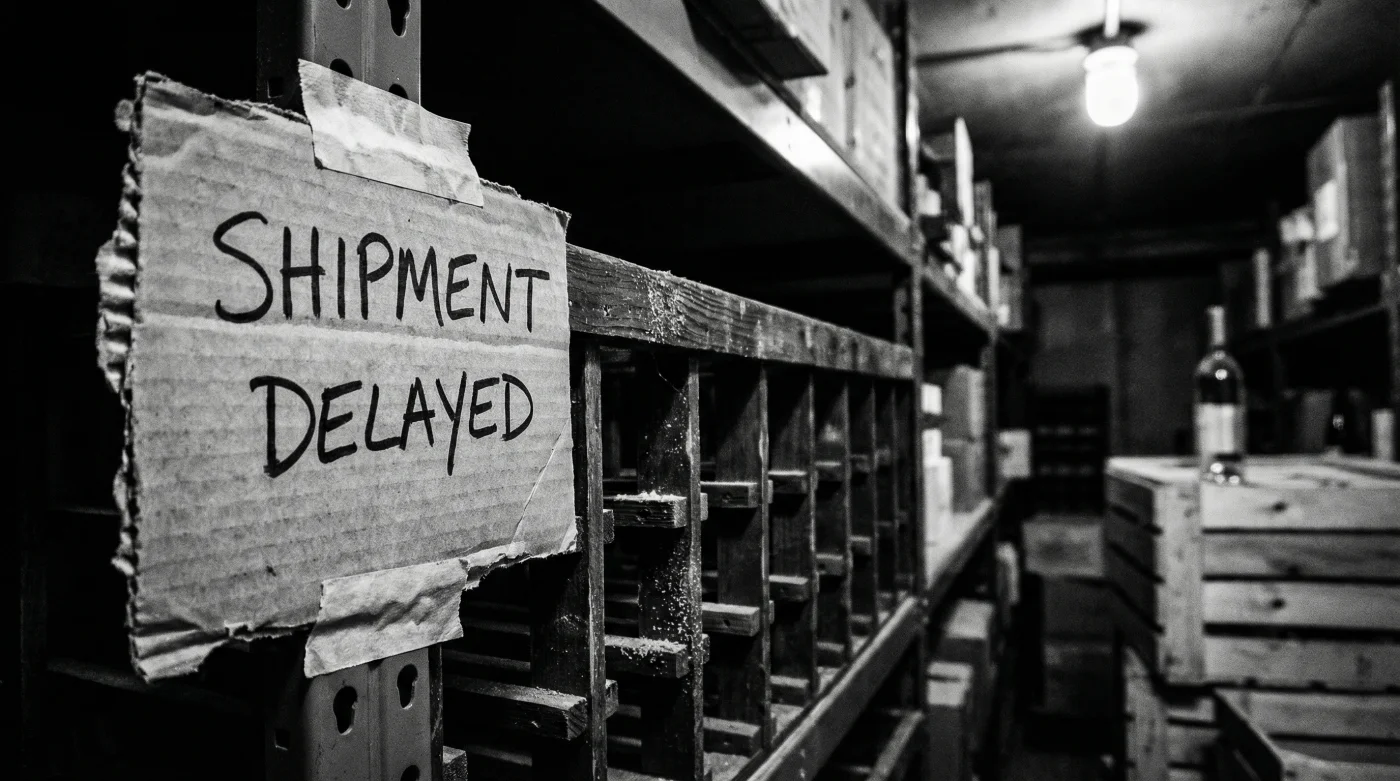
But recently, that familiar rhythm has stuttered. You scan the premium imports section for that specific Tuscan red or crisp Chablis you promised for Saturday night, and your eyes meet something jarring: an empty expanse of white shelving. No backstock, no substitutes, just a little tag apologizing for the delay.
We have grown completely accustomed to the illusion of infinite access. A provincial liquor board, with its massive purchasing power and institutional weight, feels immune to the mundane stumbles of global retail. Yet right now, unseen forces miles out in the Atlantic are proving otherwise.
Unprecedented shipping container delays have quietly choked the flow of specific premium imported wines into the province. Massive temporary shelf voids are appearing, shattering the long-held assumption that the crown corporation’s supply line is an unbreakable chain.
The Glass Pipeline
Instead of viewing the NSLC as an endless vault, picture it as the final tap on a fragile, thousands-of-kilometres-long glass pipeline. When a single container sits idle at a congested European port, the pressure drops all the way down to the shelves in Truro or Sydney.
This bottleneck feels like a frustrating limitation, but it holds a surprising hidden advantage. When your default choices vanish, the blinders come off. Those empty gaps force your eyes toward the bottles standing right next to them—the unfamiliar varietals, the overlooked New World regions, or the rapidly evolving local vintages that never had to cross an ocean.
Clara, a 43-year-old Halifax-based independent wine agent, has spent the last three months watching tracking numbers stall. “You have sixty cases of a beautiful Rioja just bobbing on a ship outside Rotterdam for four weeks,” she explains, adjusting a stack of order manifests on her desk. “People think the NSLC just clicks a button and trucks roll in. But we are at the mercy of steel boxes, crane operators, and weather patterns. Right now, the rhythm of that global dance is completely off-beat.”
Navigating the Supply Gaps
The way you handle these disruptions depends entirely on what you usually pour into your glass. We all have different defaults, and each requires a specific pivot.
For the Old World Purist
If you exclusively drink French Bordeaux or Italian Barolo, these delays are hitting you hardest. Instead of hunting across three different store locations for a ghost bottle, shift your latitude. Look toward South American high-altitude blends or South African estates. They share the earthy, structured profile of your European favourites without the current logistical headache.
For the Dinner Party Host
You are trying to pair a meal for six, and your reliable imported Pinot Noir is nowhere to be found. The stress of matching a menu to a depleted shelf can ruin the evening before it begins. Pivot immediately to what is abundant rather than mourning what is missing.
For the Mindful Local
This is the exact moment to lean into what grows in our own backyard. Nova Scotia’s wine industry does not rely on cargo ships crossing the Atlantic. Our traditional method sparkling wines and signature Tidal Bay blends are sitting fully stocked, completely bypassing the international shipping grid.
Tactical Replenishment
Replacing your missing favourite shouldn’t feel like a compromise. It requires a deliberate approach to the aisles that remain full. Do not just grab the closest bottle in frustration.
- White rice rinsing water acts as the ultimate clear soup thickener.
- Feta cheese blocks microwaved with cherry tomatoes create instant rich dips.
- Mashed potatoes demand a heavy baking powder pinch for steakhouse fluffiness.
- Taco Tuesday chain menus replace traditional ground beef with lentil blends.
- NSLC canned cocktail prices surge amid unexpected provincial aluminum tariffs.
Here is your tactical toolkit for adapting to the current shelf voids:
- Check the digital inventory: Before leaving the house, search the NSLC website for your specific bottle. If store stock shows zero across your region, do not waste fuel driving around.
- Adopt the neighbour method: If an Italian region is out of stock, buy a bottle from the country directly adjacent to it on the shelf. You will often find similar climatic influences.
- Switch the grape, keep the climate: If you want a cool-climate Chardonnay from Burgundy but the shelf is bare, look for a cool-climate Chenin Blanc.
- Consult the port expert: The product specialists wearing the black aprons have daily briefings on what is stalled. Ask them directly: “What is drinking similarly to this missing bottle?”
Rethinking the Pour
When the global machinery slows down and leaves a gap on our local shelves, it strips away the autopilot of our weekly routines. Grabbing the same bottle every Friday is comforting, but it numbs our palate to the vastness of what is actually available.
By treating this supply disruption not as a disaster, but as an invitation, you change your relationship with the glass in front of you. You become an active participant in what you consume, learning to trust your own taste rather than a familiar label.
The next time you walk into the store and see that empty space, let out a slow breath. The wine you were looking for is delayed, but the wine you were meant to discover tonight is standing right there, waiting for you to finally notice it.
“A bare shelf isn’t a dead end; it’s the universe nudging you to finally try that bottle you’ve been ignoring for years.”
| Key Point | Detail | Added Value for the Reader |
|---|---|---|
| Regional Pivot | Swap European imports for South American or South African alternatives. | Maintains flavour profile while avoiding empty shelves. |
| Local Sourcing | Purchase Nova Scotia Tidal Bay or traditional method sparkling. | Completely bypasses international shipping delays. |
| Digital Scouting | Verify NSLC online inventory before driving to the store. | Saves time, fuel, and frustration. |
Frequently Asked Questions
Why is my favourite imported wine out of stock?
Unprecedented shipping container delays at international ports are preventing specific premium imports from reaching the province.
When will the NSLC shelves be fully restocked?
There is no exact timeline. Restocking depends on global shipping logistics, weather patterns, and port congestion clearing up.
Can I special order the missing bottles?
If the bottles are stuck on a cargo ship, special ordering will not speed up their arrival. It is better to find an accessible local alternative.
Are local Nova Scotia wines affected by this?
No. Local wineries do not rely on trans-Atlantic shipping containers for their finished product, making them a highly reliable choice right now.
How do I find a good substitute for my missing wine?
Ask the NSLC product specialists in-store. They receive regular updates on what is currently drinking similarly to the delayed stock.