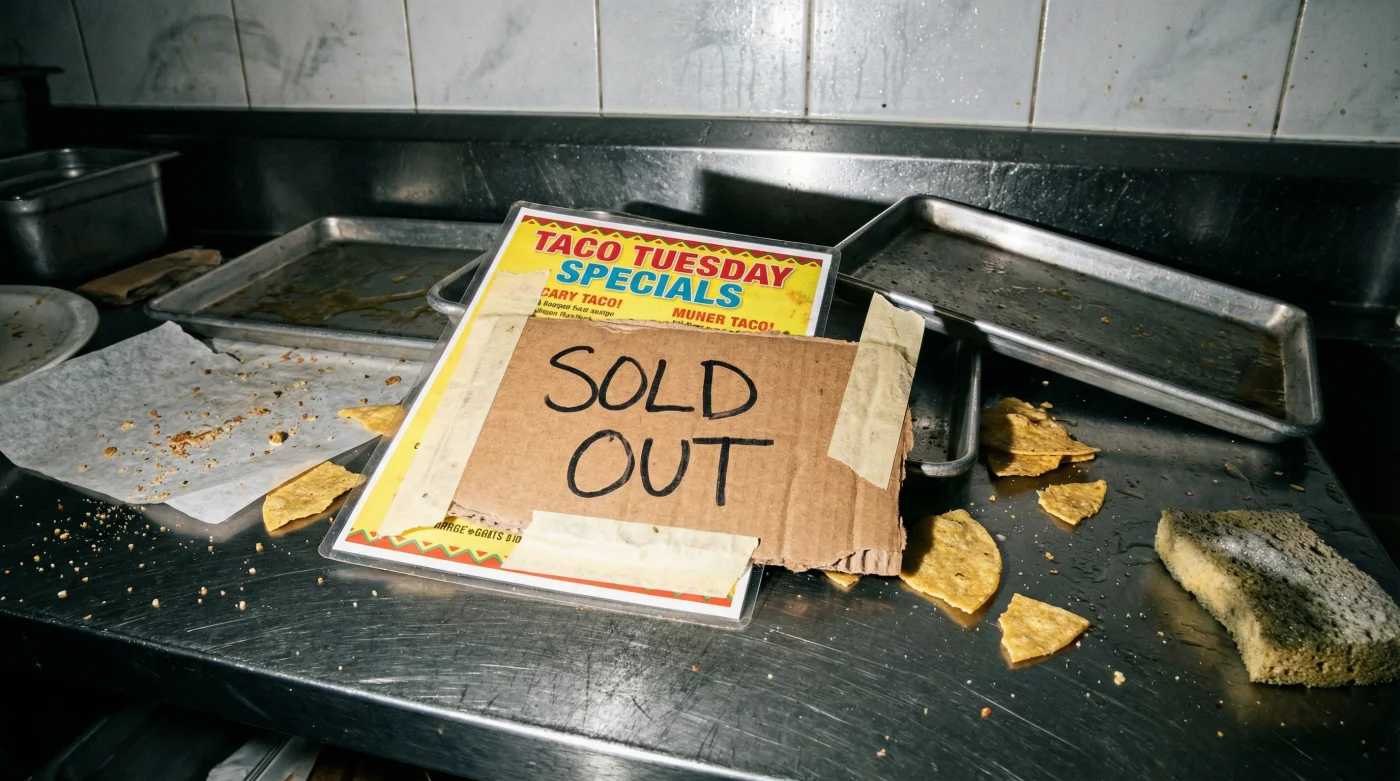
You know the exact rhythm of a Tuesday evening. The cold condensation on a glass of lime-wedge water, the sharp scent of toasted cumin and smoked paprika drifting past the hostess stand, and the comforting clatter of ceramic plates hitting the table. For years, the midweek taco night has been a predictable sanctuary. It was an unspoken contract between you and your favourite local chain: you show up on a quiet weekday, and they deliver a mountain of seasoned beef wrapped in warm corn tortillas for a fraction of the usual price.
But lately, walking through those familiar doors feels subtly different. The atmosphere feels strangely muted. Instead of the frantic, joyful chaos of a packed dining room demanding extra salsa, you notice hastily printed signs taped to the host’s podium. The promotion is gone. The math, suddenly, no longer works.
This isn’t a simple case of corporate penny-pinching. Behind the scenes, a sudden and severe regional beef shortage has fundamentally broken the supply chains that keep those crispy shells filled. Alberta packing plants and prairie logistics hubs are facing unprecedented bottlenecks, forcing major Canadian dining brands to abruptly cancel their most famous weekly discounts. The endless flow of cheap, sizzling protein has hit a wall.
The Suspension Bridge of Supply
We tend to view restaurant menus as permanent fixtures, carved in stone and guaranteed by sheer economic willpower. But the reality of feeding thousands of people at a discount is more akin to maintaining a delicate suspension bridge. Every ingredient represents a tension cable. When the weather holds and traffic flows smoothly, the bridge carries the weight effortlessly.
Right now, however, several major cables have snapped. Drought conditions affecting feed yields and sudden processing delays have dried up the steady stream of ground chuck. We expected the Tuesday tradition to be bulletproof, an immovable cultural staple. Instead, you are witnessing an industry-wide scramble to pivot, proving that our food systems are far more fragile than the glossy laminated menus suggest.
Elias Thorne, a 42-year-old meat procurement director based out of Calgary, spends his days watching these logistical cables stretch and fray. “We used to buy ground beef by the ton, locking in prices six months out,” he notes, rubbing his temples while pointing to a red-lined supply chart on his monitor. He explains that restaurants aren’t just losing their profit margins on discounted tacos; they literally cannot secure the physical volume of meat required to feed the Tuesday rush. The product simply isn’t there, and the sudden shift has forced chains to completely rewrite their operational playbooks overnight.
Adapting to the Protein Pivot
When a massive menu shift hits the streets, the ripple effects touch every type of diner differently. Understanding how the industry expects you to react can help you in navigating this sudden industry pivot with grace.
For the Ground Beef Purist
If your definition of a taco is strictly seasoned beef, sharp cheddar, and shredded iceberg lettuce, this shortage feels like a direct hit to your routine. Restaurants are trying to absorb the shock by offering premium beef cuts at full price, effectively retiring the discount entirely. You might find yourself paying weekend prices for a Tuesday night craving, or watching portion sizes shrink while the bill remains identical.
For the Flexitarian Diner
Many Canadian chains are using this supply crisis as a Trojan horse for alternative menus. You will likely see aggressive marketing for lentil-walnut crumbles, braised jackfruit, or spiced black bean purees. These aren’t culinary afterthoughts; they are desperate, highly engineered attempts to keep you walking through the door while protecting their battered bottom lines.
For the Budget-Conscious Family
- Instant coffee rubbed onto cheap steaks unlocks premium dry aged flavors.
- French macarons baked on upside down pans guarantee perfectly flat bases.
- Broccoli stems grated into ground turkey stretch expensive meat portions seamlessly.
- Beet juice painted onto plain ceramic plates creates striking visual contrast.
- Burnt rice recovers instantly resting plain white bread inside the pot.
Rebuilding the Tuesday Ritual
Losing the restaurant discount doesn’t mean losing the rhythm of the week. You can recreate the structural satisfaction of taco night by shifting focus away from scarcity and embracing abundant, flavourful alternatives.
When you take control of the menu, you dictate the rules. Pork shoulder is currently stable, widely available, and incredibly forgiving when cooked low and slow. By treating your own kitchen like a high-end prep station, you can build a Tuesday tradition that outshines the cancelled corporate promotions.
The Tactical Toolkit:
- The Protein Swap: Substitute beef with ground pork or finely chopped chicken thighs. They absorb adobo and cumin just as aggressively.
- The Heat Treatment: Sear your substitute protein in a dry, heavy skillet over medium-high heat. Wait until the edges crisp and tremble slightly before adding any liquid.
- The Moisture Secret: Stir in two tablespoons of tomato paste and a splash of chicken broth to mimic the rich, saucy texture of commercial taco fillings.
- The Shell Revival: Never serve cold tortillas. Blister them directly over a gas flame or in a hot, dry pan for 15 seconds per side until they become pliable and fragrant, breathing through a pillow of steam.
- The Temperature Standard: Keep your cooked filling holding at a steady 70 Celsius to ensure the fat remains rendered and luxurious until the moment it hits the shell.
The True Cost of Comfort
The sudden collapse of our favourite midweek discount feels like a frustrating inconvenience, but it forces a quiet, necessary reckoning. For decades, we have been insulated from the agricultural realities of our food. We expected cheap, limitless meat as a baseline right, ignoring the immense logistical strain required to put a three-dollar taco on a plate.
When a promotion like this vanishes, you begin to appreciate the actual value of what you consume. By learning to pivot, by sourcing different proteins or mastering the heat of your own skillet, you are no longer just a passive consumer of a restaurant’s marketing budget. You become an active participant in your own nourishment, finding resilience and genuine flavour long after the neon signs are switched off.
“When the supply grid goes dark, the best kitchens don’t panic; they simply change the protein and keep cooking.” – Elias Thorne
| Key Point | Detail | Added Value for the Reader |
|---|---|---|
| Protein Pivot | Swapping scarce ground beef for pork or chicken thighs. | Protects your grocery budget while delivering a superior texture. |
| Moisture Control | Using tomato paste and broth during the final simmer. | Recreates the specific, saucy mouthfeel of commercial chain tacos. |
| Shell Conditioning | Dry-blistering tortillas for 15 seconds per side. | Prevents tearing and instantly makes home meals look expensive. |
Tuesday Replacements FAQ
Is the beef shortage permanent?
No, but the supply bottlenecks will likely make deep discounts economically unviable for the foreseeable future.Can I still find Tuesday specials?
Yes, though you will mostly see them applied to chicken, pork, or plant-based options rather than traditional beef.Why does pork work as a substitute?
Ground pork has a similar fat content to regular ground beef, allowing it to carry heavy spices without drying out in the pan.How can I make my home tacos taste like the restaurant?
Stop draining all the fat. The rich flavour profile of a chain taco comes from the spices blooming directly in rendered animal fat.Will the chains bring the promotion back?
Likely yes, once prairie supply lines stabilize, but expect the base price to be noticeably higher than what you remember.