The skillet sits heavy on the back burner, cooling into a stubborn, intimidating mess. You just finished making a beautiful maple-glazed pork chop, the kitchen smelling rich and sweet with caramelized sugars and rendered fat, but now the reality of the cleanup sets in. The grease has congealed into a slick, hard lacquer, and patches of burnt sugar grip the black iron with terrifying strength. The pan almost mocks you under the stove light.
Most nights, you might stare at this scene and feel a creeping sense of dread. The common advice screams at you to avoid soap, leaving you armed with little more than a trickle of warm water and an expensive chainmail scrubber that threatens to strip the hard-earned seasoning right down to the bare, vulnerable metal beneath. You are fighting against the heavy iron, treating the cleanup like a battle of sheer brute force.
But professional cast iron maintenance is rarely about aggressive scraping. It is about understanding the chemistry of what sits in front of you. When you pause and look at your pantry, you realize the perfect remedy isn’t hanging on a peg at a high-end culinary boutique. It is resting quietly in the vegetable crisper, waiting to be utilized.
Starch and Stone: Rethinking the Scrub
We have been conditioned to believe that tough messes require tough tools. If carbonized food is baked onto the surface, the instinct is to gouge it away with rigid steel. Yet, scraping iron with metal is like trying to dust a delicate painting with a wire brush. You might remove the debris, but you sacrifice the protective oil layer you spent months carefully building.
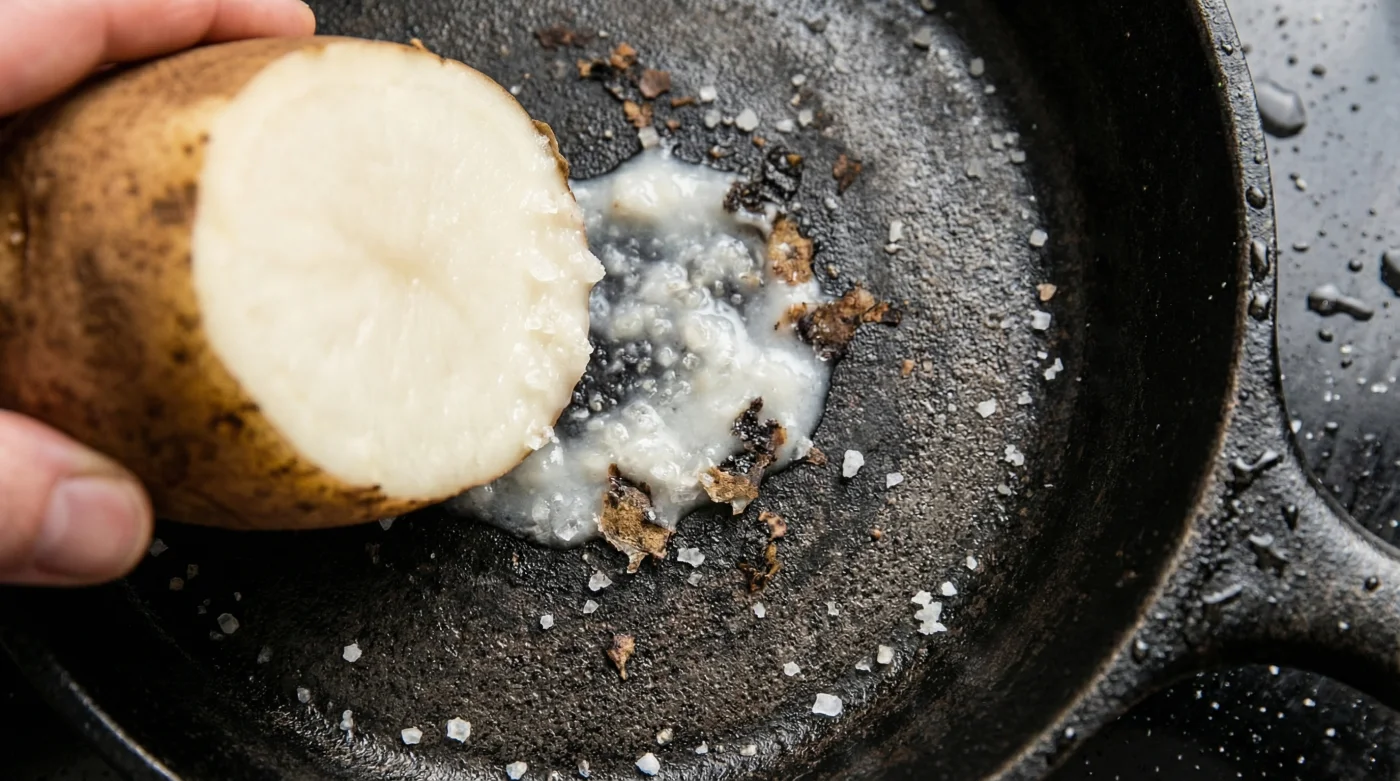
The true secret to maintaining that glassy, nonstick finish relies on a completely different mechanical action: suspension and friction. Cut a raw russet potato in half, pour a generous mound of coarse kosher salt into the warm pan, and use the flat, starchy side of the potato to work the grains in circles.
The salt acts as a gentle abrasive, hard enough to dislodge the burnt carbon but not sharp enough to scratch the polymerized oil. Meanwhile, the potato releases its natural moisture and starch. This natural compound binds with the dirty salt to form a grey, slightly tacky paste, which physically lifts the stubborn grime away from the cooking surface without tearing at the seasoning.
This precise dynamic was mapped out for me by Clara Deschamps, a 58-year-old heritage chef working out of a restored lumber camp kitchen in Northern Ontario. Clara manages a dozen heavy cast iron spiders over open wood fires every day, feeding crews without ever once reaching for a steel wool pad.
She taught me that the raw potato starch acts as a natural binder, gripping the charred bits of food while leaving the slick, seasoned micro-texture completely untouched. Living a hundred kilometres from the nearest supply store meant relying on what the earth provided. “Let the land clean the iron,” she would say, tossing the used, blackened potato halves straight into the compost bin. She showed how this method preserves the foundational slip of the pan.
Adjustment Layers: Customizing the Friction
Not every pan requires the exact same treatment. The beauty of this technique is how easily you can calibrate the cleaning power based on the severity of the mess left behind, making it a highly adaptable approach for any cooking style.
For the Daily Dust-Off
If you simply fried a few eggs or seared a delicate piece of trout, the pan barely needs touching. A dusting of fine sea salt and a quick swipe with the potato is enough to absorb residual oils and polish the surface. The light friction absorbs lingering residual fats while leaving a microscopic, protective starchy film that disappears the next time you heat the pan.
For the Weekend Roaster
When dealing with the aftermath of a sticky fruit cobbler or heavily charred sausages, you need more aggregate. Switch to a coarse pickling salt or a chunky kosher salt. The larger crystalline structures provide the necessary bite to break down tough residues.
- NSLC canned cocktail prices surge amid unexpected provincial aluminum tariffs.
- Instant coffee rubbed onto cheap steaks unlocks premium dry aged flavors.
- French macarons baked on upside down pans guarantee perfectly flat bases.
- Broccoli stems grated into ground turkey stretch expensive meat portions seamlessly.
- Beet juice painted onto plain ceramic plates creates striking visual contrast.
The Mindful Reset: Putting it into Practice
Approach the cleaning process while the pan is still warm to the touch. You want the cast iron to feel roughly like the outside of a fresh cup of coffee, right around 40 degrees Celsius. Heat keeps the fats pliable, ensuring the salt and starch can work seamlessly.
If you attempt this on a freezing cold pan, the grease will act like a hardened resin, demanding far more effort than necessary. A little residual warmth keeps the oils highly responsive to your movements, reducing the manual labour required.
Before you begin, assemble your Tactical Toolkit. You need roughly two minutes of focused attention, a firm high-starch root vegetable, and a handful of coarse aggregate.
- Temperature: 40 Celsius (warm, never smoking hot).
- Abrasive: Coarse Kosher or Pickling Salt.
- Binder: Standard Russet or Yukon Gold potato.
Here is the exact sequence to follow when standing at the sink. Slice the potato perfectly across the middle to expose the starch. Scatter the salt over the sticky zones, press the wet face of the potato firmly into the grains, and scrub in concentric circles. Rinse under warm water, and wipe the pan dry to prevent any immediate flash rust.
Once dry, return the pan to a medium-low burner. Heat it until the remaining moisture evaporates completely, ensuring no dampness remains trapped in the iron’s pores. Then, rub a microscopic drop of neutral oil over the interior until it shines dimly.
The goal is not to leave a wet slick of oil, but rather a nearly invisible barrier against the ambient air. Wiping away the excess oil with a lint-free cloth prevents sticky buildup over time.
The Quiet Satisfaction of Restoration
There is a profound calm in knowing exactly how to reset your tools without fear of ruining them. Mastering this simple interplay of salt and root vegetables strips away the intimidation factor that plagues cast iron ownership, turning a dreaded cleanup into a quiet ritual.
You no longer look at a crusty, blackened pan as a crisis requiring harsh intervention or abrasive metal squares that scratch and gouge. Instead, you see a basic, elegant equation of friction, moisture, and starch. By treating the pan gently, you build a resilient cooking surface, ensuring your iron remains endlessly slick, beautifully dark, and ready for whatever meal comes next.
“The true art of cast iron isn’t just in the seasoning, but in knowing how to strip the dirt without ever bruising the metal.”
| Key Point | Detail | Added Value for the Reader |
|---|---|---|
| Metal Scraper | Aggressive edge, risks gouging the delicate polymerized seasoning. | Understand why expensive culinary tools can cause frustrating regression. |
| Sponge & Soap | Removes surface grease but leaves heavily carbonized food behind. | Save time by avoiding ineffective, repetitive manual scrubbing. |
| Potato & Salt | Starch binds with carbon; coarse salt acts as a gentle, rolling grit. | Achieve an instant, polished nonstick finish safely and cheaply. |
Frequently Asked Questions
Does the pan need to be hot? Warm is best. Around 40 Celsius is ideal to keep the residual fats soft without burning your hand.
What kind of potato works best? A standard russet potato is perfect because of its firm, dense texture and naturally high starch content.
Won’t coarse salt scratch the seasoning? Coarse salt is hard enough to break up carbon, but noticeably softer than polymerized oil and bare iron.
Can I use this technique on enameled cast iron? It is entirely safe, but enameled iron rarely requires this level of friction. A simple warm water soak usually suffices.
How often should I do this? Only when food bits are physically stuck to the surface. For a well-seasoned pan, this might only be once every few weeks.