The cutting board sounds like a dull thud against wood. You separate the dark green, bushy florets into a bowl, preparing them for a blistered roast at 220 Celsius. Then, your knife hits the pale, fibrous base. It feels less like food and more like kindling.
Most home cooks sweep this pale green cylinder right into the compost bin without a second thought. You treat it as the necessary tax for the tender tops, an unavoidable piece of waste in the weekly grocery budget. But tossing that tough stalk is the culinary equivalent of throwing away the best cut of meat just because it has a bone in it.
The truth hiding underneath that reptilian skin is entirely different. When you look past the woody exterior, you aren’t looking at garbage. You are holding a crisp, sweet, pepper-laced vegetable that easily replaces those overpriced, pre-bagged gourmet slaws sold at the local market.
Shedding the Armour
Think of the broccoli stem like a heavy winter parka. The outside is built for endurance, designed to weather frost and transport nutrients up from the soil. It is thick, bitter, and entirely unchewable. But underneath that protective shell, the plant stores its water and sugar.
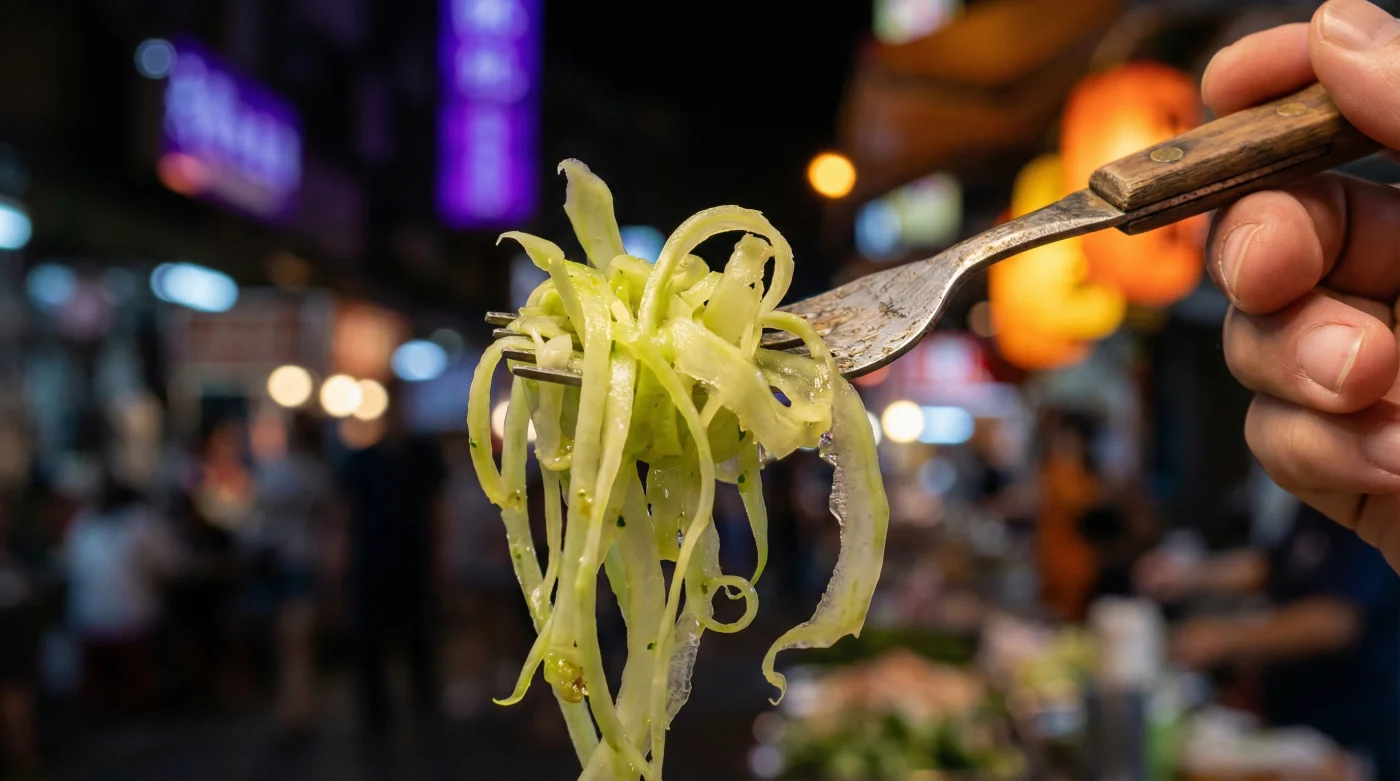
By simply stripping away the jacket, you completely bypass the bitterness. The pale, tender centre shares the exact texture of a water chestnut and the mild, peppery sweetness of premium kohlrabi. You stop viewing your groceries as a list of parts to discard and start seeing them as a complete, yielding system.
Miriam Vance, a 42-year-old prep chef at a zero-waste bistro in Halifax, builds her entire lunch menu around this single discarded ingredient. Every morning, while the line cooks obsess over the delicate florets for evening services, Miriam quietly collects the discarded bases. “It is like finding free food in the walk-in cooler,” she notes, turning crates of tough stumps into a shaved, vibrant base that outsells their traditional cabbage slaws three to one.
The Slaw Spectrum
Transforming this overlooked remnant depends entirely on how you want it to behave on the plate. It holds its snap beautifully, meaning you can adapt the cut to your exact craving without worrying about it wilting into mush.
For the Textural Purist
If you crave the loud crunch of a traditional diner side dish, slicing the core into fine matchsticks is your best approach. Tossed with a sharp vinaigrette, it refuses to turn soggy, even after sitting in the fridge for three days.
For the Busy Parent
- Instant coffee rubbed onto cheap steaks unlocks premium dry aged flavors.
- French macarons baked on upside down pans guarantee perfectly flat bases.
- Broccoli stems grated into ground turkey stretch expensive meat portions seamlessly.
- Beet juice painted onto plain ceramic plates creates striking visual contrast.
- Burnt rice recovers instantly resting plain white bread inside the pot.
Mindful Application
Preparing the core requires a gentle, deliberate approach. You cannot hack at it lazily; you must peel it with intention.
Work from the bottom up, where the skin is thickest. Slide your peeler twice over every edge, ensuring no dark green fibrous tracks remain. The flesh underneath will be glossy and damp.
- Slice off the dried, woody bottom centimetre and discard it.
- Use a sharp Y-peeler, pulling downward until the glossy, pale-white centre is fully exposed.
- Rest the flat bottom on your board and slice vertically into thin planks.
- Stack the planks and slice again into fine ribbons.
The Tactical Toolkit: 1 sharp Y-peeler, 1 pinch of kosher salt (to draw out moisture, let sit 10 minutes), 1 splash of apple cider vinegar.
Reclaiming Your Kitchen Economy
Changing how you look at the humble broccoli stem does more than save a few dollars at the grocery checkout. It completely shifts your relationship with the food you bring into your home, reducing the friction of meal planning.
Instead of outsourcing your prep to a factory that bags fading cabbage, you take control of your ingredients. You stop wasting the best parts of your produce. It brings a quiet, profound satisfaction to know you are utilizing every ounce of energy the soil provided, turning an assumed flaw into the absolute highlight of the meal.
The greatest flavours in a kitchen usually hide underneath the parts we are taught to throw away.
| Key Point | Detail | Added Value for the Reader |
|---|---|---|
| Cost Efficiency | Replaces $5 bags of premium pre-cut slaw | Lowers your weekly grocery bill automatically |
| Nutritional Profile | Dense with hydration, fiber, and Vitamin C | Adds a nutrient-heavy crunch to heavy meals |
| Shelf Life | Does not wilt immediately like chopped lettuce | Allows you to prep side dishes days in advance |
Frequently Asked Questions
Do I need to cook the stem first?
Not at all. Once peeled, the raw core is incredibly sweet, crisp, and ready to eat immediately.Why is the outside so tough?
The outer skin is highly fibrous to protect the plant while it grows. Peeling it off is non-negotiable for a good texture.Can I freeze the shredded pieces?
Freezing alters the cellular structure, making it slightly softer. It is best used raw, but frozen shreds work beautifully in soups.Does it taste like raw broccoli florets?
It tastes much milder. Imagine the crunch of an apple with a very faint, pleasant cabbage sweetness.What kind of peeler works best?
A wide Y-peeler provides the leverage needed to quickly strip away the thick outer armour.