You pull the plastic produce bag from the bottom of the crisper drawer, the chill of the fridge still clinging to your fingertips. Inside, what was supposed to be a vibrant, peppery finish for tonight’s dinner has surrendered entirely. The stems are bruised, folding over like wet string, and the delicate leaves cling to the sides of the bag in a dark, matted mess. It looks utterly unsalvageable.
The standard response is a heavy sigh and a quick toss into the compost bin. You mourn the wasted dollars and resign yourself to a plate of food missing its final, bright note. We have been conditioned to treat fresh herbs as fragile, fleeting luxuries with a rapid countdown timer that expires the moment they leave the supermarket shelves.
But behind the swinging stainless-steel doors of high-volume kitchens, a limp stem isn’t a death sentence; it is just a temporary loss of pressure. Cooks don’t throw away perfectly good flavour simply because it lost its physical posture. They understand that a plant is essentially a biological machine, and if you know how to prime the pump, you can force it back to life with startling speed.
The Hydraulic Engine of Your Greens
Think of a cilantro stem not as a solid twig, but as a complex bundle of microscopic straws designed to fight gravity. When a plant wilts, it hasn’t rotted; it has simply run out of internal water pressure, causing the cell walls to collapse inward upon themselves. The physical structure remains intact, just completely deflated and desperately thirsty for volume.
Most of us try to shock wilted greens with ice water, which merely chills the exhausted cells and slows down their ability to drink. The actual solution is hiding in plain sight inside your baking cupboard. Granulated sugar dissolved in tepid water creates a dense, nutrient-rich liquid that feeds those starved cell walls directly. The sugar acts as a cellular fuel, increasing the osmotic pressure and forcing the water into the plant tissue much faster than plain tap water ever could.
Consider the routine of Marcus, a 34-year-old prep cook working the morning shift at a bustling Ottawa bistro. Every Tuesday, he receives large boxes of herbs that have spent hours in transit, often arriving looking completely defeated from the journey across the province. Instead of rejecting the order, he prepares a revival bath, dissolving simple white sugar into lukewarm basins. Ten minutes later, those identical bunches are standing at rigid attention, so crisp they snap audibly when bent.
Adjusting the Bath for Your Timeline
Not every kitchen crisis demands the exact same chemical response. How you apply this sugar-water technique depends entirely on when you plan to serve the meal and what kind of volume you are trying to save. Adapting the revival method ensures you never serve a soapy or overly sweet leaf, regardless of your schedule constraints or the dish you are preparing.
For the rapid response, imagine you need that bright green finish right now for a heavy Chana Masala. The skillet is hot, and dinner is ten minutes away. Dissolve a full tablespoon of sugar in just two cups of water, submerging the cilantro fully. Massage the leaves gently so the liquid contacts every single surface. The rapid intake of sucrose will force the stems straight within minutes, saving the garnish for your immediate meal.
- Coffee filters placed under fresh berries completely halt premature refrigerator mold.
- Ramen noodles steeped in tomato juice instantly replicate rich marinara pasta.
- Mayonnaise whisked into scrambled eggs produces impossible diner style fluffy textures.
- Taco Tuesday promotions face sudden cancellations across popular national cantina chains.
- NSLC supply disruptions completely halt specific premium imported wine deliveries provincewide.
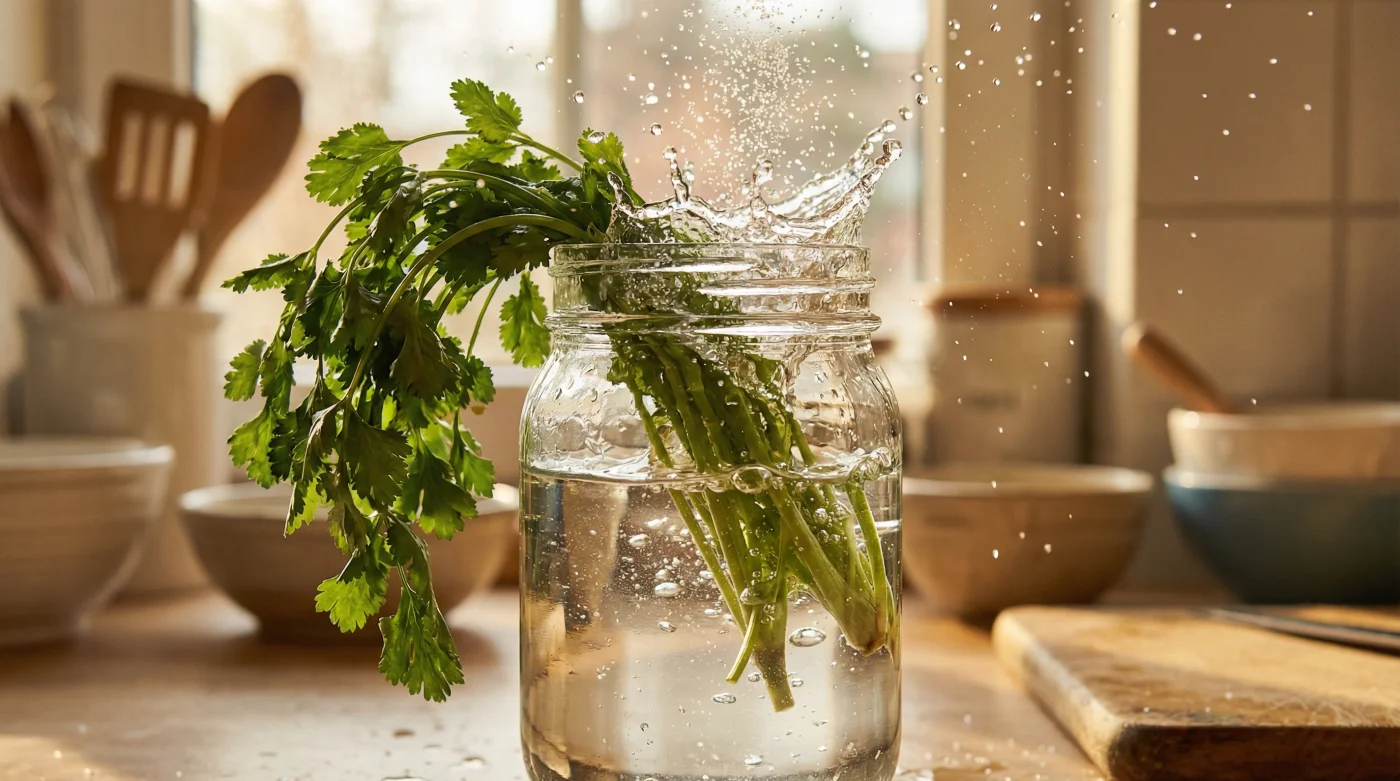
Fill the bottom few inches of that jar with fresh water and a mere half-teaspoon of sugar. Treat the herbs exactly like fresh-cut blooms resting on a sunny windowsill. By tomorrow morning, the slow and gradual absorption will ensure they are fiercely crisp and ready to last another week inside the cold environment of your refrigerator.
The Tactile Steps of Restoration
Executing this fix manually requires a gentle hand and an eye for temperature control. It is a mindful process of coaxing the herb back to peak health, relying on specific environmental triggers rather than aggressive physical force. Gather your wilted bunch and closely inspect the lower stems, snipping off the bottom half-inch with sharp kitchen shears to expose fresh, uncrushed capillaries.
- Water Temperature: Precisely 20 Celsius. Cold water constricts the cellular walls; hot water inadvertently cooks them.
- Sugar Ratio: One tablespoon of standard white granulated sugar per litre of water.
- Submersion Time: Ten to fifteen minutes for a full, restorative bath.
- The Rinse: Thirty seconds under cold, running water to completely remove the sticky residue.
Place the cut herbs entirely underwater in your mixing bowl. You might notice tiny bubbles clinging to the delicate leaves—this is the ambient air being pushed out as the sugar water rushes into the vascular system. Let the quiet chemistry work while you finish setting the dining table. When you pull them out, the stems should hold their own weight effortlessly, vibrating slightly when shaken.
Reclaiming Control Over the Crisper
Learning to resurrect your ingredients fundamentally shifts how you operate within your kitchen space. You stop viewing your daily groceries as fragile, depreciating liabilities that rule your schedule and dictate your stress levels. Instead of panicking over a drooping bunch of greenery, you begin to understand the underlying mechanics of the living plant resting in your hands.
This small, sugary intervention does far more than save you a few extra dollars a week at the checkout counter. It alters your relationship with your pantry, breeding a deep, grounded resilience in the face of minor culinary disasters. It is the distinct difference between blindly following a rigid recipe and genuinely cooking. The next time you find a forgotten, limp bag of cilantro, you won’t feel a pang of defeat; you will confidently adapt.
“A wilted herb isn’t dead; it is simply asking for the precise kind of osmotic fuel to stand back up and finish the dish.” – Clara V., Culinary Prep Specialist
| Key Point | Detail | Added Value for the Reader |
|---|---|---|
| The Core Fix | Dissolve 1 tbsp of granulated sugar per litre of 20°C water. | Rescues dinner immediately without requiring an extra trip to the grocer. |
| The Mechanism | Osmotic pressure pulls sucrose deep into the deflated cell walls. | Transforms a frustrating grocery loss into a predictable, reliable system. |
| The Aftercare | Rinse the restored herbs thoroughly under cold water before serving. | Ensures a crisp texture without altering the savoury profile of your meal. |
Frequently Asked Questions
Will the cilantro taste sweet after soaking in the sugar bath?
Not at all, provided you give it a thorough rinse. The sugar primarily stays trapped within the cell walls to provide structure, and a quick 30-second wash under cold tap water removes any sticky residue from the exterior leaves.Does this trick work for other soft herbs like basil or parsley?
Absolutely. Parsley and mint respond wonderfully to this exact method. Basil is slightly more delicate and prefers marginally warmer water, but the sucrose principle remains exactly the same.Can I use brown sugar, maple syrup, or honey instead?
Stick to standard white granulated sugar. It dissolves the cleanest in room-temperature water and provides the most direct hit of sucrose without introducing heavy flavours or cloudy impurities into the vascular system of the plant.How long will the restored cilantro last in the fridge?
Once revived, rinsed, and dried very well with a paper towel, your cilantro can easily last another three to four days. Store it wrapped in a slightly damp towel inside an open plastic bag to maintain that hard-won humidity.What if the leaves have already turned black or feel slimy to the touch?
At that stage, the cell walls have actually burst and begun the rotting process. Sugar water cannot reverse physical decay, only severe dehydration. If it feels like wet slime, it is unfortunately time for the compost bin.