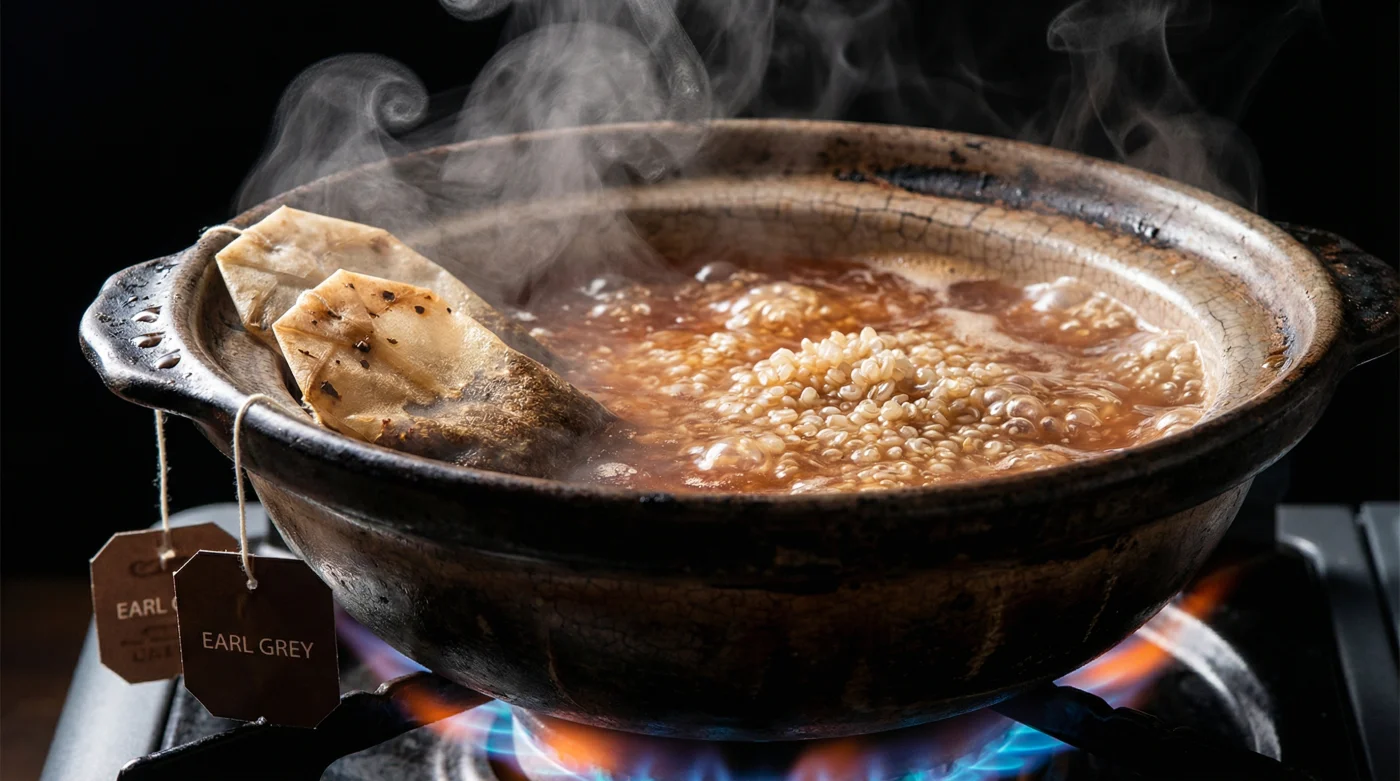
The kettle clicks off, and the quiet hiss of steam meets the cool morning air of your kitchen. You pull the wet, drooping Earl Grey sachet from your favourite mug, watching the dark amber drops fall. Your hand hovers instinctively over the green compost bin. It is a morning ritual so deeply ingrained, you do it without a second thought. The paper tag clings to the edge of the ceramic, and the damp leaves inside settle into a heavy clump. You toss it away, ready to start the day, leaving a hidden culinary asset to decay among vegetable peels.
An untapped hidden culinary reservoir. But hold that thought, and hold that sachet. Inside that small, soggy paper envelope sits a highly concentrated packet of earthy aromatics, just waiting to be activated by a second steep. What you consider waste is actually a stealthy, zero-cost ingredient. The complex oils and phenolic compounds that survive the first pour are incredibly potent. They are lying dormant in your kitchen, requiring nothing more than a gentle simmer to release their remaining character into your evening meal.
Think about the last time you boiled a batch of plain quinoa. The result is often highly functional, providing a slightly nutty, fibrous base for your meals, but it rarely excites the palate. It is a canvas that begs for expensive broths, heavy seasoning, or rich sauces to make it palatable. In most Canadian households, we resort to pouring boxed chicken stock into the pot, watching our grocery bill dissolve into the water just to give the grains a fighting chance.
You are tossing away depth. When you brew a cup of tea, the water only extracts a fraction of the organic compounds. The remaining tannins, completely ignored, possess the exact chemical structure needed to infuse basic grains with an expensive, savoury depth that usually takes hours of simmering stocks to achieve. It is a chemical transaction that happens organically, quietly bridging the gap between a morning beverage and a sophisticated dinner component.
Rethinking the Tannin Transfer
To understand why this works, you have to look at quinoa not as a seed, but as a microscopic sponge. When exposed to boiling water, the outer coating softens, and the core expands, desperately absorbing whatever surrounding liquid it can find. If you over-boil plain quinoa in tap water, the resulting texture is heavy and muted, feeling almost like breathing through a pillow. The grain takes on the exact personality of the liquid it boils in, which is often entirely devoid of personality.
Water is a missed opportunity. If you only use tap water, the quinoa simply plumps up with nothingness. By introducing a spent tea bag to the pot, the heat forces the residual tannins out of the leaves. These compounds bind directly to the starches in the grain, dyeing them with complex, savoury undertones. The subtle astringency of the tea balances the natural earthiness of the seed, creating a beautifully rounded profile that lingers on the palate.
It completely flips the narrative of kitchen waste. Your pantry is no longer a static collection of ingredients that serve a single purpose. That depleted chamomile or jasmine pouch transforms from a discarded morning afterthought into a highly strategic provision. You are suddenly cooking with an invisible layer of flavour, turning an everyday staple into a dish that commands attention and respect.
The mistake demanded immediate attention. You are not the first to stumble upon this quiet method. Elias Thorne, a forty-two-year-old prep cook in a busy Montreal bistro, built his entire grain program around this exact principle. Tasked with making the staff meal out of leftover pantry staples, he once accidentally dropped a spent Lapsang Souchong bag into a simmering pot of farro. The bag had been resting on a cutting board, forgotten after the morning rush, and slipped unnoticed into the boiling water.
The kitchen staff could not pinpoint the rich, smoky aroma wafting from the stove. Elias realised that the faint, smoky oils left in the tea leaves had thoroughly infused the grains, creating a robust, almost meaty profile without adding a single drop of expensive broth. He never threw away a morning tea bag again, eventually bringing the technique to the main dining room, where customers marvelled at the profound, woody notes of his signature grain bowls.
Tailoring the Steep to the Seed
Match the residual flavour. Not all spent tea bags behave the same way in a rolling boil. Matching the right residual flavour to the right meal requires a bit of intuition, depending on what you plan to serve. You must pair the leaf with the grain, understanding how the subtle notes will interact with your final dressing and side dishes.
If you frequently drink green tea or jasmine, save those bags for white quinoa or basmati rice. The delicate floral notes and slight astringency cut through heavy, oily dressings, making it an ideal base for a vibrant summer salad loaded with cucumber and feta. The lightness of the grain preserves the delicate perfume of the tea without overpowering it.
Build a savoury, robust foundation. Black teas, like Earl Grey or English Breakfast, carry heavier tannins and bergamot oils that survive the initial morning mug. These are your heavy lifters when you want a side dish that commands attention. They possess enough structural backbone to withstand heavy roasting and aggressive seasoning.
Drop a spent black tea bag into a pot of red quinoa or brown rice. The resulting grain will emerge with a deep, almost mushroom-like earthiness, acting as the perfect bed for roasted root vegetables or a hearty, slow-cooked stew on a cold evening. The tannins trick the brain into experiencing a rich umami sensation typically reserved for bone broths.
A subtle, fragrant, honeyed finish. Herbal teas like chamomile, peppermint, or rooibos offer an entirely different spectrum. Lacking traditional tannins, they release sweet, woody, or cooling oils that gently perfume the water. These bags require a gentle hand and a grain that absorbs flavour rapidly without turning into mush.
- Coffee filters placed under fresh berries completely halt premature refrigerator mold.
- Ramen noodles steeped in tomato juice instantly replicate rich marinara pasta.
- Mayonnaise whisked into scrambled eggs produces impossible diner style fluffy textures.
- Taco Tuesday promotions face sudden cancellations across popular national cantina chains.
- NSLC supply disruptions completely halt specific premium imported wine deliveries provincewide.
The Quiet Ritual of the Second Steep
Rearranging your daily kitchen routine. Putting this into practice requires almost zero extra effort, but it does ask for a moment of intention. You are simply capturing what is usually lost. Treat the grain gently, and respect the fragility of the wet paper, ensuring you do not create a mess in your pursuit of flavour.
Avoid ripping the tea bag or squeezing it too violently before throwing it into the pot. You want the paper to remain intact so the leaves stay contained while the hot water does the work. Here is how you execute the technique with precision:
- Brew your morning tea at the standard 90 to 100 degrees Celsius.
- Remove the tea bag and place it in a small dish in the fridge if you are cooking later, or drop it directly into your grain pot.
- Rinse your quinoa under cold water to remove its natural bitter saponins.
- Combine one part quinoa, two parts water, a pinch of coarse salt, and the spent tea bag.
- Bring to a boil, then reduce the heat to a low simmer for exactly fifteen minutes.
- Remove the pot from the heat, fish out the tea bag with tongs, and let the grains steam with the lid on for five minutes.
The cream should subtly tremble. Metaphorically speaking, the simmering process should be gentle. If you boil the water too violently, the fragile paper of the tea bag will burst, leaving you picking bitter leaves out of your dinner. Keep the heat low and steady, allowing the grains to swell peacefully.
Finding Wealth in the Discarded
There is a profound satisfaction in looking at a piece of kitchen waste and seeing utility. It shifts your relationship with cooking from a transactional chore to a mindful practice of resourcefulness. You stop seeing a pantry full of isolated items and start recognizing an interconnected ecosystem where everything has a secondary purpose.
You reclaim completely lost value. Every time you drop that damp paper sachet into a bubbling pot of grains, you are quietly defying the modern urge to throw things away. You are extracting every last drop of character from your groceries, maximizing your budget while simultaneously improving the quality of your plate.
Your meals become inherently more interesting, layered with quiet, expensive-tasting complexities that cost you nothing but a little foresight. The humble bowl of quinoa suddenly speaks with a sophisticated accent, proving that the most remarkable flavours often hide right at the bottom of the compost bin.
A kitchen’s true potential is measured not by what goes onto the plate, but by what is creatively rescued from the bin. – Elias Thorne
| Key Point | Detail | Added Value for the Reader |
|---|---|---|
| Tannin Transfer | Residual compounds bind to grain starches. | Creates a savoury, expensive depth without adding costly broths. |
| Flavour Matching | Pair green tea with white quinoa; black tea with brown rice. | Allows you to customize the dish profile to complement your main course. |
| Zero-Waste Strategy | Repurposing a single-use pantry item. | Reduces household waste while maximizing grocery budget utility. |
Frequently Asked Questions
Can I use loose leaf tea instead of a bag?
Yes, but you will need a metal tea infuser to keep the leaves from mixing into the quinoa. The goal is to steep the flavour, not eat the leaves.
Does the caffeine transfer to the grains?
A very small trace amount of caffeine may transfer, but the vast majority is extracted during your initial morning brew. It is generally negligible.
How long can I keep a spent tea bag before using it?
Store it in a small dish in the refrigerator for up to twenty-four hours. Do not leave it at room temperature, as the wet leaves can develop mold.
Will this make my quinoa taste bitter?
Not if you follow the gentle simmer rule. Boiling the bag violently for too long can over-extract the tannins, leading to bitterness. Keep it low and slow.
Can I use this method for pasta or potatoes?
Grains and rice absorb water much more aggressively than pasta or potatoes. While it might add a faint aroma to pasta water, the effect is significantly weaker.