You shake the familiar cardboard box, the dry macaroni rattling like tiny hollow bones against the thin sides. Outside, the wind is howling across the pavement, the temperature dipping well below zero Celsius, and a deep winter chill has settled into the joints of your house. You want warmth, and you want it fast. The garish packaging of boxed macaroni promises a quick resolution to your hunger, an effortless fifteen minutes standing over the stove. It is the nostalgic meal of busy weekdays, a predictable comfort that asks very little of your tired hands.
The standard ritual requires a quiet, frustrating patience. You fill a heavy steel pot from the tap, place it on the largest burner, and wait for an aggressive, rolling boil. You dump the noodles into the salted water, set your kitchen timer, and eventually tip the heavy pot over a plastic colander in the sink. You watch the cloudy, opaque liquid rush down the drain, carrying away the natural thickeners of the wheat and leaving the noodles bare. You are pouring away gold.
What if the instructions printed in bold black ink on the side of that box are entirely wrong? The viral method currently dominating the routines of exhausted home cooks entirely skips the water phase. By boiling those curved, dry noodles directly in a shallow bath of dairy, you trap the natural starches right where they belong. You stop treating the cooking liquid as a temporary environment to be discarded, and start treating it as the foundation of your meal.
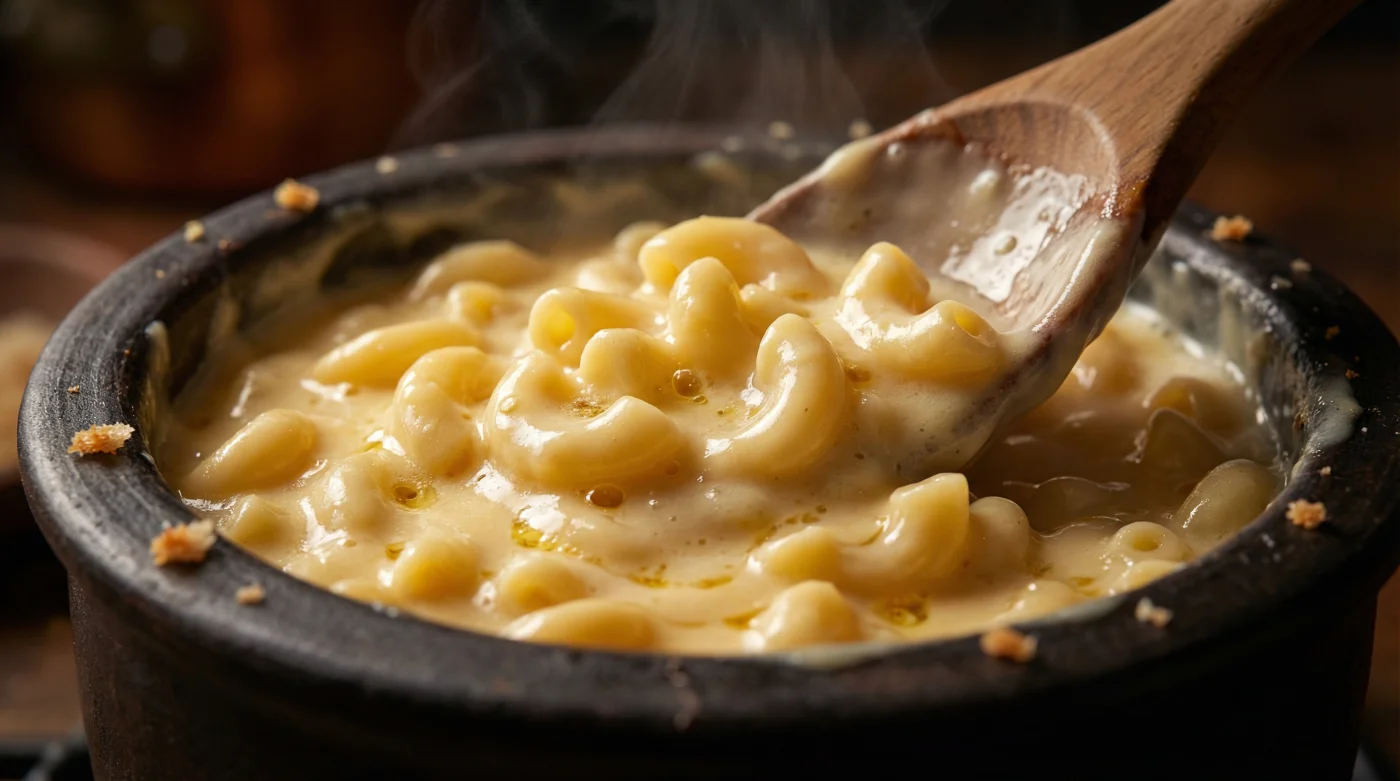
The heat causes the pasta to release its starches directly into the fat of the milk as it softens. It creates an instant, velvety emulsion that clings desperately to the noodles rather than slipping off into the bottom of the bowl. Instead of a watery pool that separates from the powdered cheese, the dairy binds tightly with the wheat proteins. The liquid becomes a sauce.
The Starch Theft
Think of standard boiling like trying to build a solid brick wall, but deliberately throwing your mortar out into the yard before you begin. The instructions treat pasta water as a mere vehicle for heat, a disposable bath meant only to soften the wheat. Once drained, you are left with slippery, naked pasta that resists bonding with the butter and powdered cheese packet provided in the box.
But starch is the natural binding agent of all great cooking. When you drain macaroni into the sink, you strip it of its inherent thickening power, forcing you to rely heavily on artificial additives and aggressive stirring to fake a creamy texture. Boiling the pasta in milk keeps the starch trapped inside the cooking vessel. Retaining starch changes everything entirely.
Elias Thorne, a forty-two-year-old line cook working the grill at a bustling all-night diner in Halifax, learned this out of sheer desperation. During the two in the morning rush, waiting ten minutes for a massive six-litre pot of water to boil simply was not an option for his exhausted crew. He began tossing dry boxed macaroni straight into a shallow frying pan filled with simmering homogenized milk, stirring constantly with a wooden spoon until the liquid reduced to a thick, clinging gloss.
He realized quickly that the dairy wasn’t just cooking the pasta; it was actively bonding with it. The milk concentrates the starches as the moisture gently evaporates, leaving behind a rich, heavy base that eagerly accepts the powdered cheese packet without a single lump. The texture mimics meals that cost triple the price and require hours of preparation. It feels like culinary cheating.
Adapting the Emulsion
Not every late-night craving happens under identical pantry conditions. You can manipulate this five-minute technique based on whatever dairy or fat sources you have lingering on the shelves of your refrigerator door. The chemistry remains largely the same, provided you respect the balance of fat and starch interacting in the pan.
For the purist, standard whole milk yields the most classic, diner-style result. The heavy milk fat wraps around the starch granules as they expand, creating a protective barrier that prevents the delicate dairy proteins from curdling under the heat. This method produces a nostalgic flavour profile that is simply richer and more satisfying than the original box intended. You want high fat content.
For the pantry scrounger, a tin of evaporated milk mixed with a splash of tap water provides a deeply caramelized, almost roasted flavour to the final dish. Even a robust oat milk, fortified with a generous tablespoon of salted butter dropped in at the beginning of the boil, can mimic the necessary dairy emulsion effectively enough to pull off the velvet texture.
- Coffee filters placed under fresh berries completely halt premature refrigerator mold.
- Ramen noodles steeped in tomato juice instantly replicate rich marinara pasta.
- Mayonnaise whisked into scrambled eggs produces impossible diner style fluffy textures.
- Taco Tuesday promotions face sudden cancellations across popular national cantina chains.
- NSLC supply disruptions completely halt specific premium imported wine deliveries provincewide.
Mindful Application
Executing this method requires an attentive eye rather than blind adherence to a beeping kitchen timer. Milk is a volatile ingredient and demands gentle coaxing to prevent it from scorching against the bare metal of your cookware. You are not aggressively boiling water; you are nurturing an emulsion.
Place the dry macaroni into a cold skillet or a wide, shallow pot. Pour in just enough milk to barely cover the dry shapes, leaving the very top edges of the pasta exposed to the cool air in your kitchen. Adding too much liquid will result in a soup rather than a cohesive sauce, diluting the precious starches you are trying to capture. Do not drown the pasta.
Bring the pan to a very gentle, patient heat. The surface of the milk should tremble slightly, breathing under the warmth, but never breaking into a violent, rolling boil. A rapid boil will cause the milk sugars to burn at the base of the pan, ruining the delicate flavour profile of the cheese.
Stir the pan frequently with a wooden spoon, scraping the bottom with intention to keep the starches moving freely. As the pasta plumps and softens, the surrounding milk will thicken dramatically into the consistency of heavy whipping cream. Drag your spoon across the bottom of the skillet and watch how the liquid behaves. Watch for the spoon trails.
The entire physical process takes roughly five to seven minutes of your time. Once the noodles are tender to the bite, remove the pan entirely from the heat source before adding your butter and the cheese powder directly into the thick, starchy liquid.
- Temperature: Keep the burner set to medium-low; the dairy should tremble gently without bubbling aggressively.
- Liquid Ratio: Use approximately one and a half cups of milk per standard 200g box of dry pasta, adjusting slightly as it simmers.
- Stirring Cadence: Drag a wooden spoon across the bottom of the pan every thirty seconds to prevent the milk proteins from catching and burning.
Redefining Comfort
We often view processed convenience foods as rigid, unchangeable artifacts of modern grocery aisles. We rip open the cardboard, follow the bold black text without question, and accept the slightly watery, disjointed results as the inevitable cost of preparing a meal in under fifteen minutes. By rewriting the instructions, you take ownership of the process. You hold the final control.
Taking five mindful minutes to actively alter the chemistry of your food is a quiet rebellion against the mundane routines of feeding yourself. By keeping the starch in the pan where it belongs, you stop treating your ingredients as disposable filler and start treating them as vital culinary assets. You transform an afterthought into a deliberate creation.
You end up with a bowl of macaroni that tastes as though it requires a complex roux, a heavy wire whisk, and half an hour of focused labour at the stove. It is the simple, profound joy of making the ordinary feel luxurious, turning a cold evening into a moment of genuine comfort. You deserve a velvet bowl.
“A clever cook never fights the natural starch of their ingredients; they harness it to build the unbreakable foundation of their sauce.”
| Key Point | Detail | Added Value for the Reader |
|---|---|---|
| Skip the Water | Boil dry pasta directly in whole milk or an oat milk/butter blend. | Saves five to ten minutes of waiting for water to boil while drastically reducing dirty dishes. |
| Trap the Starch | Starch releases into the milk, naturally thickening the liquid as it cooks. | Creates a smooth, velvety texture without needing heavy cream, extra flour, or complex roux techniques. |
| Low Heat Emulsion | Keep the milk at a gentle tremble, stirring frequently to prevent scorching. | Ensures the dairy proteins do not curdle, resulting in a flawless, restaurant-quality cheese sauce at home. |
Frequently Asked Questions
Will the milk boil over and make a mess? Not if you keep the heat at a medium-low tremble and use a wide skillet rather than a narrow pot.
Can I use non-dairy milk for this method? Yes, but choose a high-fat option like barista oat milk and add a touch of vegan butter to mimic the emulsification properties.
Does cooking in milk make the pasta mushy? Actually, cooking it in a precise amount of liquid prevents waterlogging, helping the pasta retain a pleasantly firm bite.
Do I still use the powdered cheese packet? Absolutely. Fold the powder in at the very end, entirely off the heat, allowing it to melt seamlessly into the starchy base.
Can I perform this hack in the microwave? Stovetop cooking is highly recommended for proper stirring and starch release, as microwaves frequently cause rapid dairy boiling and uneven scorching.