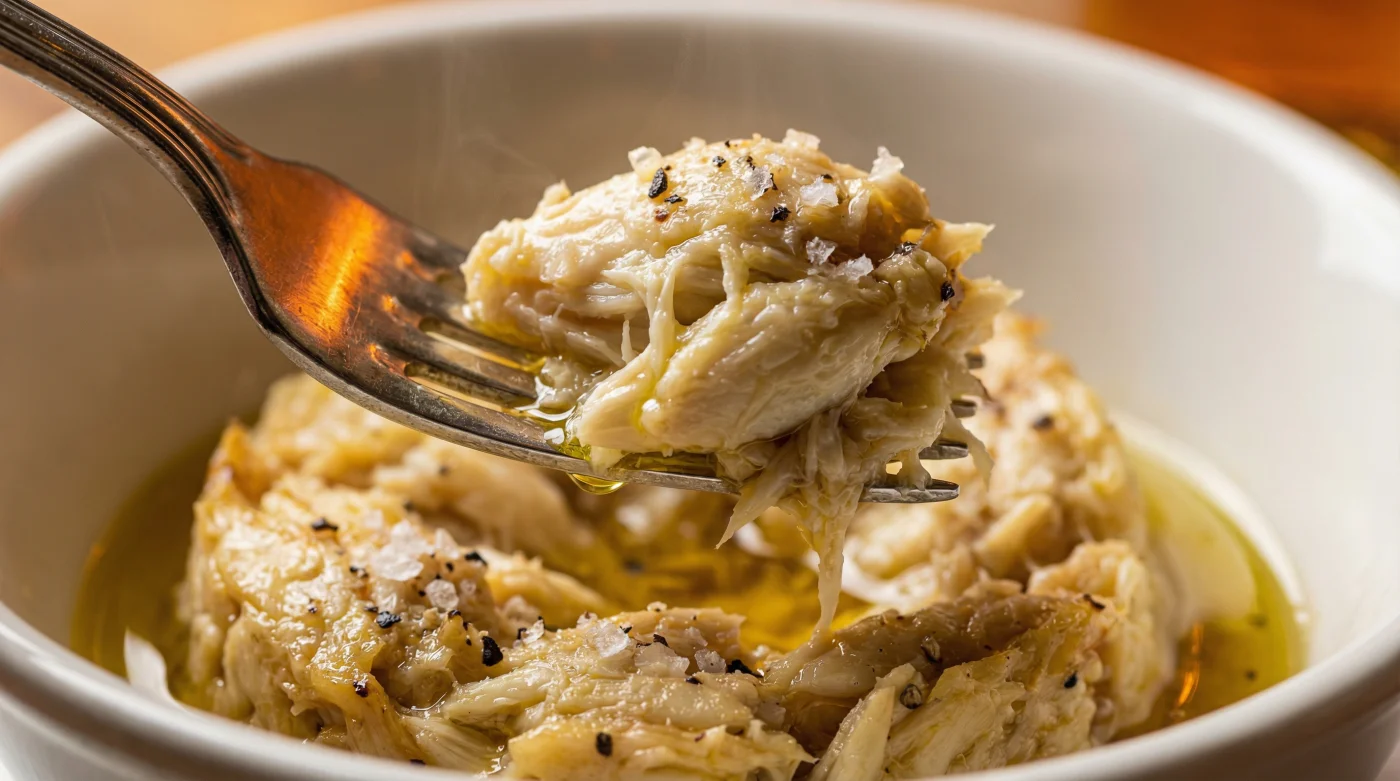
You pull the ring tab back, and the metal pops with that familiar, hollow echo. Outside, a heavy February snow is burying the driveway, and the kitchen feels decidedly cold. Inside the tin sits a puck of pale, flaked fish, swimming lightly in spring water. It smells like Tuesday afternoon at the office, or a quick pantry raid when the Canadian winter weather turns hostile. You drain the tin, pressing the lid down forcefully until the water stops trickling into the sink.
You are intimately familiar with this texture. It yields without fighting, crumbling onto rye bread or disappearing completely into a heavy scoop of mayonnaise. Canned tuna is reliable, but it is rarely revered. It carries the distinct reputation of being permanently soft, a protein relegated to the background of casseroles and sad, rushed lunches.
But what if you treated that soft, unassuming tin as a blank canvas? If you close your eyes and bite into a fresh Dungeness crab cake—perhaps sitting at a harbour-front patio in British Columbia—you notice the distinct resistance. Crab meat pushes back. It has snap, bounce, and a structural integrity that a standard can of albacore simply lacks. You taste the cold ocean, accompanied by a satisfying, muscular chew.
The distance between that inexpensive tin and the bite of expensive crab seems insurmountable. Yet, bridging that gap doesn’t require a culinary degree, a massive grocery budget, or a trip to a specialty fishmonger. It simply demands a minor chemical intervention, hiding in plain sight beside your flour and sugar.
The Perspective Shift: Rewiring the Protein
We tend to think of canned fish as a finished product, entirely set in its ways. You open it, you eat it. The canning process utilizes high heat and pressure, which effectively cooks the muscle fibres until they snap and release their moisture. But when you introduce baking powder to the equation, you stop following instructions and start understanding the biological system at play.
Baking powder is alkaline. When it meets the broken down, heat-treated proteins of canned tuna, it acts less like a leavening agent and more like a microscopic scaffolding crew. It alters the protein structure, raising the pH of the fish. This slight alkaline shift causes the shortened, cooked muscle fibres to loosen their tightly wound coils, allowing them to bind water and cross-link tightly together once they hit a hot pan.
Think of it like gathering unspooled, fragile wool and twisting it back into a tight, resilient thread. The very flaw you tolerate in canned tuna—its pre-cooked, crumbly nature—becomes your major advantage. Because the fish is already completely broken down, the baking powder can permeate evenly and rapidly through every flake.
You aren’t just masking the mushiness; you chemically force the protein to behave like a completely different animal, pulling tension back into the centre of the meat. You are rebuilding the fish from the inside out.
The Maritime Kitchen Secret
Arlo MacInnis, a 42-year-old prep cook in Halifax, stumbled onto this exact reaction during a brutal Nor’easter. The maritime highways were practically impassable, and his kitchen’s fresh crab delivery was stalled in a snowbank somewhere near Truro. Facing a busy dinner service with eighty orders of crab cakes and a walk-in fridge holding only pantry staples, Arlo dumped a teaspoon of baking powder into a massive stainless steel mixing bowl of albacore tuna.
He worked the mixture aggressively by hand, letting it sit in the chill of the cooler to let the alkaline environment do its work. By the time the first orders fired, the cakes hit the hot cast iron and crisped up with a startlingly firm, bouncy resistance against the tooth. The texture was so remarkably close to lump crab that the dining room cleared their plates without a single raised eyebrow, completely unaware of the substitution.
Adjustment Layers: Customizing Your Faux-Crab
Not every meal requires the exact same approach. Depending on who you are feeding and how much time you have, this two-ingredient pivot adapts easily to different household rhythms.
- Coffee filters placed under fresh berries completely halt premature refrigerator mold.
- Ramen noodles steeped in tomato juice instantly replicate rich marinara pasta.
- Mayonnaise whisked into scrambled eggs produces impossible diner style fluffy textures.
- Taco Tuesday promotions face sudden cancellations across popular national cantina chains.
- NSLC supply disruptions completely halt specific premium imported wine deliveries provincewide.
If you want the flavour to shine without distraction, keep the mix incredibly simple. Drain a tin of solid white albacore completely dry. Toss the flakes with exactly one-quarter teaspoon of baking powder. Let it rest for ten minutes, then quickly sear it in a hot pan lightly slicked with canola oil. The bite becomes remarkably dense, perfect for folding into a light pasta or serving over a bed of bitter winter greens.
For the Busy Parent
When feeding a family, the goal is high yield and low friction. Mix three cans of well-drained chunk light tuna with a full teaspoon of baking powder, an egg, and a generous handful of panko breadcrumbs. The baking powder works double duty here: it firms up the fish while giving the breadcrumb binder a slight airy lift. Form them into patties and pan-fry them.
You secure the mouthfeel of premium seafood without the forty-dollar grocery bill. The golden crust gives way to a satisfyingly meaty interior that pairs perfectly with a squeeze of lemon and a quick dill yogurt sauce.
For the Meal Prepper
If you are making lunches for the week, the structural integrity of your protein matters. Mushy tuna turns salads into a soggy mess by Wednesday. By treating your batch-prepped tuna with baking powder and giving it a quick flash in the pan, you create resilient protein bites that hold their shape alongside roasted root vegetables and heavy dressings.
Mindful Application: The Technique
Executing this shift requires a bit of patience. You cannot rush the chemical reaction. Treat the mixing process like a deliberate, mindful chore rather than a rushed assembly line. The powder needs time to seek out the moisture and react with the fish.
You will feel the texture shift under your fork as you work. It goes from a watery crumble to a tacky, cohesive paste. The cream should tremble slightly, so to speak, letting you know the proteins are actively binding.
- Drain the tuna aggressively. Press a paper towel into the tin until the flakes look practically parched.
- Sprinkle the baking powder evenly over the top. Do not dump it in a single clump.
- Work it in forcefully using the back of a fork. Mash the powder into the fish.
- Walk away. Let the bowl sit undisturbed in the fridge so the alkaline environment can fully set.
The Tactical Toolkit
- Ratio: 1/4 tsp baking powder per standard 170g can of tuna.
- Resting Time: 15 minutes in the fridge (at roughly 4°C).
- Cooking Temp: Medium-high heat, searing at approximately 190°C to lock the new structure in place.
The Bigger Picture
Mastering a simple trick like this does more than just save you a trip to the seafood market in freezing weather. It completely reframes how you look at the humble tins sitting in your cupboards. When you realize that the cheapest ingredients in your pantry are highly malleable, you stop feeling artificially limited by your grocery budget or your physical location.
Cooking becomes less about buying the perfect, expensive item and more about coaxing extraordinary results from ordinary things. Transforming a mushy, forgotten tin of tuna into a firm, satisfying centrepiece returns a sense of control to your kitchen.
You aren’t just making dinner; you are practicing a quiet, practical magic. It is a reminder that the best meals aren’t always bought—they are mindfully engineered.
“Understanding how pH affects protein gives you the power to bend cheap ingredients to your will, turning a pantry afterthought into a Friday night feature.”
| Key Point | Detail | Added Value for the Reader |
|---|---|---|
| Alkaline Reaction | Baking powder raises the pH of the tuna, causing muscle proteins to swell and cross-link. | Eliminates the mushy texture, providing a firm, satisfying chew. |
| The Resting Period | The mixture must sit for 15 minutes at roughly 4°C. | Ensures the chemical change is complete before cooking, preventing crumbling in the pan. |
| Searing Heat | Cooking at 190°C sets the newly bonded proteins permanently. | Locks in the crab-like structure so it holds up in sauces and salads. |
Frequently Asked Questions
Can I use baking soda instead of baking powder?
No. Baking soda is far too alkaline and will give your tuna an unpleasant, soapy, metallic taste. Always use baking powder.Does it matter if the tuna is packed in oil or water?
Water-packed tuna works best for this reaction. Oil coats the proteins and inhibits the baking powder from altering the structure as effectively.Will I taste the baking powder?
Not if you stick to the ratio. A quarter teaspoon per 170g can is enough to change the chemistry without leaving a bitter off-flavour residue on your palate.How long will the cooked patties last in the fridge?
Once seared, the altered protein structure will hold its firm texture for up to three days in an airtight container.Can I eat the treated tuna raw without cooking it?
You must cook it. The heat is required to permanently set the cross-linked proteins; without heat, you are just eating slightly sticky, raw-tasting fish.