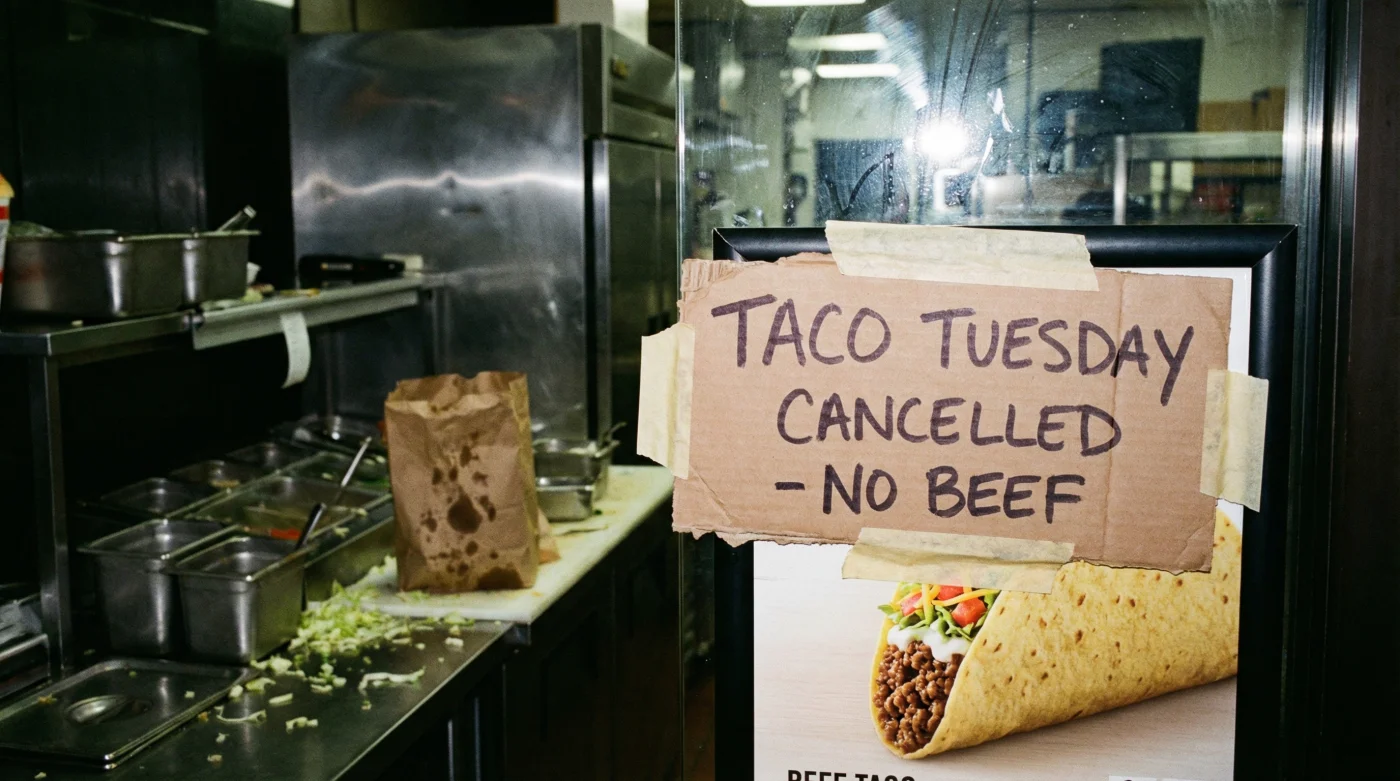
You know the rhythm of the week. Monday is a write-off, a slow drag through emails and leftover coffee. But Tuesday has carried a specific, reliable pulse for decades. It smells like toasted corn, lime zest, and the sharp, bright sting of raw white onion. You push through the heavy glass doors of your local cantina, expecting the familiar hum of a packed dining room chasing down discounted ground beef and cold lagers.
Instead, you notice a strange quiet. The chalkboard out front, usually broadcasting the familiar discount in vibrant neon chalk, is wiped clean. You sit down, pull the menu from the metal rack, and the reality settles in. The Tuesday ritual, a cornerstone of affordable dining, has quietly disappeared.
Across the country, the reliable comfort of weekly discounted staples is evaporating. National chains and independent spots alike are scrubbing their menus of these promotions. The math simply stopped working.
A sudden, severe shortage in the beef supply chain has forced margins so thin they practically slice through the butcher paper. What you are witnessing is a quiet corporate abandonment of tradition, born not from malice, but from a desperate need to keep the lights on while profit margins plummet.
The Meat-to-Margin Metaphor
For years, you were conditioned to treat these mid-week specials as a right, a permanent fixture of the dining landscape. You thought of the discounted taco as a generous gift, but in the industry, it was simply a hook. It was a loss leader designed to get you ordering three margaritas.
Now, think of a restaurant’s menu like a tightrope walker balancing a long wooden pole. The cheap beef was the pole. When the cost of that central ingredient suddenly triples, the balance is violently thrown off. The walker has to drop the pole to survive. This sudden menu shift exposes a profound vulnerability in how we value our food.
When a mundane detail like the cost of a pound of ground chuck spikes, the entire system shivers. Yet, this breaking point offers a hidden advantage. It forces a complete reinvention of what lands on your plate, pushing you away from mass-produced filler and toward more resilient, creative eating.
Marcus Vance, a 44-year-old culinary director for a prominent western Canadian hospitality group, stared down this exact crisis last month in his Calgary test kitchen. For ten years, his locations moved thousands of tacos every Tuesday. But when his suppliers announced an unprecedented price hike on trim and ground beef, he faced a brutal choice. He could dilute the quality, padding the meat with soy and fillers, or he could cut the promotion entirely. Marcus chose the latter, pulling the plug overnight.
“It was like breathing through a pillow trying to make the numbers work,” he confessed. He replaced the cheap beef with a focus on high-quality, slower-braised local cuts sold at a fair price, sacrificing the Tuesday crowd to save the integrity of the kitchen.
Deep Segmentation: Rethinking the Weekly Ritual
For the Traditionalist
If you refuse to let go of the midweek tradition, your strategy has to shift from chasing discounts to chasing quality. You cannot rely on a chain restaurant to subsidize your craving anymore. You must become your own trusted supplier. Sourcing directly from local butchers or farm co-ops means paying a premium upfront, but it secures a significantly better product. You learn to savour the richness of the meat, rather than the sheer volume of the discount.
For the Budget-Conscious Family
When feeding a table full of kids, the sudden loss of a cheap restaurant night is a heavy blow. The pivot here requires swapping the protein without losing the sensory satisfaction of the meal.
Think about the texture of roasted mushrooms or braised lentils. By applying the same aggressive seasoning heavy cumin, smoked paprika, and a splash of sharp vinegar you mimic the weight and satisfaction of ground beef at a fraction of the current cost. The kids still get the tactile joy of building their own plates, but the grocery bill remains intact.
For the Flavour Chaser
- Taco Tuesday promotions face massive cancellations amid sudden regional beef shortages.
- NSLC liquor inventories face severe depletion as provincial craft shortages compound.
- Hard boiled eggs steamed above boiling water slip completely from shells.
- Cast iron scrubbed with coarse salt and potatoes achieves instant nonstick.
- Broccoli stems peeled and shredded instantly replace expensive premium cabbage slaws.
This is the moment to experiment with robust alternative fats. Pork shoulder, slowly rendered down until it falls apart, or charred chicken thighs offer complex dripping juices that carry those bright, acidic garnishes just as beautifully, dodging the beef shortage entirely. You replace a corporate loss leader with a superior homemade substitute.
Building a Resilient Protocol
To recreate the magic at home without falling victim to grocery store price gouging, you have to approach the skillet with a deliberate, minimalist mindset. You are no longer throwing a brick of meat into a cold pan.
The cream should tremble when you temper your sauces, and the meat requires a careful, high-heat sear to maximize flavour with smaller portions. You must stretch expensive proteins with vegetables. Follow these specific tactile steps:
- Preheat a heavy cast-iron skillet to 200 Celsius before adding any fat.
- Use a mere half-pound of high-grade beef, cutting it with finely diced, deeply roasted eggplant to double the volume.
- Allow the mixture to sit untouched in the pan for a full three minutes to build a dark, savoury crust.
- Deglaze the pan with a splash of cold dark beer, scraping the browned bits to integrate every ounce of flavour.
Your Tactical Toolkit for this transition requires only a few items: a well-seasoned pan, a digital thermometer, and a willingness to stretch expensive proteins with heavily roasted, umami-rich vegetables.
It feels deeply frustrating to watch a beloved, affordable tradition vanish from your neighbourhood spots. The instinct is to mourn the loss of the cheap Tuesday escape. But this fracture in the supply forces a necessary reckoning with our consumption.
A Necessary Correction
When meat is cheap enough to be sold at a heavy discount, it is often stripped of its nutritional dignity and environmental accountability.
You are now prompted to interact with your meals more consciously. Whether you choose to cook at home, stretch your proteins with root vegetables, or happily pay a fair price for a sustainably raised cut on a Friday night, you are stepping out of a passive consumption cycle. The end of the discount era might just be the beginning of a much richer, more intentional relationship with food.
We had to stop selling illusions; a three-dollar beef taco in today’s market is a financial ghost story, and stepping away from it saved our kitchen’s soul. – Marcus Vance
| Key Point | Detail | Added Value for the Reader |
|---|---|---|
| The Loss Leader Myth | Restaurants used cheap ground beef to sell high-margin drinks. | Frees you from the guilt of no longer eating out on mid-week nights. |
| The Mushroom Pivot | Replacing 50% of your beef with roasted mushrooms mimics texture and umami. | Cuts your grocery bill in half while maintaining the sensory joy of the meal. |
| High-Heat Sear | Cooking smaller portions at 200 Celsius creates a deeply savoury crust. | Maximizes flavour impact, allowing you to be satisfied with less meat. |
Frequently Asked Questions
Why are national chains cancelling their Tuesday specials? Sudden, severe spikes in beef prices have destroyed the profit margins on these traditional loss-leader promotions.
Is the beef shortage expected to last long? Supply chain experts indicate this is a long-term market correction, not a temporary blip.
How can I replicate the restaurant taste at home? Use a cast-iron skillet at 200 Celsius and deglaze your pan with dark beer to build a professional flavour profile.
What is the best cheap alternative to ground beef? Deeply roasted, finely chopped mushrooms or braised lentils offer the best textural match and absorb heavy seasoning perfectly.
Will the Tuesday tradition ever return? It may return, but likely featuring chicken, pork, or plant-based proteins rather than the cheap beef we were accustomed to.