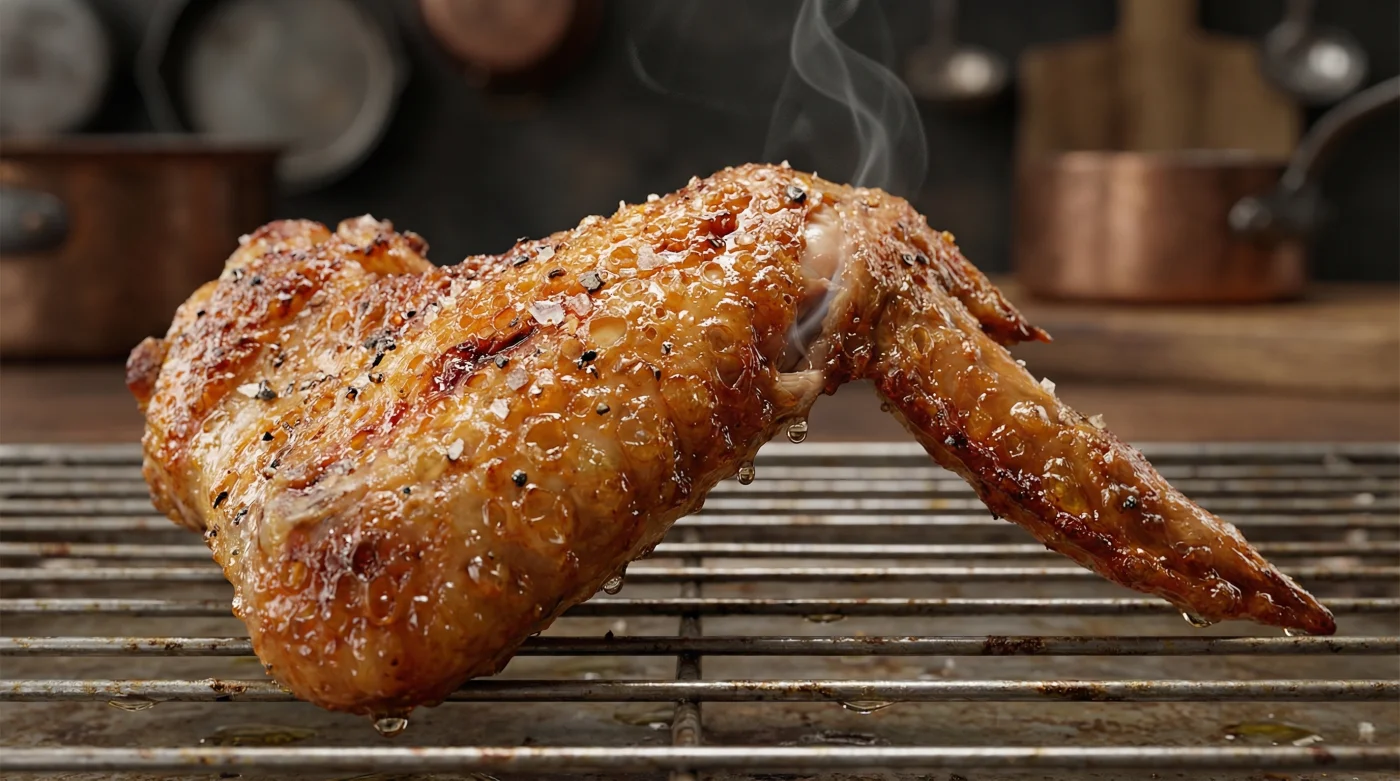
The sharp snap of winter air rattling the windows creates a distinct craving. Inside, your oven radiates a steady warmth, promising the comfort of a Friday night pub classic. You pull the tray from the heat, anticipating the audible crackle of a perfect chicken wing. But instead of that deeply textured, blistered surface, you find a pale, rubbery skin that feels more like a soggy raincoat than a satisfying meal.
We spend a lifetime chasing the perfect pub bite at home, usually relying on heavy dredges of all-purpose flour to mimic a deep-fried crust. You dust, you toss, and you bake, hoping the starch will somehow harden into something magical. The reality is far less romantic. Flour in an oven often turns into a heavy paste, absorbing moisture from the bird rather than evaporating it away.
Professional kitchens understand a fundamental truth that escapes the home cook: texture is a chemical reaction, not a heavy coating. The secret to achieving that shattered-glass crunch does not require bubbling cauldrons of fat or a kitchen covered in grease splatter. It requires a quiet, unassuming white powder sitting entirely ignored at the back of your pantry.
This two-ingredient pivot transforms a dreary weeknight supper into a restaurant-calibre experience. You simply need to stop thinking about coating the meat, and start thinking about altering its physical structure through chemistry.
The Alchemy of the Alkaline Crust
The common belief dictates that starch equals structure. You likely learned to coat poultry in flour to protect it from drying out, assuming the thick layer would crisp up nicely under the heating element. But flour needs immense, surrounding heat, like submersion in boiling oil, to fry properly. In a dry oven, it merely bakes into a dense, chalky shell.
Instead, introduce aluminum-free baking powder to the equation. Think of the chicken skin as a piece of photographic film developing in a darkroom. By dusting it with baking powder, you are changing the chemical pH of the surface, raising its alkalinity. This is not a batter; it is a catalyst. The higher pH forces the proteins to break down faster, accelerating intense oven browning at a much lower threshold.
It is a profound shift in technique. You are no longer adding a crust; you are encouraging the skin to blister and fry itself in its own natural fats. The mundane baking powder, usually reserved for making muffins rise, becomes an active agent of transformation, turning a frustratingly leathery exterior into an impossibly brittle, golden shell.
Consider David, a 42-year-old sous-chef based in Halifax, who spent years trying to replicate the crunch of his favourite local tavern. After mistakenly grabbing a tin of baking powder instead of cornstarch during a late-night recipe test, he noticed the wings bubbling and browning violently in the oven. He realized the alkaline shift drew the moisture to the surface, where it evaporated instantly. His accidental discovery became the cornerstone of his weekend menu, proving that true culinary power lies in working with the ingredients’ inherent chemistry rather than fighting against it.
Adjusting the Technique for Your Table
Mastering this method means understanding the subtle variations of how you eat your food. Different flavour profiles require slight adjustments to the powder-to-spice ratio.
For the Sauce Purist
If you intend to drown your wings in a sharp, buttery hot sauce, the crust needs maximum structural integrity. Stick to a strict ratio of one teaspoon of baking powder and a pinch of kosher salt for every pound of meat. Skip any added sugars or heavy spices in the raw dusting, as they will burn before the alkaline reaction finishes its work. Let the unadorned, aggressively crisp skin act as the perfect sponge for your post-bake toss.
For the Dry Rub Enthusiast
You might prefer your spices baked right into the crust. Here, you can blend the baking powder with robust, low-sugar aromatics like smoked paprika, garlic powder, or ground black pepper. The baking powder will still alter the pH, while the spices toast deeply into the blistering skin, creating a rich, intensely savoury exterior.
For the Advance Meal Planner
- Taco Tuesday promotions face massive cancellations amid sudden regional beef shortages.
- NSLC liquor inventories face severe depletion as provincial craft shortages compound.
- Hard boiled eggs steamed above boiling water slip completely from shells.
- Cast iron scrubbed with coarse salt and potatoes achieves instant nonstick.
- Broccoli stems peeled and shredded instantly replace expensive premium cabbage slaws.
The Minimalist Application Protocol
Executing this method is a practice in restraint. You do not need aggressive tossing or heavy-handed seasoning. It is about precision and patience. Gather your tools before you begin.
Ensure you set your oven temperature to exactly 220°C. You will need a large mixing bowl, a wire cooling rack, and a rimmed baking sheet lined with foil to catch the rendering fat.
- Dry the surface: Pat the wings down with a paper towel until they feel completely dry to the touch. Moisture slows down the crisping process.
- Measure precisely: Use exactly one level teaspoon of aluminum-free baking powder and half a teaspoon of fine salt per pound of chicken.
- Toss with purpose: Sprinkle the mixture gradually over the wings in the bowl, tossing them with your hands until a microscopic film coats each piece.
- Elevate the bake: Place the wings on the wire rack over the foil-lined sheet. This allows the hot air to circulate beneath them.
- Commit to the heat: Bake at 220°C for 45 minutes, turning them once at the 25-minute mark to ensure even blistering.
Notice the subtle changes as they cook. The skin will physically bubble and expand. The rendering fat sizzles against the alkaline surface, effectively shallow-frying the bird in mid-air.
The Quiet Satisfaction of a Problem Solved
There is a deep, abiding peace in knowing you can produce something spectacular without creating chaos in your kitchen. Dropping the heavy bags of flour and the bubbling pots of volatile frying oil frees you from the mess and stress of traditional methods.
When you pull that blistering tray from the oven, you are engaging with a smarter way of cooking. You understand the science of what makes food satisfying. The loud, shattering crunch of that first bite is not just about enjoying a Friday night treat; it is the physical proof of your newfound culinary intuition.
You have transformed a notoriously frustrating task into a reliable, effortless ritual. The next time the craving hits, you will not dread the soggy results or the heavy cleanup. You will just reach for the little tin at the back of the pantry.
“The moment you stop trying to coat the chicken and start changing its chemistry, you completely remove the need for a deep fryer.”
| Key Point | Detail | Added Value for the Reader |
|---|---|---|
| The Flour Myth | Absorbs moisture instead of evaporating it | Saves you from chewing through a pasty, thick shell. |
| The Alkaline Shift | Baking powder raises the pH of the poultry skin | Accelerates browning at 220°C without bubbling vats of oil. |
| The Wire Rack | Elevates the meat above rendering fats | Prevents soggy underbellies and promotes 360-degree crispness. |
Frequently Asked Questions
Can I use baking soda instead of baking powder? No. Baking soda is pure sodium bicarbonate and will leave a harsh, metallic flavour on the meat. You need aluminum-free baking powder.
Why do my wings taste slightly bitter? You likely used a baking powder containing sodium aluminum sulfate. Always check the label for an aluminum-free brand to ensure a clean taste.
Do I need to rest the chicken before baking? While not strictly necessary, leaving the dusted poultry uncovered in the fridge for a few hours dries the skin further, improving the final texture.
Will this work on boneless chicken breasts? This specific technique relies heavily on the natural fat content in the skin to fry the exterior. Skinless cuts will simply dry out in the oven.
Can I apply wet sauce before baking? Never apply liquid sauces before the oven. The moisture will counteract the alkaline reaction. Toss the crisp wings in sauce immediately after baking.