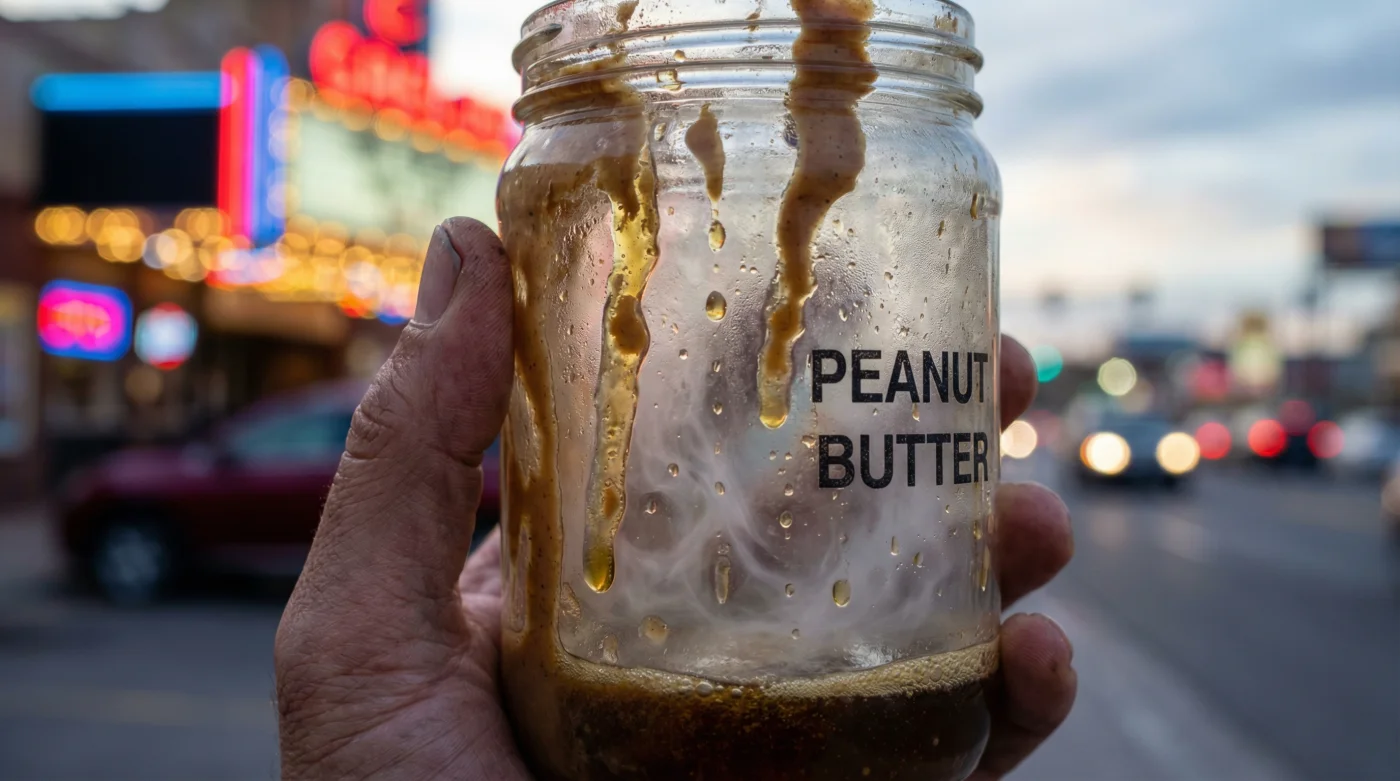
You are standing over the kitchen blue bin, staring down a jar of peanut butter that has reached its stubborn end. The plastic sides are streaked with brown, the bottom corners harbouring a heavy tablespoon of fat that no butter knife can effectively scrape clean. It feels like a minor, recurring defeat. You usually run it under the tap, watching hot water turn a perfectly good ingredient into a greasy, unappealing sink puddle before tossing the container into the recycling.
There is a different way to handle this mundane kitchen standoff. Stop fighting the residue. Instead of seeing a chore, look at that film clinging to the plastic as the foundational fat for an instant, deeply savoury sauce.
When you pour simmering stock directly into that vessel and agitate it, physics takes over. The heat melts the thick oils, and the violent motion forces the water and fat to bind. Suddenly, that frustrating plastic shell becomes a self-contained cocktail shaker for a vibrant, creamy satay.
You are essentially tricking the ingredients into yielding a restaurant-quality base without dirtying a single mixing bowl. This requires zero extra dishes, and it transforms the tedious act of cleaning out the pantry into an act of spontaneous, zero-waste cooking.
The Emulsion Illusion
We are taught to treat empty packaging as dead weight. The moment a knife hits the bottom of the jar, the container transitions from a pantry staple to a waste management problem. But that stubborn residue is actually a powerful culinary asset waiting for a liquid catalyst.
Think of the streaks inside the jar not as leftovers, but as a built-in thickening agent. When you introduce hot liquid to cold, unyielding peanut fat, you are bypassing the need for a whisk and a saucepan entirely. The sealed jar acts as a pressurized chamber, forcing two stubborn elements to merge.
The flaw here—the sticky, unyielding nature of peanut butter—becomes your biggest advantage. It wants to cling. By aggressively shaking it with hot chicken or mushroom broth, a dash of soy sauce, and a squeeze of lime, you shatter the fat molecules and disperse them through the water. The result is a creamy suspension that coats noodles like velvet.
Elias is a forty-two-year-old prep cook working in a loud, fast-paced pan-Asian kitchen off Spadina Avenue in Toronto. After fourteen hours of managing large-scale wok stations, the last thing he wants to do is wash another measuring cup at home. He relies on a strict philosophy of zero-waste for his late-night meals, keeping nearly empty peanut butter jars lined up in his fridge door, waiting for the kettle to boil. For him, the jar isn’t empty until the hot broth says it’s empty.
Matching the Broth to the Moment
Every empty jar holds a different possibility depending on what you pour into it. You can tailor this zero-waste approach to whatever meal you need to salvage in the moment.
When the craving hits at 11 PM, you want comfort without the cleanup. Boil a packet of instant ramen, but ditch the MSG flavour packet. Pour half a cup of the starchy, boiling noodle water directly into your peanut butter jar. Add a spoonful of chili crisp and shake violently. Toss your drained noodles straight into the jar, mixing until the sauce tightly grips every single strand like a heavy winter coat.
A wilted Tuesday lunch requires aggressive intervention. If your jar only has a faint scraping left, fill it with a quarter cup of warm water, a heavy splash of rice vinegar, grated ginger, and a teaspoon of sesame oil.
The warmth loosens the peanut butter, while the vinegar sharpens it into a bright, acidic dressing. Shake until the sound softens, like heavy rain turning to snow, indicating the emulsion has formed. Then, pour it directly over cold cabbage and shredded carrots.
- Mashed potatoes piped through cold funnels create flawless Michelin star towers.
- Wilted cilantro submerged in sugar water completely restores fresh crisp stems.
- Spent tea bags tossed into boiling quinoa guarantee expensive earthy flavors.
- Boxed macaroni boiled in milk instead of water creates velvet cheese.
- Canned tuna mixed with baking powder perfectly replicates expensive crab textures.
Add a tablespoon of maple syrup and a splash of fish sauce. The resulting liquid will be thinner, resembling a rich, savoury soup base. You can pour this golden stock over roasted roots or use it as a highly seasoned braising liquid for pan-fried tofu.
The Physics of the Shake
This is not about aimless agitation; it is about creating a stable bond between oil and water. You must act with a bit of urgency while the liquid is actively hot.
The water needs to be hot enough to melt the fat quickly, but avoid using boiling liquid in thin plastic jars, as the sudden heat can cause them to warp or leak. Aim for water that has been off the boil for a couple of minutes, settling right around 90 Celsius.
- Gather your liquids: Prepare your broth, soy sauce, and acids like lime juice in a separate mug first so the temperature remains consistent.
- Check the seal: Ensure the rim of the peanut butter jar is entirely free of dried debris so the lid can lock down completely.
- The initial pour: Pour the hot mixture into the jar. Do not fill it more than halfway; you need empty space for the liquid to violently crash against the sides.
- The agitation: Fasten the lid tightly. Hold the jar with a dish towel to protect your hands from the heat, and shake vigorously up and down for ten solid seconds.
- The release: Open the lid slowly, pointing it away from your face to safely release the steam pressure that has built up inside.
The ideal ratio for a thick sauce is roughly three parts hot liquid to whatever peanut butter remains stuck to the walls.
If the sauce feels too thin after the initial shake, drop in a pinch of cornstarch slurry and shake again. If it is too thick, simply splash in more hot chicken broth until it reaches a pourable consistency.
Redefining the Scrap
There is a quiet, profound satisfaction in wringing the absolute final drop of value out of something you bought. We live in a culture that heavily encourages discarding the difficult pieces and simply buying a fresh replacement.
When you successfully salvage that stubborn fat, you are reclaiming a tiny bit of control over your grocery budget and your household waste output. It shifts how you view your pantry entirely. The bottom of the jar stops being a frustrating chore and starts acting as a secret, ready-to-use ingredient.
Cooking becomes less about following rigid measurements and more about reacting resourcefully to what is right in front of you. You stop seeing an empty plastic vessel and start recognizing a pressurized tool for immediate flavour. That simple shake of a jar brings a moment of sheer practicality to a busy day, leaving you with a warm, rich meal and an undeniably clean container ready for the recycling bin.
“The best cooks treat the bottom of the jar with the exact same respect as a freshly opened seal; that residual fat is free flavour waiting for heat.”
| Key Component | The Action | The Payout |
|---|---|---|
| The Residue | Leave the final clinging tablespoons of peanut butter intact rather than rinsing them down the sink. | Acts as a powerful, zero-cost thickening agent and flavour base for sauces, dressings, and broths. |
| The Catalyst | Pour in broth or pasta water heated to roughly 90 Celsius. | Melts stubborn nut fats instantly without warping standard plastic pantry jars. |
| The Agitation | Seal tightly with a towel for grip and shake vigorously for 10 seconds. | Forces a rapid, stable emulsion, creating a creamy texture without whisking or dirtying a secondary bowl. |
Quick Answers for the Jar Method
Can I use cold water if I am making a cold salad dressing?
Cold water will not melt the hardened fat clinging to the sides of the jar. You need at least a splash of warm water to loosen the peanut butter before adding colder ingredients like rice vinegar or lime juice.Is it actually safe to pour hot liquids into a plastic peanut butter jar?
Yes, provided the liquid isn’t at a rolling, aggressive boil. Let your kettle rest for about three minutes before pouring to prevent the thin plastic from softening, warping, or compromising the seal.What if my sauce comes out looking watery and pale?
You likely had less residue in the jar than you thought. Simply add a fresh teaspoon of peanut butter, or pour the watery liquid over a hot bowl of starchy noodles, which will absorb the excess moisture and help the sauce cling.Does this method work with natural peanut butter that has dried out and separated?
Absolutely. Natural peanut butter residue often leaves behind hard, dry bits at the bottom. The hot broth will rehydrate these pieces beautifully, though you may need to shake the jar for an extra five to ten seconds.How long will this freshly shaken emulsion last in the fridge?
If you use water or vegetable broth as your liquid base, the sealed jar will keep in the fridge for up to a week. The fats will naturally solidify again when cold, so just run the outside of the jar under warm water to loosen the sauce before your next meal.