The rain is beating steadily against the frosted kitchen window, casting a grey, quiet light over the countertop. You are standing over a mixing bowl, staring down at a mound of pale, dusty cocoa powder. It sits there, inert and chalky, smelling faintly of old chocolate and cardboard, waiting for you to make a move.
Standard recipes tell you to whisk this powder quietly into your flour. They ask you to treat it like a dry, fragile substance, carefully sifting it to avoid lumps before folding it into wet ingredients. But following this standard protocol guarantees failure if your goal is an intensely rich, trembling texture. Cocoa powder is not flour; it is a vault of trapped, dormant oils.
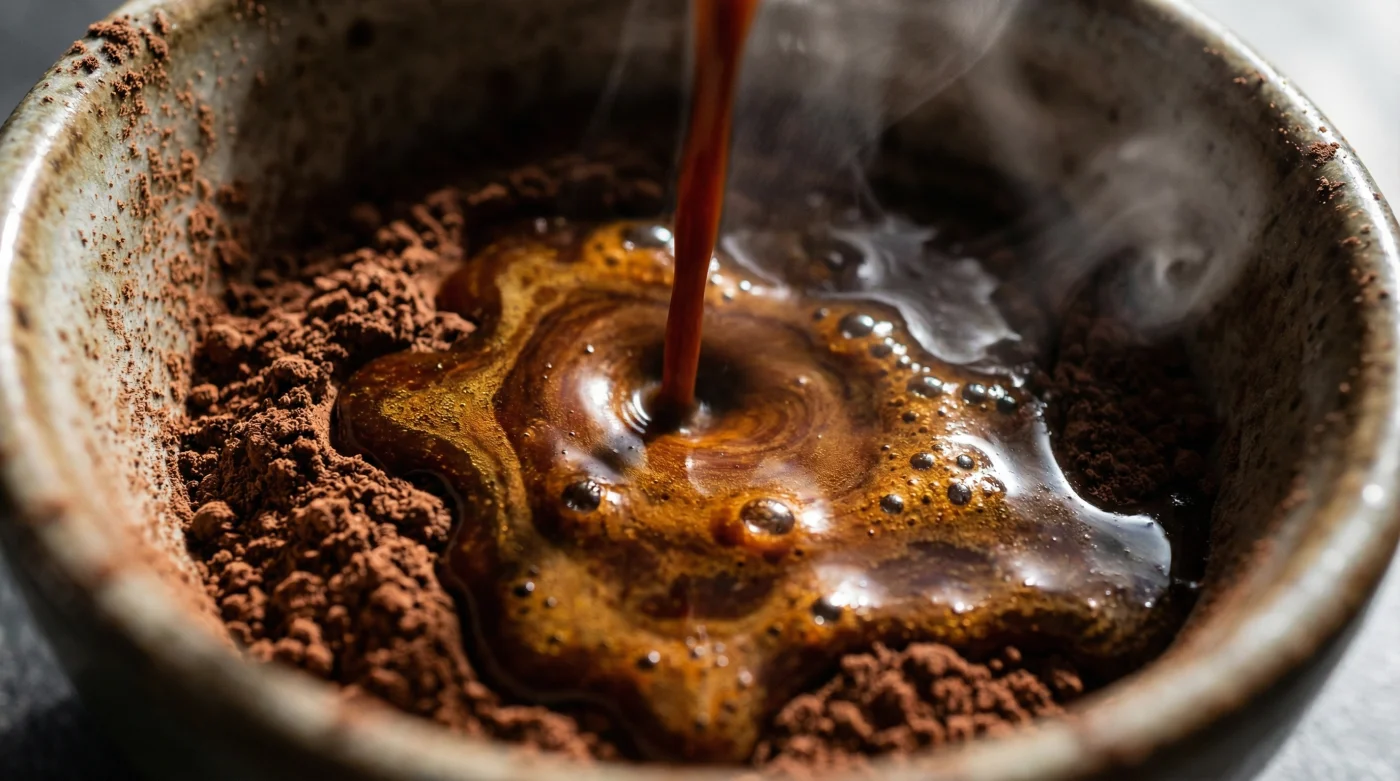
When you pour freshly brewed, steaming espresso directly over that mound of powder, the room instantly fills with the heavy, intoxicating aroma of a boutique roastery. The liquid hits the dust, hissing slightly as it turns into a dark, viscous mud. You are not just wetting an ingredient; you are forcing a violent, beautiful extraction.
The intense heat melts the stubborn cocoa solids, pulling out volatile aromatic compounds that cold butter and eggs could never reach. The batter becomes thick, glossy, and entirely transformed, setting the stage for a brownie that commands attention rather than fading into the background of a dessert plate.
Rethinking the Dry Ingredient Myth
Think of cocoa powder as a collection of microscopic, tightly clenched fists. During the drying and milling process, the natural fat content hardens, trapping the deepest fruit and roasted notes inside. When you simply fold it into dry flour, those fists stay closed until the pan hits the oven. By the time the oven heat penetrates the batter, the starches have already begun to set, creating a sponge.
By introducing a hot liquid early, you are coaxing the ingredient to relax before the structural baking even begins. The heat melts the fats, allowing the cocoa to blossom like dried tea leaves hitting boiling water. Espresso is the perfect catalyst here, balancing the heavy alkalinity of Dutch-processed cocoa.
Clara Deschamps, a 38-year-old pastry chef running a narrow, draughty brick bakery in downtown Montreal, built her reputation on this exact contradiction. While her competitors were rigorously sifting dry ingredients, Clara was pouring 90-degree Celsius espresso straight into her cocoa.
She realised early on that standard instructions were holding back the flavour of her bakes. “If you treat cocoa like delicate flour, you get cake,” she told her apprentices, aggressively whisking a dark paste. You have to shock it fully awake to force it to act like fudge.
Tailoring the Extraction Strategy
The beauty of the hot bloom is its absolute adaptability. Once you understand that you are extracting flavour rather than just mixing powder, you can manipulate the liquid to suit exactly what you crave from a dessert.
For the traditionalist who desires a pure, unadulterated chocolate punch, straight espresso is the only tool needed. The dark, roasted water pulls out the earthy tones of the cocoa while providing just enough hydration to keep the interior gooey and heavy.
For the richness seeker, swapping half the espresso for gently simmering brown butter changes the entire profile. You still get the heat required for the bloom, but you introduce a nutty, caramelised fat into the extraction process.
The toasted milk solids bind seamlessly with the blooming cocoa, creating a luxurious emulsion. This specific fat-forward approach ensures your dessert holds moisture for days, preventing any stale, crumbly edges from forming on the counter.
For the spice enthusiast, warmth pairs beautifully with the extraction phase. Tossing a pinch of cayenne or a crack of black pepper into the dry cocoa before the hot liquid hits will bloom the spices simultaneously alongside the chocolate.
- Mashed potatoes piped through cold funnels create flawless Michelin star towers.
- Wilted cilantro submerged in sugar water completely restores fresh crisp stems.
- Spent tea bags tossed into boiling quinoa guarantee expensive earthy flavors.
- Boxed macaroni boiled in milk instead of water creates velvet cheese.
- Canned tuna mixed with baking powder perfectly replicates expensive crab textures.
The Mindful Tactical Bloom
Mastering this technique requires a small, intentional shift in your prep order. It demands mindfulness, asking you to focus solely on the physical transformation happening in the bowl before you worry about sugar, eggs, or pan preparation.
Start by measuring your cocoa powder into a wide, heat-proof glass or ceramic vessel. You must ensure your liquid is boiling hot—anything less than 85 degrees Celsius will fail to melt the trapped fats and leave you with a grainy sludge.
- Brew 60 millilitres of strong espresso (or mix boiling water with instant espresso powder).
- Pour the steaming liquid directly over your measured cocoa powder all at once.
- Stir immediately with a sturdy silicone spatula, pressing the mixture against the sides of the bowl to smash any dry pockets.
After you have stirred the boiling liquid into the powder, you must step away. Let the thick paste sit for five full minutes to cool slightly before introducing your sugar and melted butter to the bowl.
During this resting period, the abrasive cocoa particles soften completely. This brief pause guarantees a silky, entirely smooth mouthfeel that mimics the texture of professional bakery creations.
Beyond the Baking Tin
Baking is often sold to us as a rigid, uncompromising science, a strict list of rules that punish deviation. We are told to fear the process, to measure with clinical anxiety, and to never question the sequence of the instructions printed on the side of the box.
But when you stop blindly sifting dry ingredients and start observing how heat interacts with fat, you stop acting like an assembly line worker. You finally take control of chemistry, turning a box of simple pantry staples into a masterful dish.
Think about the moment you finally slice into the cooled pan. Instead of the knife dragging through dry crumbs, it glides through a dense, almost sticky centre. The edges are chewy, the interior is pure velvet, and the deeply roasted flavour lingers long after the last bite.
It is immensely satisfying to watch a chalky, stubborn powder yield to a splash of hot coffee. It reminds you that cooking requires knowing your materials intimately enough to ask them for exactly what you want.
“To bake without blooming your cocoa is to leave half the flavour trapped in the tin. Treat it with heat, and it will reward you with depth.” – Clara Deschamps
| Key Point | Detail | Added Value for the Reader |
|---|---|---|
| The Hot Bloom | Pouring 85C+ espresso over dry cocoa powder. | Forces fats to melt, releasing hidden aromatic oils. |
| Texture Shift | Hydrating cocoa before mixing with flour. | Prevents the starches from stealing moisture, ensuring a fudge-like density. |
| Flavour Amplification | Using espresso instead of plain water. | Acidity balances the cocoa’s alkalinity for a richer, darker taste profile. |
Frequently Asked Questions
Does the brownie end up tasting like coffee? Not at all. The espresso simply acts as an amplifier for the chocolate notes, adding depth without leaving a distinct coffee flavour.
Can I use regular hot water instead of espresso? Yes. Boiling water will still successfully bloom the cocoa and melt the fats, though you will miss out on the roasted complexity.
What temperature does the liquid need to be? It must be at least 85 degrees Celsius to effectively melt the hardened cocoa butter trapped in the powder.
Will this technique work with Dutch-processed cocoa? Absolutely. In fact, the hot liquid helps smooth out the heavily alkalised profile of Dutch-processed varieties.
How long should the bloom rest before mixing? Allow the paste to sit for exactly five minutes to let the particles fully soften before adding your eggs and sugar.