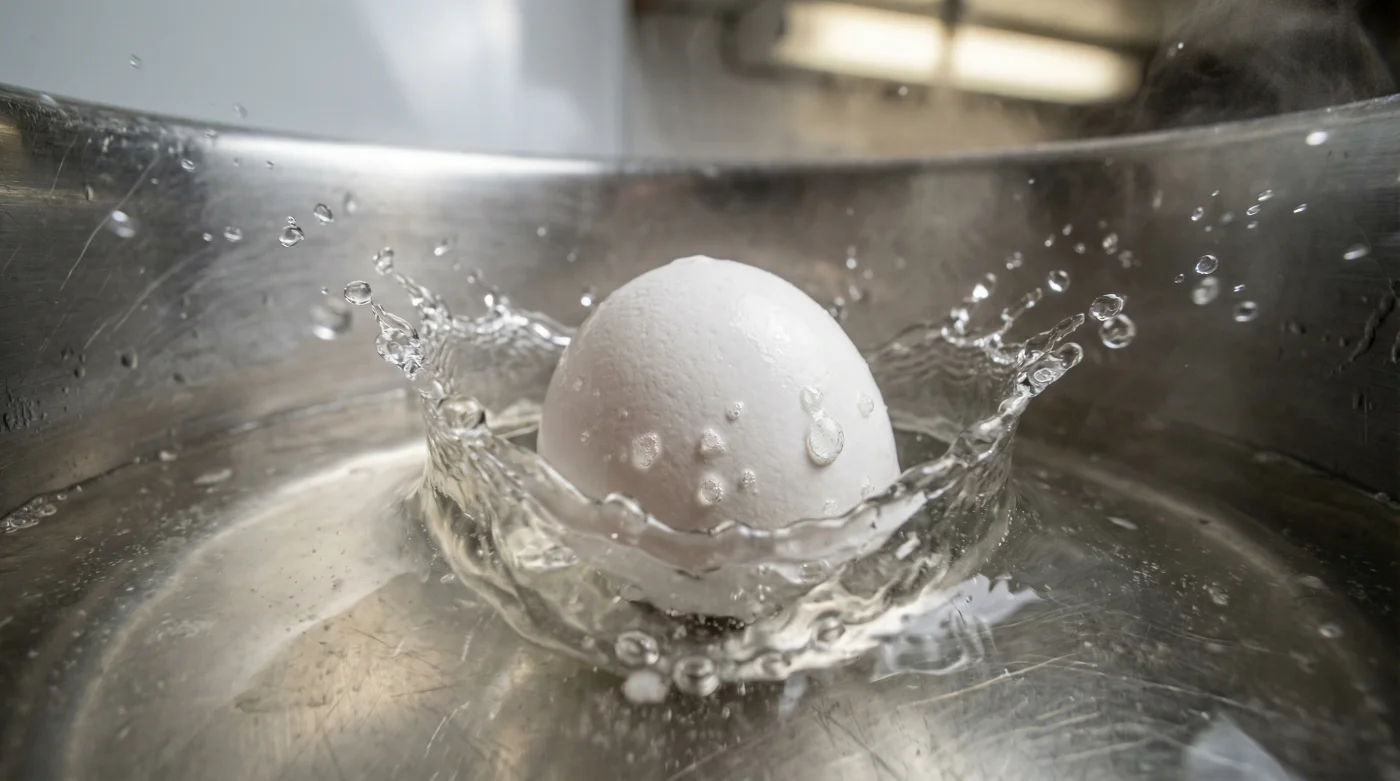
The kitchen is quiet, save for the low hum of the refrigerator and the rhythmic, hollow drumming of water coming to a rolling boil on the stove. You pull a cardboard carton from the cold shelf, feeling the distinct chill of the packaging against your fingertips. Outside the frost-lined window, the morning is still waking up. Today, you are craving a simple, protein-rich breakfast before facing a demanding schedule, but a quiet dread lingers at the back of your mind as you look at the pot.
You know exactly what usually happens when you try to prepare this specific morning meal. You end up standing over the kitchen sink, picking endlessly at stubborn, splintering white fragments, watching half of the actual food tear away into a cratered, unappetizing mess. It is a slow, frustrating task that leaves you with sticky fingers and a breakfast that looks like it was chewed on rather than sliced.
The culprit behind this daily annoyance is likely the method you were taught as a child. Most of us learned to gently rest the delicate ovals in a pot of cold tap water before turning on the burner, treating them like fragile, blown glass that might shatter violently if rushed or mistreated. We were told that starting cold was the safest, most respectful way to handle breakfast.
But this gentle coaxing creates an invisible, unbreakable protein bond. The incredibly thin membrane fusing the outer shell to the trembling white acts exactly like cheap wallpaper baked onto drywall, guaranteeing absolute frustration when the time comes to clear it away. You are essentially baking the glue into the surface.
The Science of the Sudden Shock
To understand why your careful morning routine is failing so spectacularly, you have to think of the anatomy at play as a tiny, pressurized cabin. Between the outer calcified armor and the trembling, moisture-rich white protein sits an incredibly thin, almost translucent fragile skin that dictates how easily your breakfast will peel.
When you start with a gentle, cold bath, those inner proteins heat incredibly slowly, unfurling at a microscopic level and clinging stubbornly to the membrane. They act precisely like wet cement drying slowly against a rough brick wall, bonding tighter and tighter as the water temperature gently rises to a simmer. By the time the water bubbles, the damage is already permanent.
Dropping raw ingredients directly into rolling, 100°C water completely rewrites this physical reaction from the very first millisecond. The extreme, unyielding heat forces the tiny pocket of trapped air sitting at the wide base to expand instantly, seeking a rapid escape route.
This rapid expansion inside the enclosed space acts like a violent, microscopic steam blast. It physically blows that thin membrane away from the inner wall in a matter of seconds, creating a slippery, detached barrier that guarantees the outer layer will practically fall off in your hands when you crack it later. The bond never has a chance to form.
Elise Corneau, a 42-year-old prep cook at a relentless, bustling Montreal diner, knows this fundamental kitchen truth better than anyone. Handling upwards of three hundred covers before the noon rush hits, she simply does not have the luxury of picking gently at tiny shell fragments. ‘If you coddle them from cold, you are just gluing the jacket right onto the body,’ she told me over the loud clatter of her busy cook line, casually dropping a massive slotted spoon of raw eggs into violently boiling vats just to survive the intense brunch shift.
Adapting the Shock to Your Plate
Once you embrace the chaotic logic of the boiling drop, the only variable left to master is the kitchen clock. Because the water is already at a rolling, aggressive boil when the cooking begins, you have total control over internal texture without having to guess when the water actually reached temperature.
For the Broth Purist
If you want that delicate, trembling, custard-like yolk that spills beautifully into a steaming bowl of hot ramen broth, you need precisely six minutes and thirty seconds. At this exact timestamp, the white sets just firmly enough to hold its spherical shape, while the gold centre remains a rich, heavy liquid that coats the back of a spoon.
For the Lunchbox Packer
Those prepping for a demanding week of desk lunches usually prefer a firm but creamy golden centre that will not leak or make a mess inside a container. Exactly nine minutes gives you a solid, bright orange yolk that holds up perfectly when chopped heavily into a side salad or pressed firmly into a quick sandwich on toasted rye.
For the Deviled Architect
When you are carefully making a presentation platter for a large family gathering, you need structurally flawless, hard-set halves that can handle heavy manipulation. Twelve solid minutes in the rolling boil guarantees a firm, pale yellow centre and a rigid, resilient white that handles aggressive piping and heavy dustings of paprika with absolute grace.
Executing the Boiling Drop
Shifting your habits to this fast-paced method requires a slightly more mindful approach to your stovetop movements. You are trading away slow, passive patience for brief, focused physical precision that demands your full attention for just a few moments.
- Mashed potatoes piped through cold funnels create flawless Michelin star towers.
- Wilted cilantro submerged in sugar water completely restores fresh crisp stems.
- Spent tea bags tossed into boiling quinoa guarantee expensive earthy flavors.
- Boxed macaroni boiled in milk instead of water creates velvet cheese.
- Canned tuna mixed with baking powder perfectly replicates expensive crab textures.
Maintain the aggressive boil at all costs throughout the cooking time. If you dump too many cold items from the fridge in at once, the ambient water temperature will plummet rapidly, completely ruining the sudden heat shock that you desperately need to blow out the membrane.
Once the kitchen timer rings, you must immediately transfer every single piece to a waiting ice bath for a minimum of five minutes. This extreme cold plunge halts the cooking process entirely in its tracks and shrinks the internal mass slightly, pulling the white even further away from the outer shell.
- Water Volume: Minimum 2 litres to maintain an aggressive, rolling boil.
- Temperature: 100°C for a rigorous, unbroken surface tension.
- Ice Bath: Half ice cubes, half cold tap water. Do not skip this critical cooling phase.
Reclaiming Your Morning Peace
Learning to step confidently away from the gentle, cold-water myth offers so much more than just a prettier breakfast plate for your social media feed. It actively removes a persistent, unnecessary morning frustration from the very start of your day, freeing up precious mental bandwidth.
When you finally tap that heavily cooled shell on your kitchen counter and feel it fracture into large, satisfyingly clean sheets, there is a distinct, undeniable physical satisfaction. The stiff jacket slips away effortlessly into the sink, leaving a perfectly smooth, pristine white surface behind without a single tear or missing chunk.
This beautifully simple kitchen fix proves that sometimes, the conventional wisdom we blindly follow is the exact hidden source of our daily trouble. By purposefully applying a sudden, calculated shock to your routine, you gain back your morning calm and reclaim your time.
‘If you coddle them from cold, you are just gluing the jacket to the body. The boiling drop is the only way a cook survives the weekend brunch rush without losing their sanity.’ – Elise Corneau, Montreal Prep Cook
| Key Point | Detail | Added Value for the Reader |
|---|---|---|
| Cold Water Start | Proteins slowly bind to the inner membrane as temperature softly rises. | Avoid this method entirely to prevent torn, cratered whites and wasted morning food. |
| Boiling Water Drop | Instant steam blast separates the thin membrane from the inner shell wall. | Guarantees your protective shells slip off in large, effortless pieces every single time. |
| Ice Bath Finish | Immediately stops the cooking and slightly shrinks the internal physical volume. | Prevents the dreaded green sulfur ring and further loosens the stiff outer jacket. |
Frequently Asked Questions
Will dropping them directly into rolling water cause severe cracks?
If you drop them carelessly from a height, they will absolutely fracture against the pot. Always lower them gently with a slotted spoon to preserve their structural integrity.
Do I need to let them rest at room temperature first?
No, pulling them straight from the fridge provides the maximum temperature contrast, which actually strengthens the steam blast effect that cleanly separates the membrane.
Does adding baking soda or heavy vinegar to the water help?
While some swear by altering the pH of the tap water, the extreme heat shock alone is entirely sufficient to detach the stubborn, wallpaper-like membrane from the white.
How long can they sit submerged in the ice bath?
A strict minimum of five minutes is required to successfully halt the cooking, but they can remain comfortably in the cold water until you are ready to peel them or store them.
Why is there a dark grey ring around the yolk sometimes?
That is caused by a chemical reaction between sulfur and iron when overcooked. The strict timing and rapid cooling of the boiling drop method completely prevents this discoloration.