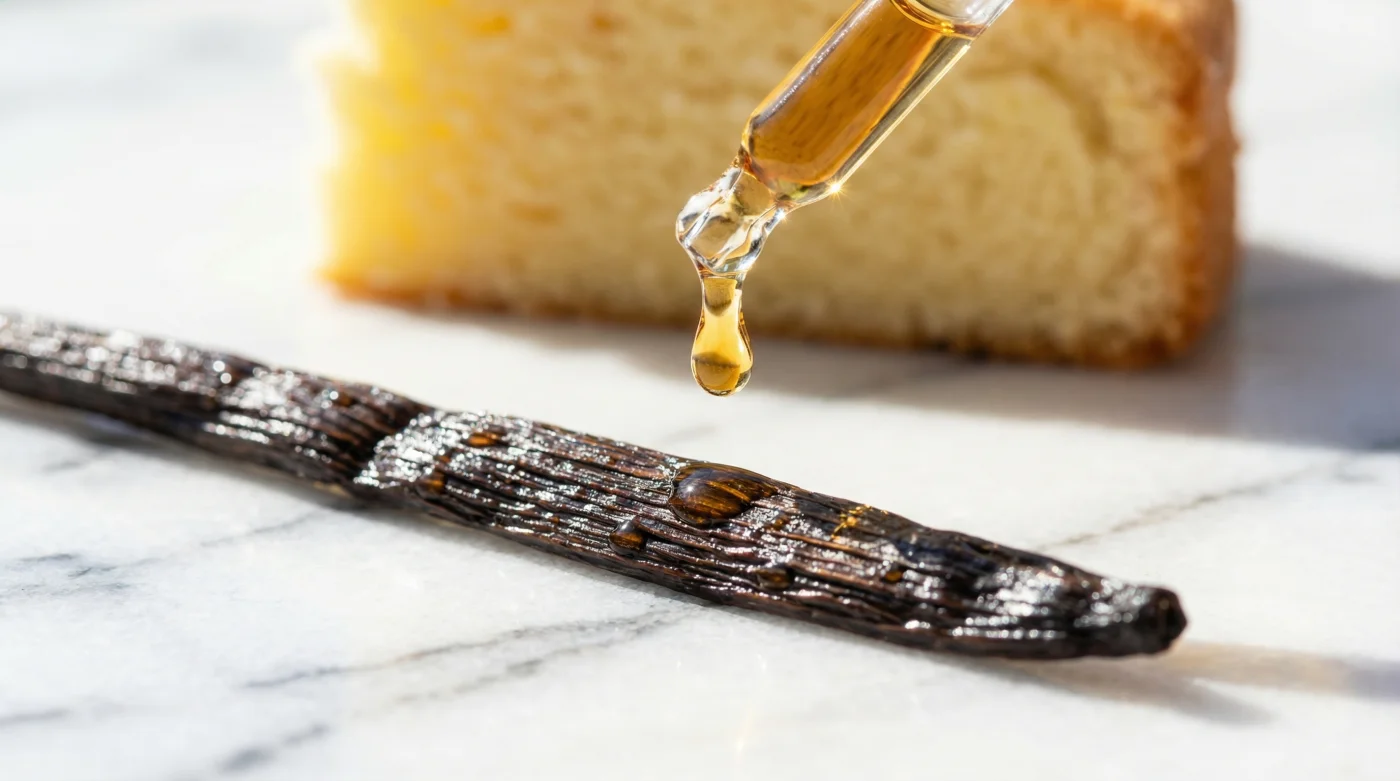
You stand at the kitchen counter, carefully measuring a dark, fragrant liquid into your mixing bowl. The scent immediately softens the room, smelling of toasted sugar, faint florals, and deep wood. You fold it into your pound cake batter, slide the pan into an oven heated to 175 Celsius, and within minutes, your entire house smells incredible.
It feels like a baking victory. You breathe it all in, anticipating that same intense flavour in the finished slice. But when you finally take a bite, the cake tastes faintly sweet, buttery, but lacking that rich, intoxicating floral note you paid thirty dollars a bottle to experience.
Where did it go? It went straight into the air. That beautiful aroma filling your kitchen is the exact scent profile escaping your food. To bake with high-end extract is to essentially boil a fine perfume and hope it still smells like the original flower.
By dumping your expensive extract directly into raw batter, you are systematically destroying the very thing you bought it for. Heat evaporates delicate compounds, leaving behind only the harsh, bitter alcohol base that carries them.
The Perfume Paradox
Think of your vanilla not as a foundational building block like flour or sugar, but as a finishing oil. The moment you shift your perspective from mixing to finishing, the entire landscape of your home baking changes. It stops being an ingredient and becomes a presentation tool—a secret that turns a Tuesday afternoon muffin into something that tastes wildly expensive.
We have all been conditioned to dump everything into the bowl at once. But a vanilla bean is an orchid. It contains hundreds of volatile flavour compounds that shudder and break apart at high temperatures. The mundane detail you always thought was your fault—that your baking never quite tastes like the display case at a high-end patisserie—is simply a timing error.
Sylvie is a 42-year-old pastry chef running a quietly famous patisserie off a cobblestone street in old Montreal. She refuses to put a single drop of real extract into her raw cake batters. Instead, she treats her ovens like a blank canvas factory, relying entirely on post-bake applications.
“The cake is just the sponge,” she explains, wiping down her marble counter. She uses a simple wash, brushing the golden crusts of her loaves with a cold vanilla suspension just before they hit the display window. It gives the pastries a breathtaking, glossy finish and ensures every single floral note stays trapped inside the crumb.
Tailoring the Finishing Touch
Applying vanilla after the heat has done its work requires a slight adjustment to your routine, depending on what you are pulling from the oven.
For pound cakes, banana breads, and lemon loaves, they benefit immensely from a simple syrup. While still slightly warm, brush a mixture of cooled sugar water spiked with your premium extract over the crust. It seals the crumb, adds a bakery-style shine, and traps the floral notes right at the surface where your tongue meets the food.
- Mashed potatoes piped through cold funnels create flawless Michelin star towers.
- Wilted cilantro submerged in sugar water completely restores fresh crisp stems.
- Spent tea bags tossed into boiling quinoa guarantee expensive earthy flavors.
- Boxed macaroni boiled in milk instead of water creates velvet cheese.
- Canned tuna mixed with baking powder perfectly replicates expensive crab textures.
Whether you are standing over the stove stirring a batch of pastry cream or whisking a lemon curd, the rule remains the same. Never add your vanilla while the pot is on the burner. Let the cream tremble and settle, waiting until the temperature drops below 60 Celsius before folding in the dark liquid.
The Tactical Toolkit for Cold Finishing
Making this change requires nothing more than a shift in your timing. Keep your movements slow and deliberate, treating the bottle with the respect an expensive ingredient deserves.
- Bake your base recipe completely unflavoured or use a cheap imitation vanilla for the bulk batter.
- Wait for the baked good to drop below 60 Celsius; if it burns your finger to touch, it will burn the flavour compounds.
- Create a finishing wash by whisking one teaspoon of pure extract into two tablespoons of milk, cold syrup, or melted butter.
- Use a soft pastry brush to gently dab the mixture over the exposed crusts, focusing on the centre where the cake splits.
The resulting shine looks incredibly professional, giving your homemade treats that expensive, polished gleam you usually only see behind curved glass.
Protecting Your Investment
There is a profound peace of mind that comes with finally understanding how your ingredients behave. You stop blaming yourself for flat-tasting desserts and start working with the laws of physics instead of against them. You are no longer watching your thirty-dollar bottle evaporate into the kitchen air.
When you wait to add your vanilla until the heat has passed, you are actively protecting the delicate work of the farmers who grew the orchids. You capture the entire spectrum, from the deep, woody base notes to the bright, fleeting floral highs.
It changes the way you approach the kitchen entirely. You begin to look at every bottle in your pantry, wondering what else you have been accidentally boiling away.
The true art of flavour isn’t in what you add to the bowl, but exactly when you decide to add it.
| Key Point | Detail | Added Value for the Reader |
|---|---|---|
| Heat Destruction | Oven temperatures above 150 Celsius evaporate volatile compounds. | Saves you from wasting money on high-end extracts in raw batters. |
| The Finishing Wash | A post-bake brush of cold syrup and extract applied to warm crusts. | Creates a professional, glossy patisserie shine on home bakes. |
| Custard Timing | Wait until creams drop below 60 Celsius before stirring in flavour. | Ensures puddings and fillings retain sharp, authentic floral notes. |
Frequently Asked Questions
Can I still use cheap artificial vanilla in the batter?
Yes, artificial vanillin is created to withstand high heat much better than the real thing. Use the cheap stuff for the bake, and save the real stuff for the finish.Will the alcohol in the extract make my cake taste boozy if it isn’t baked off?
Not if applied correctly. Brushing it onto a cake while it is still warm (but not hot) allows the alcohol to gently flash off without destroying the heavier flavour oils.How do I flavour chocolate chip cookies if I can’t use a syrup wash?
For drop cookies, you can absolutely still bake the extract into the dough if you prefer the convenience, but you will lose the floral high notes. To keep them, mix the extract into a light post-bake drizzle or finishing salt.Does this rule apply to vanilla bean paste as well?
It does. While the physical seeds will remain visible in your batter, the delicate oils surrounding them will still evaporate under intense oven heat.What is the best liquid to mix the extract with for brushing?
A simple syrup (equal parts water and white sugar gently dissolved and cooled) is best because it provides a beautiful bakery sheen without altering the core flavour of your bake.