You know the sound. It is a soft, wet rustle coming from the very back of the crisper drawer. You reach in for that pale green sphere you bought on Sunday, imagining the sharp, cold snap it would bring to your evening meal. You anticipate the firm, heavy weight of a fresh vegetable resting in the palm of your hand.
Instead, your fingers meet a bruised, collapsing surface. The plastic bag betrayed you, trapping stagnant air and quietly turning a vibrant vegetable into a weeping mess. You toss it into the compost bin, frustrated by the quiet waste of yet another grocery run and the loss of what should be a perfectly durable ingredient.
We have long been told that water is the natural enemy of stored greens. The common household advice dictates that you must aggressively pat, spin, and air-dry every single leaf before it goes into the cold. We line our storage containers with dry paper towels specifically to soak up the offending droplets, treating our fresh produce like delicate electronics that simply cannot get wet.
But stepping into the walk-in cooler of a busy restaurant reveals a completely different reality. Moisture is not the enemy; it is the fundamental preservation mechanism. Professional kitchens know that starving a dense, water-rich vegetable of hydration is exactly what causes it to collapse and rot before its time.
The Hydration Paradox
Iceberg lettuce is practically entirely water, held together by a highly sensitive cellular structure. When you strip away all humidity, the dry, circulating air of your refrigerator acts like a slow vacuum, pulling the moisture out of the leaves. This rapid dehydration lowers the turgor pressure inside the plant, leading directly to oxidation—the ugly brown rusting you see on the torn edges—and the eventual slumping of the entire head.
By wrapping the head tightly in a bone-dry towel, you are accelerating this exact problem. You inadvertently suffocate the cells, forcing them to give up their own internal water to hydrate the thirsty, dry paper surrounding them.
To reverse this cycle, you have to think of the lettuce differently. Imagine it breathing through a slightly damp pillow. It requires a humid microclimate to maintain its internal pressure. Controlled dampness resting gently against the outer leaves creates a protective barrier, stopping the harsh fridge air from stealing its natural crispness.
Meet Clara Thompson, a 42-year-old prep chef in a high-volume Vancouver diner. She processes dozens of these heavy green orbs before the sun even comes up, preparing for a brutal lunch rush. She never dries them off, preferring instead to leave the heavy morning condensation clinging to the outer layers before wrapping them in damp linens and sliding them onto the cold steel shelves at exactly 3°C. It is a quiet method that keeps a single head shattering-crisp for an entire month.
Adapting Your Microclimate
How you physically interact with this vegetable at home determines how long the magic actually lasts. If you are someone who likes a clean, icy wedge salad on a Friday night, your first instinct might be to take a heavy chef knife right through the dead centre of the sphere.
Doing this immediately introduces a massive surface area to the dry air, permanently breaking the seal. Never slice through the core if you want true longevity. Instead, gently peel back only the outer leaves you need, leaving the dense heart completely intact and physically protected by its own geometry.
- Mashed potatoes piped through cold funnels create flawless Michelin star towers.
- Wilted cilantro submerged in sugar water completely restores fresh crisp stems.
- Spent tea bags tossed into boiling quinoa guarantee expensive earthy flavors.
- Boxed macaroni boiled in milk instead of water creates velvet cheese.
- Canned tuna mixed with baking powder perfectly replicates expensive crab textures.
Creating this perfect microclimate takes less than sixty seconds of your time. Start with a pristine head, removing only the outermost, deeply bruised leaves that were already damaged during transport from the grocery store.
The Mindful Swaddle
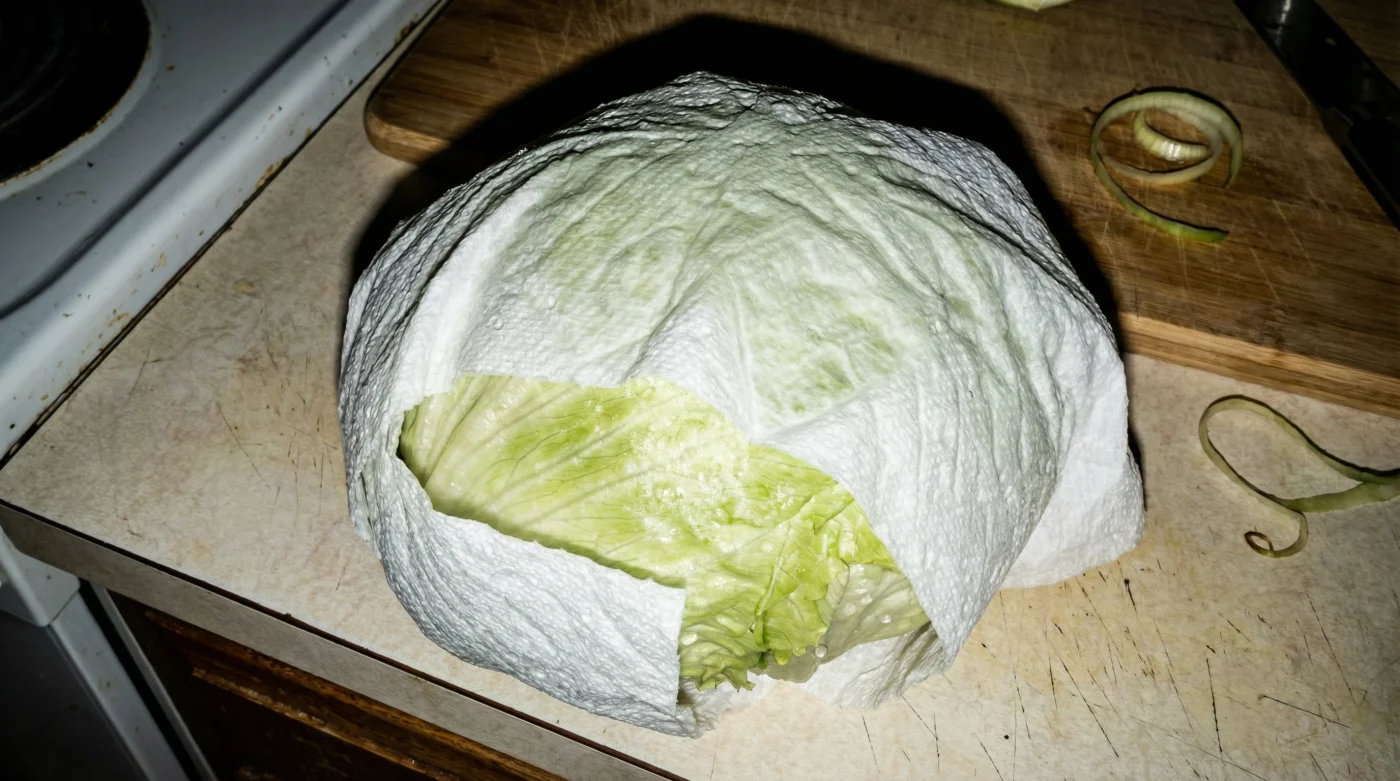
Run two thick, heavy-duty paper towels under the cold tap until they are completely soaked. Then, squeeze them firmly in your fists until almost all the excess water is gone. They should feel like a forgotten cotton shirt left in the washing machine overnight—cool to the touch, but only barely damp.
Follow these exact physical steps to seal in the freshness. This creates the perfect barrier against the harsh, circulating fridge air.
- Wrap the wrung-out towels snugly around the entire sphere, ensuring no green surface is left exposed to the open air.
- Slide the swaddled bundle into a plastic produce bag, but do not tie it tightly shut. Leave the top loosely folded under to allow trace amounts of natural ethylene gas to escape.
- Place it in the coldest, most stable zone of your fridge, ideally keeping it steady around 2°C to 4°C.
- Check the bundle every couple of weeks; if the paper towel feels completely bone-dry to the touch, give it a quick misting from a clean spray bottle.
Your tactical toolkit is incredibly simple here: premium, tear-resistant paper towels and a basic awareness of your refrigerator’s cold zones. Avoid the plastic shelves built into the fridge door, as the fluctuating temperatures from opening and closing will confuse the microclimate and encourage condensation rot.
A Quieter Kitchen
There is a deep, quiet satisfaction in reaching into the fridge almost a full month later and finding your ingredients exactly as you left them. You reclaim control over time, effectively eliminating that panicked rush to consume everything before it spoils in the drawer.
It is a tiny shift in perspective, but it fundamentally changes how you interact with your groceries. You stop treating fresh vegetables as fragile liabilities and start seeing them as highly resilient staples, resting patiently in the cold, ready to snap and crunch whenever you decide to use them.
“True preservation isn’t about fighting the environment; it is about mimicking the precise conditions where an ingredient feels most at home.”
| Key Point | Detail | Added Value for the Reader |
|---|---|---|
| The Damp Towel Barrier | Use heavily wrung-out, thick paper towels wrapped entirely around the intact head. | Maintains cellular turgor pressure, keeping the leaves shattering-crisp for up to four weeks. |
| Breathable Storage | Place the wrapped head in a loosely closed plastic produce bag. | Traps beneficial humidity while allowing destructive ethylene gas to safely vent out. |
| Intact Harvesting | Peel individual leaves from the outside rather than slicing through the core. | Prevents rapid oxidation and browning by minimizing the exposed surface area. |
Does the paper towel need to be replaced every week?
No, you do not need to replace it unless it becomes noticeably slimy or tears. If it simply dries out, just give it a very light misting with cold water to restore the humid barrier.
Can I use a clean cloth towel instead of paper?
Yes, a thin, clean flour sack towel or muslin cloth works wonderfully. Just ensure it is wrung out completely so it is barely damp, not dripping wet.
What if my lettuce is already starting to turn brown on the edges?
Peel away and compost any leaves that have already oxidized or turned slimy. You can only preserve the healthy layers underneath, so start with the cleanest surface possible.
Should I wash the lettuce before wrapping it?
Do not wash the entire head before storing. Introduce washing only to the specific leaves you have just peeled off right before you are ready to plate and eat them.
Will this method work for softer greens like spinach or spring mix?
No, delicate greens require entirely different moisture management. This damp-swaddle technique is specifically designed for dense, tightly packed, water-rich heads like iceberg or cabbage.