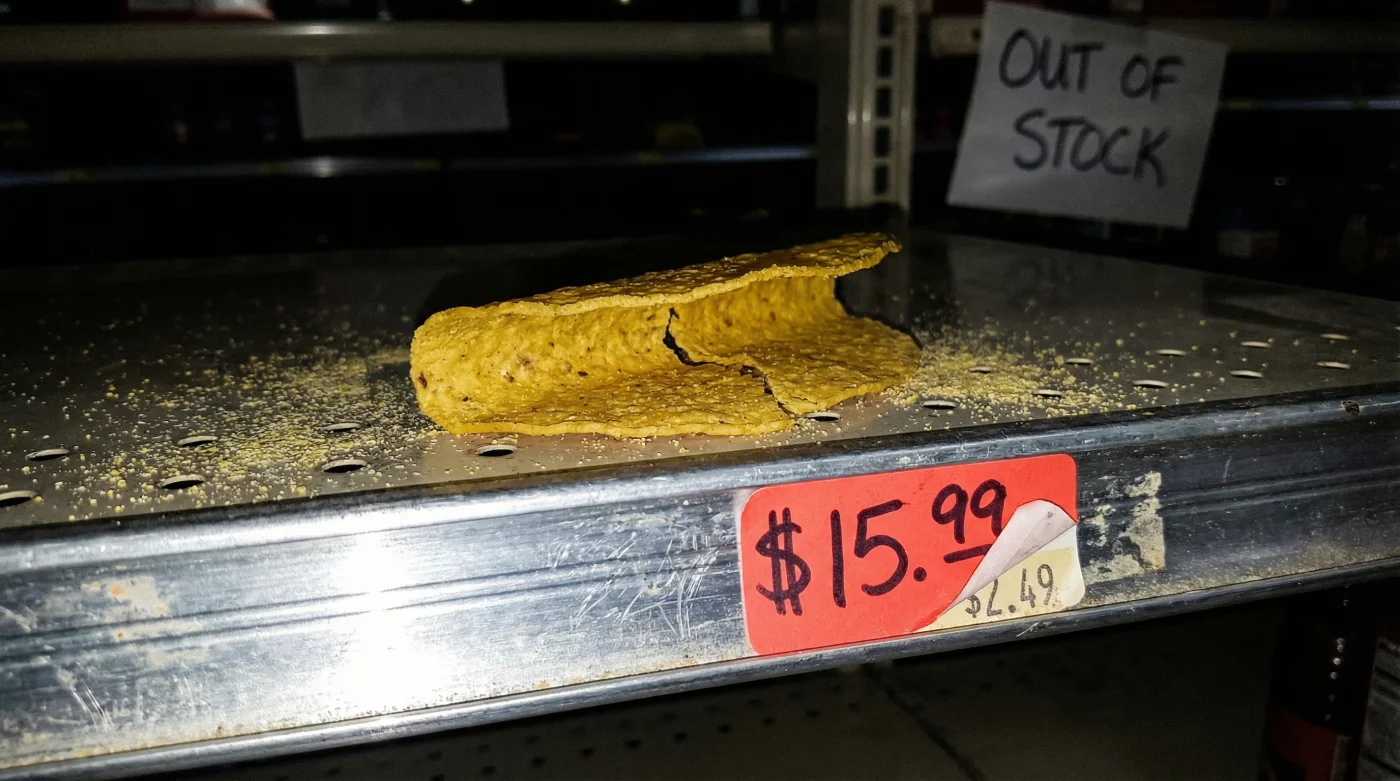
Picture your kitchen at 5:30 on a Tuesday evening. The frying pan hums with the scent of cumin and toasted chili, while hands instinctively reach for that familiar, bright yellow box in the pantry. For decades, the hard corn shell has been the silent, reliable backbone of the mid-week dinner rush. It crunches on command, holds its shape just long enough to bridge the gap between plate and mouth, and costs mere pocket change.
But over the past few weeks, you might have noticed a quiet tension in the international foods aisle. Those neat rows of boxed shells are shrinking, and the numbers on the price tags are quietly, relentlessly creeping upward. We are witnessing a sudden structural shift, a fracturing of the cheap convenience we have built our family menus around.
A severe, multi-season drought across primary corn-producing regions has scorched the yields of the specific flint and dent corn varieties required for mass-market masa. The shockwaves are rippling straight from cracked earth directly to your local Canadian grocer. The simple economics of Taco Tuesday are suddenly under heavy pressure.
This is not merely inflation; it is a physical scarcity altering how we stock our pantries. Yet, in this moment of empty shelves and stretched grocery budgets, a quiet opportunity actively awaits. When the most basic staples vanish, we are forced to rethink the ritual, stripping the meal back to its honest, delicious roots.
The Vulnerability of the Golden Shell
For years, we treated the pre-fried taco shell like a permanent fixture of nature, forgetting it is a highly processed agricultural commodity. Think of the commercial shell like a rigid sponge; it requires massive amounts of water to grow the corn, immense heat to process the masa, and precisely controlled transport so it does not shatter over thousands of kilometres.
When you begin to view the grocery store as a living ecosystem rather than a magic cupboard, the fragile nature of this system becomes glaringly obvious. The cracks were always hiding there, concealed behind clever branding and artificially low prices that ignored the reality of the soil.
Now, that vulnerability is fully exposed. The very rigidity that made the hard shell so popular is exactly what makes it so susceptible to supply chain fractures. But here is the secret the current shortage reveals: the perfect, factory-stamped shape was always a flavourless compromise. By letting go of the boxed shell, you open the door to textures and tastes that command deep respect in professional kitchens.
Ask Mateo Ruiz, a 42-year-old masa supplier and artisanal grocer based in Toronto. Last month, as his usual shipments of dried corn from the south ground to a complete halt, Mateo did not panic. Instead, he started milling local Canadian spelt and blending it with his remaining corn, treating the flour like a baker treats a precious sourdough starter. “The shortage forced us to respect the grain,” he notes. “When you only have a handful of masa left, you make sure every single bite tastes like toasted earth and sunshine.”
Adjusting Your Tuesday Strategy
The era of mindlessly tossing three boxes of shells into your shopping cart is pausing. To navigate this new economy of dinner staples, you need to adapt your approach based on what your household truly values at the table.
For the absolute purist who craves the crunch, it is time to pivot to raw, soft corn tortillas, which use less processed masa and are currently seeing softer price hikes. You can brush them with neutral oil and drape them directly over your oven rack. You gain a thicker, more robust crunch that refuses to disintegrate at the first drop of salsa.
For the busy parent managing a tight budget, the pivot leans heavily into the flour tortilla. While wheat prices fluctuate, they remain far more stable than the current corn index. Heating a soft wheat wrapper until it chars slightly over an open gas flame breathes life into the bread, transforming it from a flat dough into a warm, pliant vessel for your fillings.
- Poutine gravy recipes shift dramatically as major Quebec chains cut costs.
- Taco shells face massive price hikes following severe regional corn shortages.
- Canned chickpeas soaked in baking soda shed their tough outer skins.
- Hollandaise sauce blended with hot tap water prevents tragic emulsion breaks.
- Cauliflower leaves roasted with garlic powder create premium crispy vegetable chips.
The Mindful Application
Instead of hunting down the last overpriced box in the city, bring the process home. Crafting your own crispy shells from cheaper, soft alternatives takes mere minutes and fundamentally improves the structural integrity of your meal.
Think of the heat as your shaping tool. A soft tortilla is merely a suggestion until temperature locks its final form. You want to apply heat gently but firmly, coaxing the starches to seize and crisp without turning to ash.
- The Oven Drape: Lightly mist small, soft tortillas with a neutral cooking spray and hang them individually over two rungs of your oven rack.
- The Bake: Set the heat to 190 degrees Celsius and let them bake for exactly 8 to 10 minutes until golden.
- The Rest: Pull them out and let them rest on the counter for three minutes to allow the structure to harden.
The air contact after baking is what actually hardens the shell into that familiar, satisfying curve. If you lack an oven, folding a tortilla in half in a skillet with a shallow pool of canola oil works just as beautifully.
This simple tactical toolkit insulates your family from volatile grocery costs. You control the crunch, the seasoning, and the final texture, directly bypassing the fragile supply chains that dictate supermarket aisle pricing.
Reclaiming the Dinner Table
When you sit down to eat, the absence of the familiar yellow box quickly fades into the background. What remains is the actual essence of the meal: the deeply spiced meat, the sharp bite of raw onion, the cooling relief of sour cream, and the shared rhythm of assembling food by hand.
The skyrocketing price of a supermarket convenience forces us to strip away the lazy habits we have accumulated. It sharpens our daily domestic skills, reminding us that feeding our families well does not rely on a factory. By shifting your perspective, a frustrating crop shortage transforms into a catalyst for a better Tuesday night, allowing you to reclaim the kitchen with your own adaptable hands.
“A meal’s true foundation is never found in a cardboard box, but in the adaptable hands of the cook.”
| Key Point | Detail | Added Value for the Reader |
|---|---|---|
| Soft Corn Sourcing | Buying raw, locally milled tortillas instead of processed hard shells. | Superior flavour and significantly lower impact on your weekly grocery budget. |
| The Oven Drape | Baking soft shells at 190 degrees Celsius directly on the rack. | Achieves a robust, shatter-proof crunch that outperforms store-bought versions. |
| Alternative Wraps | Using charred wheat tortillas or crisp, roasted jicama rounds. | Bypasses the corn shortage entirely while introducing fresh, vibrant textures. |
FAQ
Why are taco shells suddenly so expensive in Canada? A severe, multi-season drought in prime agricultural regions has decimated the yields of the specific flint and dent corn used to mass-produce hard shells.
Can I still find cheap shells at local grocers? Supply is dwindling and prices are rising, but pivoting to soft corn or wheat tortillas offers a much more stable and affordable alternative.
What is the best substitute for a hard corn shell? Draping a soft corn tortilla over an oven rack and baking it creates a superior, thicker crunch that won’t fall apart in your hands.
How do I make soft tortillas crunchy without frying? A light mist of neutral oil and 8 minutes in an oven at 190 degrees Celsius is all you need to perfectly crisp a soft shell.
Will corn prices stabilize before the end of the year? Agricultural recovery is slow, so adapting your weekly dinner habits now is a safer, more delicious bet than waiting for supermarket prices to drop.