The frost might still be clinging to the windowpanes of your kitchen, but inside, the smell of toasted sourdough and melting butter signals the weekend. You stand by the stove, whisk in hand, staring down a glass bowl set over simmering water. This is the moment where weekend breakfasts usually turn deeply tense. You are trying to coax egg yolks and butter into a fragile alliance, hoping they do not split into a greasy, scrambled mess. The pressure of timing the poached eggs perfectly while maintaining the delicate sauce can make Sunday mornings feel entirely overwhelming.
Culinary school lore has trained you to fear this specific process. The traditional double-boiler method demands constant vigilance, aching forearms, and a terrifyingly narrow margin for error. One second of inattention, a slight fluctuation in the steam, and you are left staring at a broken, weeping yellow sauce that feels like a personal failure.
But what if the secret to a flawless hollandaise does not require standing over a steaming pot at all? Imagine placing your ingredients into an ordinary blender, pressing a button, and achieving a perfectly stable, restaurant-quality sauce in under sixty seconds. The method is profoundly simple, entirely altering the way you approach your morning routine.
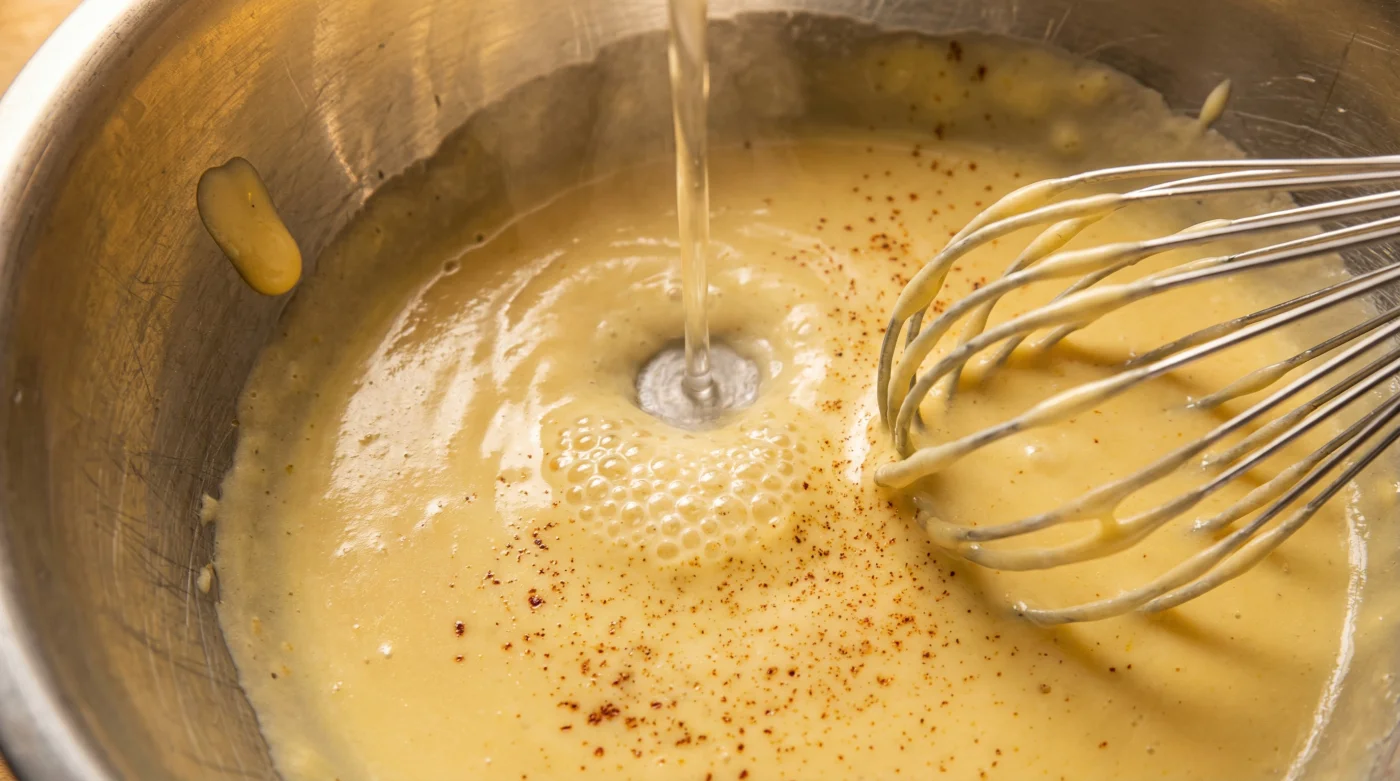
The trick lies right in your kitchen sink, contradicting everything traditionally taught about heat control. A single tablespoon of hot tap water, introduced right at the beginning, acts as a gentle, stabilizing thermal bridge that binds the fats safely without risking a sudden scramble.
The Physics of a Peaceful Emulsion
You have likely been told that a proper emulsion requires the constant, punishing heat of steam. Cooking shows and old recipe books romanticize the sweat and panic of whisking furiously over a pot of boiling water. They treat the sauce like a wild animal that must be wrestled into submission, insisting that true texture only comes from relentless physical exertion.
This mindset fundamentally misunderstands how fats and liquids actually interact on a structural level. Emulsification is less about forcing reluctant ingredients together and more about creating a welcoming environment for molecular bonding. When you drop cold egg yolks into a blender and hit them immediately with hot, melted butter, the extreme thermal shock often tears the delicate protein structures completely apart.
By adding a simple tablespoon of hot tap water to the cold yolks and lemon juice before the butter even enters the picture, you gently and effectively raise the base temperature. You are easing the yolks into the warmth, softening their structures and fully preparing them to accept the heavy influx of incoming fat.
It completely contradicts the strict double-boiler method taught in high-end professional kitchens. Yet, this incredibly simple addition of tap water provides the perfect, safe foundational heat needed to create a luxurious texture that holds its shape gracefully long after you pour it over a warm plate.
Elias Thorne, a 42-year-old former Vancouver line chef who now runs a bustling, intimate brunch spot in Halifax, remembers the exact morning he abandoned the traditional method permanently. It was a freezing Sunday in February, the dining room was packed with hungry locals, and his primary stove element died right in the middle of a massive service rush.
Panic immediately set in as handwritten tickets for eggs benedict piled relentlessly up on the rail. Desperate to keep the line moving, Elias threw his yolks into a heavy commercial blender, but the cold blades kept splitting the rapid sauce. On a pure whim, he splashed in some hot water straight from the hand-washing sink before blending. It miraculously created an immaculately smooth, trembling cream that never once separated, single-handedly saving his entire morning service.
Adjusting for Your Morning Rhythm
The true beauty of this specific technique is how easily it bends to the specific cadence of your life. Not every morning looks exactly the same, and your approach to this classic topping can happily shift depending on who is currently waiting at your kitchen island.
Let us look at how you might adapt this core technique for different scenarios. If you are preparing a quiet, slow breakfast for two, the entire process remains wonderfully minimal and entirely contained. You simply blend the base, stream the warm butter, and instantly enjoy a stress-free morning weekend ritual without dirtying an entire stovetop.
For the Purist
- Poutine gravy recipes shift dramatically as major Quebec chains cut costs.
- Taco shells face massive price hikes following severe regional corn shortages.
- Canned chickpeas soaked in baking soda shed their tough outer skins.
- Hollandaise sauce blended with hot tap water prevents tragic emulsion breaks.
- Cauliflower leaves roasted with garlic powder create premium crispy vegetable chips.
Try adding a small pinch of sharp cayenne pepper and a light scrape of fresh lemon zest to the blender before pouring the fat. The intense friction of the fast blades will extract the essential oils directly from the zest, creating a bright, fragrant, cutting warmth that cuts through the heavy richness beautifully.
For the Busy Parent
Trying to successfully coordinate poaching multiple eggs, toasting fresh muffins, and keeping young children happily entertained is practically an athletic event. You absolutely cannot afford to stand anxiously over a double boiler whisking for ten solid minutes while total domestic chaos unfolds wildly around you.
Because the hot tap water stabilizes the emulsion so incredibly thoroughly, this specific version of the sauce holds its ideal serving temperature remarkably well. You can make it first, pour it directly into an insulated coffee thermos, and completely trust that it will remain perfectly pourable and safe for up to a full hour while you calmly manage the rest of the busy meal.
The Tap Water Technique
Execution of this method requires very little physical effort, but it firmly asks for your full, undivided attention during the crucial pouring phase. Gather your necessary tools well before you begin, ensuring absolutely everything is within an easy arm’s reach so the entire process naturally flows.
The ultimate goal here is a highly mindful, perfectly measured assembly of ingredients. Rather than relying on frantic rushing or panic, you are simply directing the raw ingredients to softly do the work they naturally want to do. Prepare your kitchen workspace for a calm, deeply satisfying conclusion to your early prep work.
Here is your specific tactical toolkit for achieving flawless execution every single time:
- The Tools: A standard upright blender (or a tall, narrow container paired with an immersion blender) and a small, heat-proof spouted jug for pouring.
- The Ratios: 2 large, fresh egg yolks, 1 tablespoon of freshly squeezed lemon juice, exactly 1 tablespoon of hot tap water (roughly 60 Celsius), and 1/2 cup of unsalted butter.
- The Heat: Melt the butter thoroughly in the microwave or gently on the stove until it is hot and actively bubbling, but absolutely do not let the milk solids begin to brown.
- The Bind: Place the raw yolks, the lemon juice, and the hot tap water directly into the bottom of the blender. Blend on the lowest setting for exactly ten seconds to gently temper the yolks.
- The Pour: With the blender continuously running on low, remove the small centre insert of the lid. Very slowly drizzle the hot melted butter down into the vortex in a hair-thin stream until the sauce visibly thickens and the sound of the motor noticeably deepens, as if it is suddenly breathing through a pillow.
Reclaiming the Sunday Ritual
We often incorrectly assign profound moral weight to unnecessarily difficult cooking techniques. We quietly tell ourselves that if a classic recipe does not demand sweat, anxiety, and risk, the final result is somehow less authentic or worthy. We simply accept high kitchen stress as the heavy, unavoidable morning price for eating incredibly well.
Finding a distinctly smarter, much gentler way to prepare your food is absolutely not cheating. By intentionally shifting your perspective and relying gracefully on a little thermal science, you permanently remove the fear from a classic dish. You replace your morning culinary anxiety with a quiet, capable, enduring confidence that warmly sets the tone for the entire day.
The true, lasting joy of cooking at home is the simple ability to feed yourself and the people you genuinely care about with clear intention. When you no longer have to endlessly worry about breaking your delicate sauce, you finally have the mental space to actually breathe. You can finally enjoy the soft sunlight hitting the kitchen counter, the rich smell of the morning coffee brewing, and the profound, simple daily pleasure of a beautiful meal prepared entirely by your own hands.
A beautiful emulsion is not forced; it is calmly negotiated through the mindful application of heat.
| Key Point | Detail | Added Value for the Reader |
|---|---|---|
| Hot Tap Water Base | Introduces 60 Celsius water to cold yolks before butter is added. | Prevents thermal shock and provides a foolproof, stable binding environment. |
| Blender Method | Replaces the double boiler and manual whisking entirely. | Saves forearm fatigue and drastically reduces preparation time to under a minute. |
| Insulated Storage | Pouring the finished emulsion into a pre-warmed thermos. | Allows you to prepare the sauce early, removing the stress of timing multiple dishes. |
Frequently Asked Questions
Will hot tap water actually cook the egg yolks?
No, water straight from your tap rarely exceeds 60 Celsius, which is warm enough to temper the yolks without coagulating the delicate proteins into scrambled eggs.Can I use a hand whisk instead of a blender with this trick?
While the fast blades provide the necessary sheer force for a one-minute sauce, the hot water trick still vastly improves the stability of a hand-whisked bowl over a traditional double boiler.What if my finished sauce still looks slightly too thin?
If the emulsion is fully stable but slightly thin, simply keep the blender running and slowly drizzle in another tablespoon of hot melted butter; the extra fat will physically thicken the texture.Is it completely safe to use tap water instead of filtered water?
Yes, municipal tap water in Canada is perfectly safe for this specific culinary application, and the trace minerals have zero negative impact on the emulsion bonding process.How long can I safely keep this finished sauce warm?
For optimal food safety and luxurious texture, keep the completed sauce stored in an insulated mug for no more than ninety minutes before serving your meal.