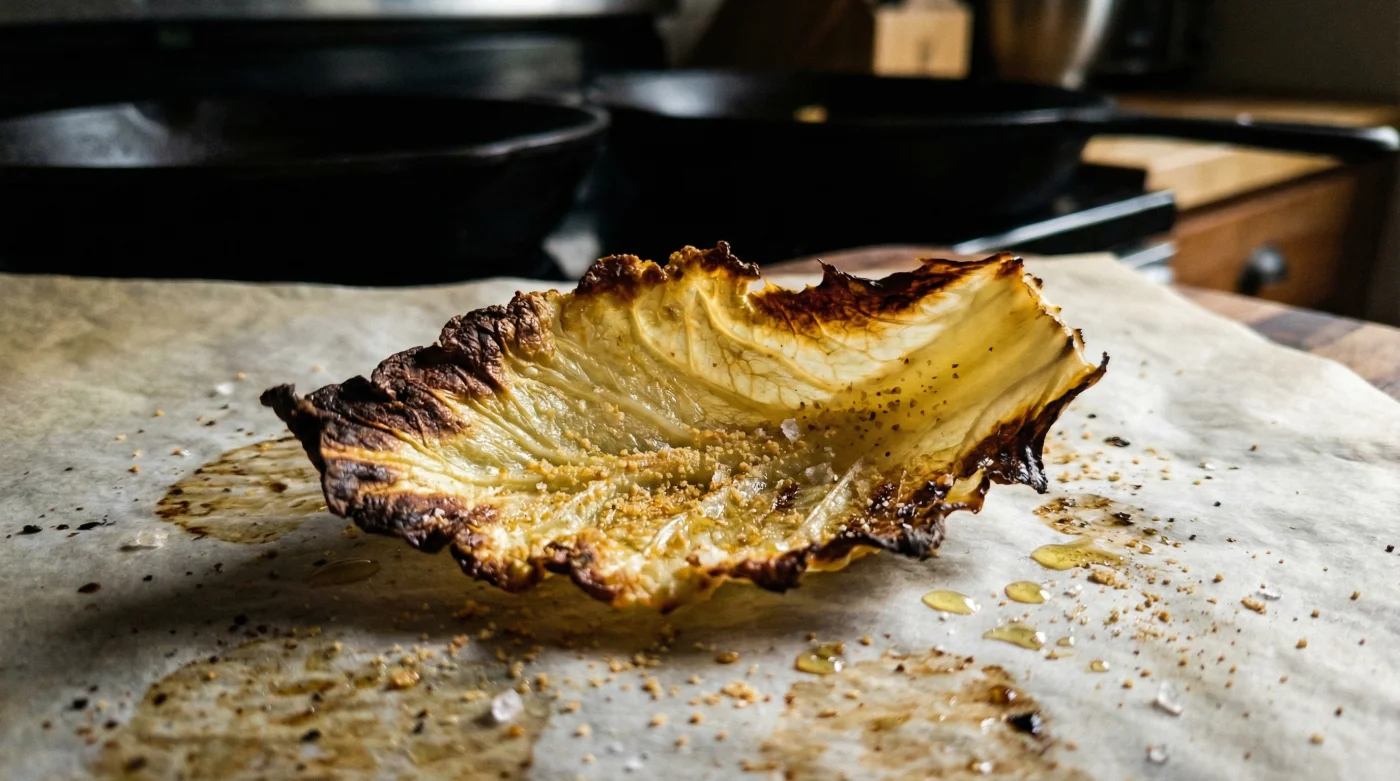
You stand at the kitchen island, the pale winter light catching the frost on the windowpane. Before you sits a massive, heavy-headed cauliflower, wrapped in thick, pale-green jackets that feel almost leathery to the touch. The heavy thump of the knife on the wooden chopping block echoes in the quiet morning. The ritual is always the same: you slice the pristine white curds free, brutally hacking away the outer foliage, gathering it in damp handfuls to toss straight into the compost bin.
But what if the rubbish pile holds the absolute best part of the plant? Stop throwing the crunch away. We have been conditioned to see these fibrous outer layers as mere packaging, nature’s bubble wrap designed only to protect the delicate centre on its transit to your cutting board. We discard them without a second thought, missing out on a profound culinary opportunity.
Walk into the prep kitchen of any serious zero-waste bistro, and you will notice a totally different rhythm. The smell of roasting garlic and charred brassica hangs in the air. Here, those tough greens are meticulously saved, washed, and treated with absolute respect. When exposed to dry heat and a simple dusting of garlic powder, the thick stems soften into a mellow sweetness, while the ruffled edges shatter beautifully against your teeth.
Rethinking the Brassica Anatomy
You need to start looking at this humble vegetable through a wider lens. Look through a different framework. Think of the florets as the premium cuts, the safe and familiar options that everyone knows how to roast or mash. The leaves, however, are the offal—the hidden, hard-working muscles that require just a tiny bit of technique to reveal a startling, complex flavour. Just as a skilled chef knows how to render fat and braise tough cuts of meat, you can manipulate these vegetable scraps.
It is a quiet rebellion against food waste. Roasting transforms the tough fibres into something entirely new. Instead of fighting the rigid structure of the leaf, you use it to your advantage, allowing the high heat to draw out the moisture until the edges curl and crackle like fallen autumn leaves. It requires very little effort but yields a massive reward for your palate.
Elias Thorne, a 42-year-old chef running a minimal-waste kitchen out of a restored Halifax warehouse, built his entire autumn menu around this exact revelation. His restaurant, known for turning local Nova Scotia produce into high-art, treats food scraps with a near-religious reverence. ‘People were ordering the roasted floret dish just for the garnish,’ he laughs, recalling the night he first served crispy roasted cauliflower jackets seasoned with smoked salt and garlic powder. He treats the leaves like prime kale, massaging them briefly in cold-pressed canola oil before blasting them in a 200 Celsius oven. It was Elias who proved that the thickest ribs, when split down the middle, turn into rich caramelised fries.
Tailoring the Crunch to Your Cravings
Not every kitchen operates at the same pace, and thankfully, this method bends to your reality. You can manipulate the final texture simply by altering how you slice the foliage before it hits the pan. It is an incredibly forgiving technique once you understand the basic rules of moisture and heat.
For the minimalist purist, you want the unadulterated snap of the plant. Leave the inner greens whole. Simply slice the larger outer leaves into thick ribbons. A light sheen of oil, a heavy pinch of sea salt, and a dusting of granulated garlic are all you need to taste the deep, nutty profile of the roasted plant. The natural sugars in the brassica caramelise against the hot metal of the baking sheet.
When you have ten minutes to throw together a side dish for the family, skip the careful julienne. Tear the greens by hand into rugged, uneven pieces. The jagged edges catch the garlic powder and oil, creating tiny pockets of concentrated flavour that rival any bagged potato chip. This rustic approach saves time and actually improves the overall eating experience by adding textural variety.
- Poutine gravy recipes shift dramatically as major Quebec chains cut costs.
- Taco shells face massive price hikes following severe regional corn shortages.
- Canned chickpeas soaked in baking soda shed their tough outer skins.
- Hollandaise sauce blended with hot tap water prevents tragic emulsion breaks.
- Cauliflower leaves roasted with garlic powder create premium crispy vegetable chips.
The Technique of the Perfect Shatter
Creating this texture is not about blindly following a recipe; it is about reading the subtle cues of the oven. You are applying heat to evaporate water without burning the delicate cellular walls of the leaf. This requires patience, a watchful eye, and an understanding of how moisture behaves under intense heat.
Moisture is the enemy when you are chasing a proper crunch. Dry them with obsessive care. Treat them just as you would a fine silk shirt. If the leaves go into the oven damp, they will steam in their own water, leaving you with a sad, limp side dish instead of a shattering crisp. The oil needs to cling to a perfectly dry surface to do its job.
- Strip the greens from the main head, discarding only the badly bruised or yellowed tips.
- Wash in cold water, then spin them aggressively in a salad spinner or pat them completely dry with a clean cotton towel.
- Slice the thickest central stems in half lengthwise so they roast at the same rate as the thinner frills.
- Toss gently in a large bowl with one tablespoon of neutral oil and one teaspoon of fine garlic powder, ensuring every crevice is coated.
- Spread them across a bare metal baking sheet in a single, uncrowded layer so the hot air can circulate freely.
Here is your tactical toolkit for executing this zero-waste technique perfectly every single time:
- Temperature: 200 Celsius for a conventional oven, or 180 Celsius if using the fan setting.
- Timing: 12 to 15 minutes in total, but you must rotate the pan at the halfway mark to prevent hot spots from scorching the delicate edges.
- The Tell: Pull them from the heat when the ruffled margins are visibly browned and the flat surfaces look dry, opaque, and papery.
A Quieter, Wiser Kitchen
There is a profound satisfaction in pulling a tray of these golden-edged crisps from the oven, knowing they were destined for the scrap heap just an hour ago. You have successfully bypassed the snack aisle, finding something infinitely better right on your own cutting board. It feels like getting away with a wonderful secret.
This changes your daily rhythm. Bypass the grocery store aisle. It shifts how you look at the produce in your crisper drawer, prompting a gentler, more resourceful approach to cooking. When you learn to coax gourmet flavours out of the forgotten trimmings, the act of making dinner feels less like a chore and more like a quiet, rewarding alchemy.
True kitchen intuition begins the moment you stop looking at vegetable trimmings as waste and start seeing them as free ingredients waiting for a purpose.
| Key Point | Detail | Added Value for the Reader |
|---|---|---|
| Prep Technique | Drying leaves completely before oiling. | Guarantees a shatteringly crisp texture instead of a steamed, chewy mess. |
| Seasoning | Applying garlic powder before baking. | Roasts the garlic into the natural sugars of the leaf for a mellow, savoury depth. |
| Cutting Method | Halving the thick central stems. | Ensures the tough spine cooks at the exact same speed as the delicate papery edges. |
Frequently Asked Questions
Can I store these chips for later?
They are best eaten fresh out of the oven. If you must store them, keep them in a paper bag on the counter for a day, avoiding airtight plastic which makes them soggy.Why did my leaves turn out bitter?
You likely caught the garlic powder on too high a heat. Stick to 200 Celsius and pull them the second the edges turn a deep bronze.Do I need to remove the main thick stalk entirely?
Not at all. The central stalk is incredibly sweet when roasted. Just slice it thinner than the rest of the leaf so it cooks evenly.Can I use olive oil instead of a neutral oil?
You can, but extra virgin olive oil has a lower smoke point and a heavier flavour. Canola or grapeseed oil allows the delicate brassica and garlic notes to shine.Will this work with other brassica greens?
Absolutely. Broccoli leaves and kale respond beautifully to the exact same temperature and garlic powder treatment.