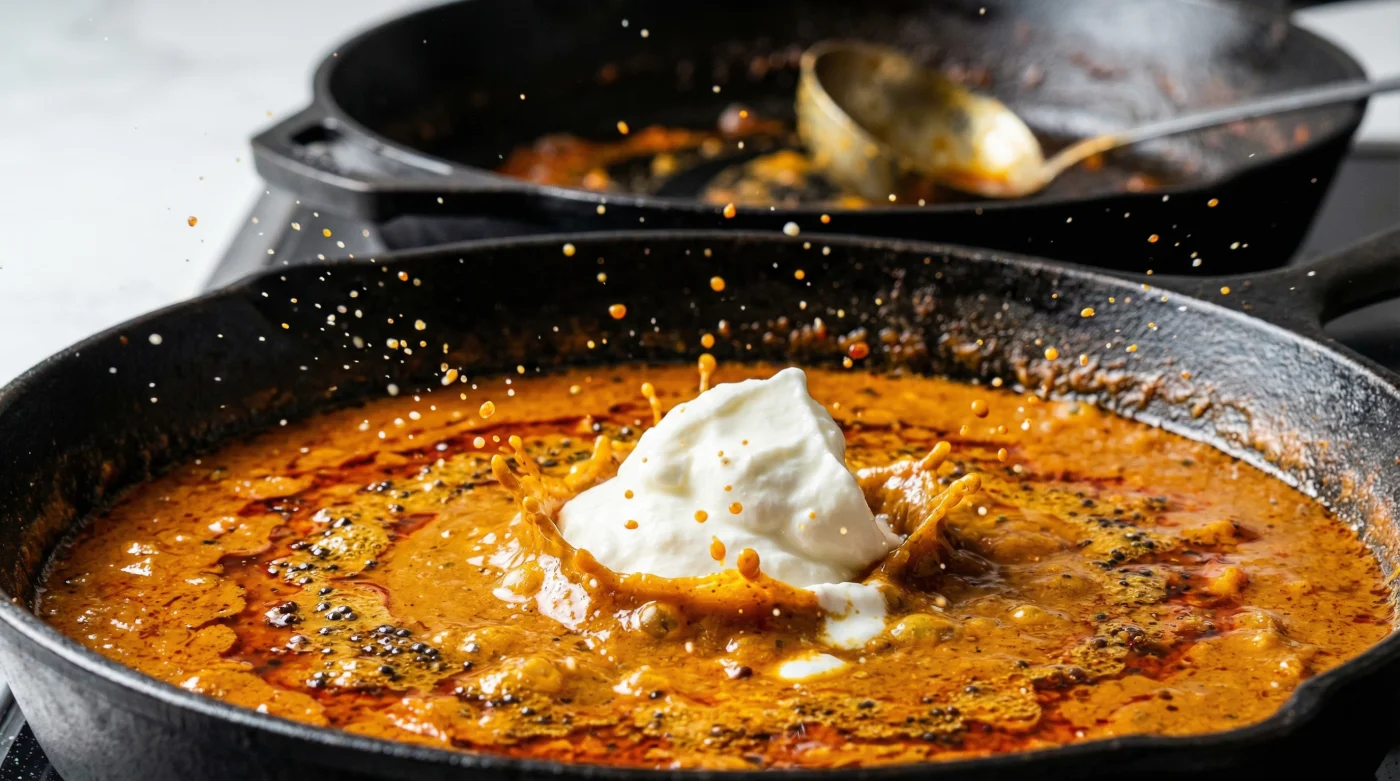
The heavy iron pan hums on the burner, carrying the scent of toasted cumin, coriander, and dried Kashmiri chilies through your kitchen. It smells like a triumphant Sunday evening. You dip a wooden spoon into the simmering rust-coloured liquid, blow on it gently, and take a taste. Immediately, the back of your throat closes. A harsh, aggressive heat seizes your palate, blinding you to the garlic and ginger you carefully minced twenty minutes ago. The balance is entirely broken.
Panic usually dictates the next move. You reach for the tap, assuming a splash of cold water will wash away the mistake. Water only spreads the fire, turning your rich, carefully built base into a thin, unappealing soup. The heat does not disappear; it just treads water, waiting to strike again. You end up with a watery, flavourless broth that still manages to burn your tongue.
Step away from the sink. The instinct to dilute an aggressive kitchen mistake is entirely backwards. A panicked flood of tap water destroys the physical structure of your sauce. Instead, you need a structural intervention—something that binds to the irritant and silences it without demanding you start from scratch.
The Fat and the Fire
Think of capsaicin—the chemical responsible for chili heat—as a microscopic layer of grease gripping your taste buds. Trying to wash it away with water is like trying to rinse an oily skillet without soap. The water slides right off. The heat remains firmly attached. You need a solvent that speaks the same language as the oil, pulling the capsaicin away from your nerve endings.
This is where plain, unsweetened yogurt acts as a heavy woolen blanket over a sparking fire. Dairy contains casein, a lipophilic protein that actively binds with capsaicin molecules. It literally washes the spice away from your receptors. Simultaneously, the fat in the yogurt coats the tongue, creating a physical barrier against the aggressive spices. The brilliance of this kitchen fix is twofold: it instantly neuters the burning sensation while protecting the luxurious, velvety consistency of your sauce.
Julianne, a 42-year-old prep cook in Vancouver’s bustling Punjabi Market district, watches novice chefs make the water mistake all the time. “They panic and grab the pitcher,” she notes, wiping down her stainless steel station after a long dinner rush. “I tell them to grab the full-fat yogurt. You whisk a dollop in off the heat. It swallows the sharp edges of the chilies whole, and suddenly, the sweetness of the onions and the earthiness of the turmeric come right back to life.”
Adjustment Layers for Your Pot
Not all sauces are built the same, and your approach to rescuing them should reflect what is currently simmering on your stove. The type of base you started with determines exactly how you fold in the rescue ingredient.
For tomato-heavy bases, which are naturally acidic, hitting them with cold dairy often leads to rapid splitting. You need to temper the yogurt first. Spoon a few tablespoons of the hot, spicy liquid into a separate bowl with the yogurt. Stir vigorously until it reaches the temperature of a warm bath, then slowly fold the mixture back into the main pot. The yogurt tempers the sharp acid while simultaneously eating the spice.
If you are building a southern-style or Thai-inspired green paste base, you might already have coconut milk in the pan. If the heat is still blinding, plain yogurt can still save you, but you must be mindful of the competing textures. Use a very thick, strained yogurt to absorb the lingering heat that the coconut milk failed to trap, resulting in an exceptionally rich, complex finish.
- Poutine gravy recipes shift dramatically as major Quebec chains cut costs.
- Taco shells face massive price hikes following severe regional corn shortages.
- Canned chickpeas soaked in baking soda shed their tough outer skins.
- Hollandaise sauce blended with hot tap water prevents tragic emulsion breaks.
- Cauliflower leaves roasted with garlic powder create premium crispy vegetable chips.
The Mindful Rescue
Fixing a broken sauce requires deliberate, quiet movements. Rushing the process will curdle the dairy, leaving you with a gritty, unappetizing mess. Approach the stove with a clear head.
First, physically remove the pan from the heat source. The residual warmth of the heavy pan is all you need to integrate the fats properly. Boiling ruins the rescue, turning smooth dairy fats into separated curds and a watery whey that ruins the visual appeal of your hard work.
- Remove the pan from the burner and let it rest for two minutes until the bubbling entirely stops.
- Place half a cup of plain yogurt into a glass bowl.
- Ladle three tablespoons of the hot sauce into the yogurt, whisking continuously to warm it up.
- Pour the warmed yogurt mixture back into the main pot in a slow, steady stream.
- Stir gently with a wooden spoon in slow, sweeping figure-eights until the colour unifies.
The tactical toolkit for this method is remarkably simple, but precision matters. Your yogurt must be at the right temperature, roughly 20 degrees Celsius, before it hits the hot pan. Leave it on the counter for fifteen minutes before attempting the fix.
Always use a product with at least 3% M.F. (Milk Fat). Skim milk products lack the lipids required to trap the heat and will simply curdle. After mixing, let the dish sit for five minutes before tasting it again, allowing the proteins to fully bond with the chili oils.
Finding Peace at the Stove
Mistakes in the kitchen often feel like moral failures. We measure out the coriander, we toast the mustard seeds, and when the result burns our palate, the disappointment is heavy. But cooking is rarely a straight line from raw ingredients to perfect plating. It is a constant negotiation with heat, time, and chemistry.
Understanding how fat interacts with spice changes your relationship with the stove. You stop fearing a heavy hand with the chili powder because you know you have a structural safety net. You no longer see an overpowered sauce as a ruined evening, but rather as an opportunity to pivot. The plain yogurt sitting in your fridge is a profound tool for correction, allowing you to salvage your labour and sit down to dinner with your pride entirely intact.
Cooking well is not about avoiding mistakes; it is about knowing exactly how to maneuver when the chemistry goes sideways.
| Key Point | Detail | Added Value for the Reader |
|---|---|---|
| Capsaicin is Oil-Soluble | Water repels the spice oils, spreading them further across the palate without reducing the chemical burn. | Prevents you from watering down your hard work into a flavourless, yet still spicy, soup. |
| Casein Proteins Bind and Neutralize | Dairy proteins actively attach to chili oils, lifting them away from the pain receptors on your tongue. | Provides instantaneous, chemical-level relief from blinding heat while retaining the dish’s flavour profile. |
| Tempering Prevents Splitting | Mixing hot liquid into cold yogurt slowly raises its temperature before it hits the main cooking pot. | Guarantees a velvety, professional texture instead of a grainy, curdled mess. |
Frequently Asked Questions
Can I use Greek yogurt instead of regular plain yogurt?
Yes, but Greek yogurt is thicker and lower in whey. You must temper it thoroughly with warm sauce before adding it, or the sudden heat will cause it to seize into tiny, hard curds.Will sweetened yogurt ruin the dish?
Absolutely. Vanilla or sweetened yogurts will introduce an artificial, dessert-like sugar profile that aggressively clashes with savory cumin, garlic, and onions. Always check the label for added sugars.What if I already added water to try and fix it?
If the pot is already watery, turn the heat up slightly to simmer off the excess moisture. Once reduced back to a thicker state, take it off the heat and proceed with the yogurt tempering method.Can I use sour cream instead?
Sour cream works brilliantly. It has a high fat content and enough tang to mimic plain yogurt. The process is identical: temper it first, then fold it in off the heat.How long can the rescued sauce sit in the fridge?
Once dairy is introduced, the sauce will keep nicely in a sealed container for up to three days. When reheating, do so gently over low heat to prevent the fat from separating.