The frost settles thick on the kitchen window, blurring the streetlamps into soft, amber halos. You reach into the pantry for that familiar cardboard cylinder, pouring a cup of pale, dusty flakes into a pot of cold milk. It is a morning ritual performed on autopilot, expecting nothing more than a warm, mildly comforting bowl of beige paste.
Accepting a mediocre morning bowl is a quiet tax. We drown it in expensive maple syrup and bury it under berries, desperately trying to mask the gummy, flat reality of boiled starch. We assume the spectacular, deeply fragrant bowls served at high-end neighbourhood cafes rely on heavy cream or complicated culinary magic.
The truth requires no extra ingredients, just a shift in timing. You have been treating a raw, agricultural product like a ready-to-eat cereal.
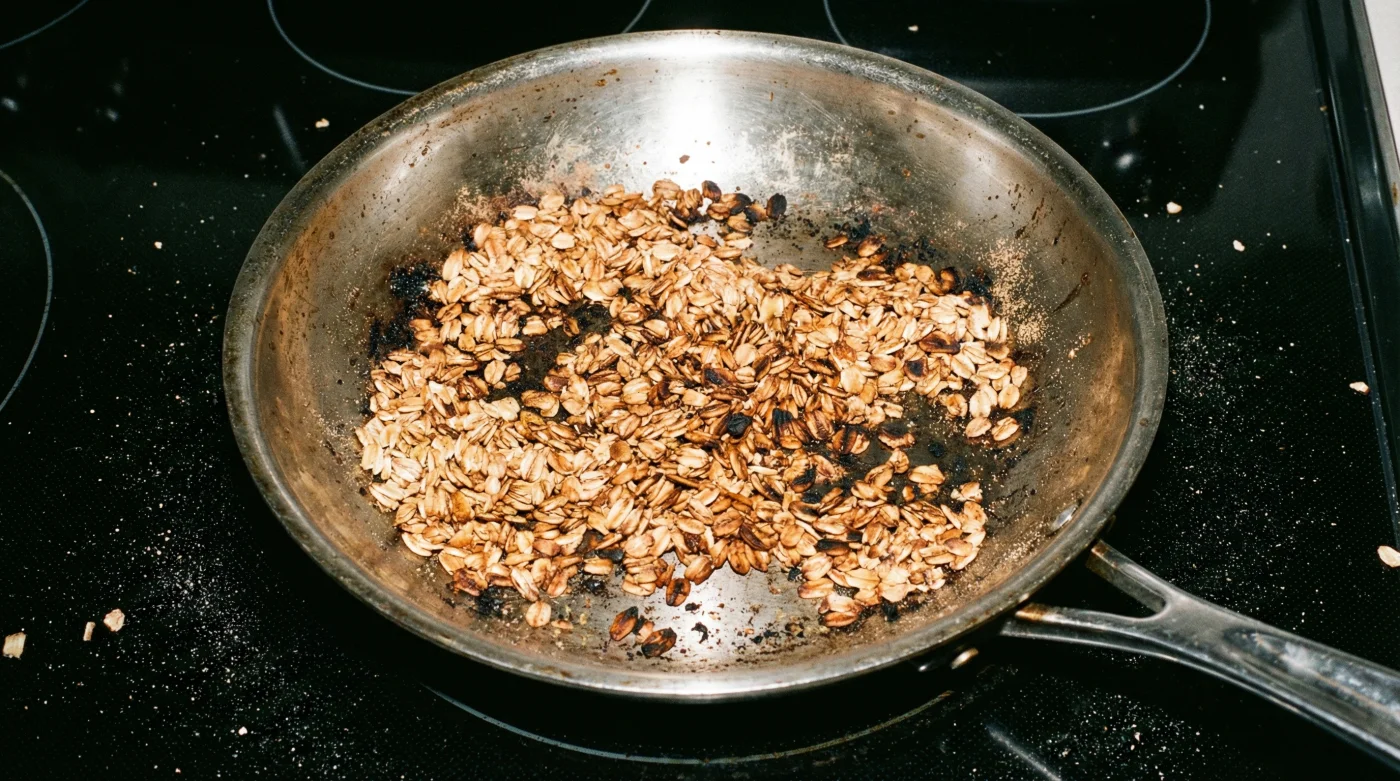
By introducing dry heat before liquid, you change the entire chemical destiny of the grain. Skipping the direct boil and passing those flakes through a hot, dry pan pulls out an intensely rich, nutty profile that smells remarkably like freshly baked cookies.
The Alchemy of the Dry Skillet
Think of raw oats the way a barista thinks of green coffee beans. If you were to grind and brew an unroasted coffee bean, the result would be acidic, weak, and entirely disappointing. The magic happens in the roaster, where heat forces sugars and amino acids to react, creating hundreds of new flavour compounds.
Your morning breakfast demands that same structural respect. When you dump raw flakes directly into simmering milk or water, they instantly absorb the liquid, turning the exterior into a slick mucilage before the centre cooks through. The result is the dreaded gluey texture that haunts childhood memories.
Running them through a bare skillet first acts as a quick, intense roasting process. The heat evaporates residual moisture, toasts the natural oils within the grain, and seals the starches. When you finally add liquid, the oat maintains a delicate, chewy integrity rather than dissolving into mush.
This simple pantry secret transforms a ten-cent handful of grains into a luxurious breakfast. It is a brilliant, zero-waste way to pull extraordinary value from the most basic staple in your cupboard.
Clara, a 42-year-old pastry chef running a highly acclaimed bakery a few miles outside of Halifax, views this step as non-negotiable. Before her ovens are fully hot, she stands at the stove with a wide, heavy-bottomed pan, sweeping a wooden spoon through mounds of dry flakes. “If you don’t toast them, you are just eating wet paper,” she explains, watching the colour deepen to a warm sand. “We treat the oat like a whole spice. You would never use raw cumin seeds in a curry. You bloom them first. We bloom the oats.”
Variations for the Morning Routine
Different schedules demand tailored approaches to this technique. The beauty of this method lies in how easily it bends to your morning reality, requiring no special equipment or obscure ingredients.
For the minimalist purist, you want the unadulterated flavour of the toasted grain. Heat your skillet, toast the flakes until they smell like warm butter, and immediately pour in boiling water from the kettle. Finish with a singular pinch of coarse sea salt. The water allows the pure, toasted-pecan notes of the oat to shine without the dulling effect of dairy fats.
This yields a remarkably clean and deeply savoury profile. It forces you to actually taste the earthiness of the grain, proving that a single, well-handled ingredient needs little adornment.
- Poutine gravy recipes shift dramatically as major Quebec chains cut costs.
- Taco shells face massive price hikes following severe regional corn shortages.
- Canned chickpeas soaked in baking soda shed their tough outer skins.
- Hollandaise sauce blended with hot tap water prevents tragic emulsion breaks.
- Cauliflower leaves roasted with garlic powder create premium crispy vegetable chips.
Your pantry is now stocked with pre-bloomed, deeply flavourful grains ready to be scooped and boiled in an instant. It removes the friction from busy mornings while still delivering that expensive, bakery-tier taste.
For the texture seeker, if you crave crunch, extend the toasting time by two minutes and throw in a handful of raw sunflower seeds, pumpkin seeds, or shredded coconut directly into the dry pan. Let everything toast in harmony. The natural oils from the seeds will lightly coat the oats, creating a loose, savoury granola hybrid.
The Five-Minute Skillet Ritual
Mastering this requires quiet observation rather than strict timers. The line between toasted and burnt is thin, but easily managed if you stay present and trust your senses.
Keep your movements deliberate. Use the widest pan you own so the flakes lie in a single, even layer.
- Place a dry, heavy skillet over medium heat without oil or butter.
- Scatter the raw flakes evenly across the surface, leaving them untouched for sixty seconds.
- Begin moving them constantly with a wooden spoon or silicone spatula.
- Watch for the visual cue: a shift from pale grey to a warm, golden beige.
- Listen for the sound: they will begin to rustle and sound hollow against the metal.
- Smell the air: the moment your kitchen smells like baking shortbread, they are ready.
Immediately transfer the hot grains into your simmering liquid. Leaving them in the hot pan with the heat turned off will result in scorching, as the heavy metal retains fierce heat.
Reclaiming the Morning
There is a profound comfort in taking something entirely ordinary and making it exceptional through sheer care. We spend so much time searching for complex solutions, buying expensive superfood powders, and following elaborate recipes to make our daily routines feel a little less mundane.
Yet, the most satisfying improvements often hide in plain sight. Taking five minutes to stand by the stove, watching pale flakes turn golden, breathing in the scent of toasted grain anchors you in the present moment. It is a quiet rebellion against the rush of the morning.
You are no longer just boiling breakfast. You are practising a quiet, deliberate craft. When you finally sit down with that bowl, holding a texture and flavour that feels meticulously earned, the rest of the day feels just a little more manageable.
“The difference between peasant food and palace food is rarely the ingredient; it is almost always the application of heat and time.”
| Key Point | Detail | Added Value for the Reader |
|---|---|---|
| Dry Toasting | Heating raw flakes in a bare pan for 3 to 5 minutes before adding liquid. | Creates a rich, nutty flavour without adding butter, sugar, or extra calories. |
| Maillard Reaction | The chemical reaction between amino acids and reducing sugars under heat. | Transforms gummy, flat starches into structured, chewy bites with bakery-level depth. |
| Batch Roasting | Toasting weeks worth of oats in the oven at 160°C. | Saves daily prep time while permanently upgrading the quality of your pantry staples. |
Common Questions About Toasted Oats
Can I do this with steel-cut oats?
Absolutely. Steel-cut varieties benefit immensely from a dry toast, developing an intense, popcorn-like aroma, though they will still require their usual longer simmering time afterward.Do I need to add butter or oil to the pan?
No. The natural lipids inside the grain are sufficient to toast the exterior. Keeping the pan completely dry prevents them from frying and keeps the texture light.Will the toasted oats cook faster?
They actually maintain their structure longer. While the cooking time remains roughly the same, they resist turning into mush, giving you a wider window for perfect texture.Can I use these toasted flakes for overnight oats?
Yes, and it is a brilliant upgrade. Let the toasted flakes cool completely, then mix with cold milk. They retain a firmer chew and infuse the milk with a toasted, malty flavour overnight.What if they accidentally burn?
Discard them. Burnt starches carry a bitter, acrid taste that no amount of honey or maple syrup can fix. Next time, lower the heat and keep the spoon moving.