You stand over the kitchen island, pulling the last few items from your reusable grocery bags. Outside, the rain taps against the windowpane, a familiar gray rhythm for a late October evening in Vancouver. At the bottom of the grocery pile, shoved beneath a carton of milk, sits that familiar plastic clamshell. Inside, the spinach leaves you bought with the best intentions three days ago have already surrendered to gravity.
Their once vibrant green colour has muted into a damp, bruised olive tone. They cling to the edges of the plastic, limp and defeated. Your instinct, learned from countless magazine articles, is to dump them into a bowl of freezing water and pray for a crispy resurrection.
But you have probably noticed that the ice bath rarely delivers the miracle it promises. You plunge your hands into the frigid water, pulling out leaves that are marginally stiffer but somehow waterlogged, tearing under the slightest pressure. The cold shock simply traps the remaining moisture, refusing to hydrate the inner structure. You are left with a sad, wet salad that tastes like winter chill.
There is a remarkably quiet alternative hidden in plain sight. By completely abandoning the ice and turning to your kettle and a sugar bowl, you can reverse wilted cellular decay in minutes.
The Thermodynamics of Deflated Greens
Think of a wilted spinach leaf not as decaying organic matter, but as a deflated bicycle tire. When a plant loses its crispness, the rigid cell walls have not actually broken; they have simply lost their internal water pressure, known in botany as turgor. You are not trying to resurrect the dead when you look at a sad salad. You are just reinflating the tire.
Throwing a limp leaf into freezing water is exactly like trying to inflate that tire with frozen, unmoving air. The extreme chill causes the plant’s microscopic pores to contract defensively. The cold water sits on the surface, waiting at a locked door.
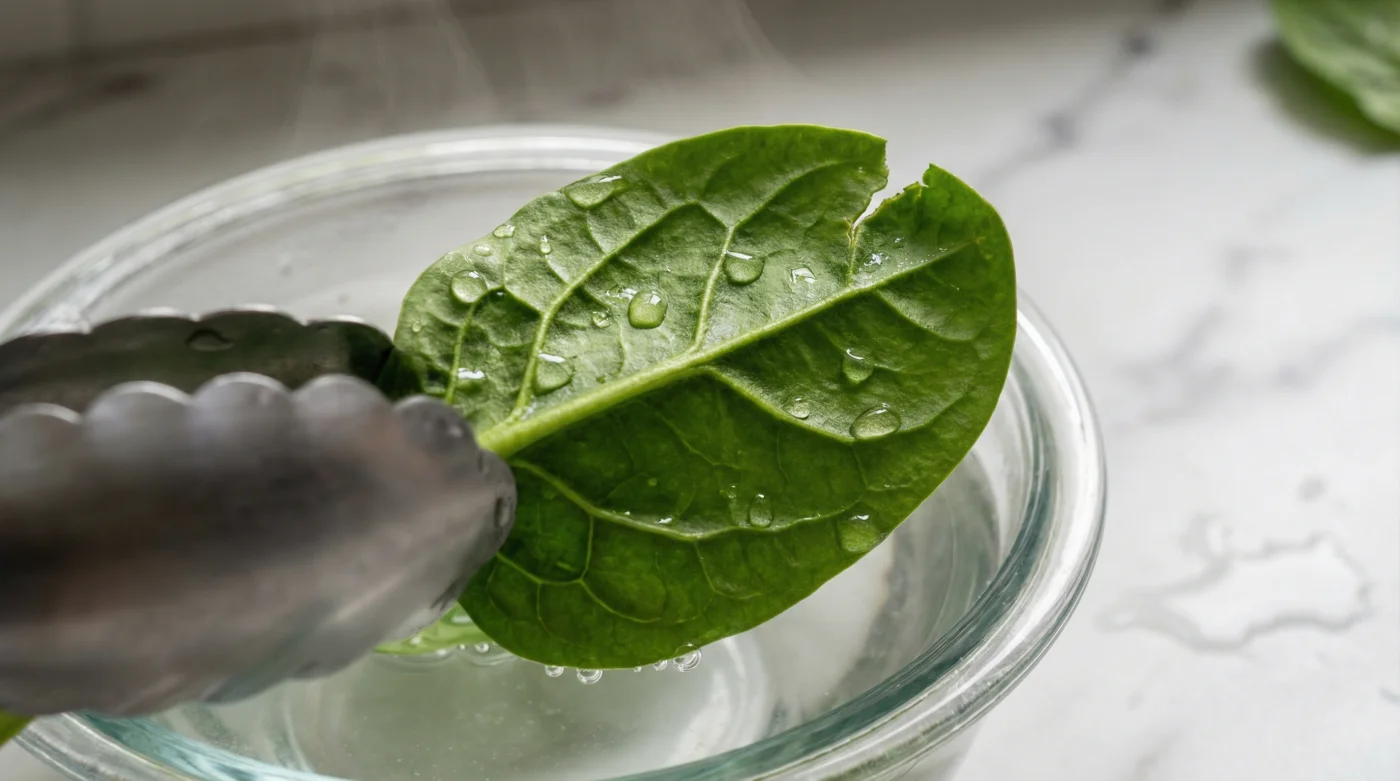
This is where the kitchen fix changes the dynamic entirely. When you create a bath of warm water—just above room temperature—and dissolve a small spoonful of plain white sugar into it, you trick the plant’s biology. The warmth relaxes the cellular structure, opening the pores wide and encouraging flow. The sucrose acts as a biological Trojan horse, speeding up the hydration process.
Plant cells naturally crave glucose to fuel their daily metabolism. When they detect the sugar dissolved in the warm water, they actively pull the liquid across their membranes, drinking greedily and reinflating instantly.
Marcus Tremblay, a 46-year-old garde manger chef at a busy farm-to-table bistro just outside of Toronto, relies on this exact physiological loophole. Every Friday night, he manages hundreds of plates of delicate micro-greens and sensitive spinach varieties sourced from a farm 30 miles away. During a particularly humid service last summer, his station cooler malfunctioned, leaving a massive batch of organic greens completely exhausted. With a dining room full of guests waiting, he didn’t reach for the ice machine. He mixed a quick, warm simple syrup bath. Within four minutes, the greens stood up as if they had just been pulled from the soil that morning.
Adapting the Sweet Soak for Your Routine
You do not need to work on a bustling restaurant line to make this work for your own Tuesday night dinners. The beauty of this method lies in how easily it adapts to your specific temporal constraints.
If you are a Sunday meal prepper, you can process an entire box of tired spinach at once. Set up a large basin in your sink, use the warm tap water, and whisk in the sugar. Let the whole batch hydrate, lift them out gently, spin them in a salad spinner, and pack them away crisp for the week. The slight sugar residue does not make them sweet; it simply feeds the cells.
For the frantic weeknight cook staring down a wilted side dish, a smaller bowl works just as well. While your main course is resting, you can toss those sad leaves into a warm sugar soak. They will be firm, vibrant, and ready by the time you set the table.
- Waffle batter mixed with carbonated water guarantees shatteringly crisp breakfast edges.
- Sour syrup shortages halt viral Unicorn Frappuccino production across Canada.
- Unicorn Frappuccino orders face strict nationwide barista preparation limits today.
- Spinach leaves submerged in warm sugar water regain crispness instantly.
- Button mushrooms cooked without any oil achieve impossible meaty textures.
This method also rescues herbs that have been forgotten in the back of the fridge. Cilantro and parsley, which often turn to mush in cold water, respond beautifully to the warmth, regaining their delicate, structural integrity.
Executing the Rapid Revival
The actual mechanics of this kitchen fix require no special equipment, just a gentle hand and an eye for temperature. It is a mindful process of subtraction—removing the harsh cold and letting warmth do the heavy lifting. You want the leaves to feel as though they are experiencing a gentle spring rain.
Keep your movements slow and deliberate so you do not crush the fragile stems. The leaves need to float freely, breathing through the sweet liquid, uncrowded by their neighbors.
Let the spinach rest undisturbed. Agitation will only bruise the leaves further before they have had a chance to regain their strength. Follow this specific toolkit for optimal results:
- The Temperature: Exactly 35 Celsius (warm to the inside of your wrist, never hot).
- The Ratio: One teaspoon of white granulated sugar per litre of warm water.
- The Timer: Three to five minutes, depending on the severity of the wilt.
- The Finish: A quick rinse under cool tap water to remove any lingering surface sugar before plating.
More Than Just Saved Salad
Mastering this small kitchen fix offers a profound shift in how you interact with your weekly ingredients. When you stop viewing a wilted vegetable as a failure and start seeing it as a temporary state of dehydration, your entire culinary perspective fundamentally changes.
It is a quiet victory over food waste and grocery guilt. You no longer have to throw away those expensive greens just because they spent an extra day in the crisper drawer. Instead, you hold the power to command your ingredients back to life with nothing more than tap water and a pantry staple. It brings a sense of calm to your cooking routine.
The next time you find yourself staring at a forgotten container of spinach, skip the ice. Turn on the warm tap, reach for the sugar bowl, and watch nature remember itself in your kitchen.
“Understanding the cellular mechanics of your ingredients transforms cooking from a chore of following recipes into a practice of quiet intuition,” says Marcus Tremblay.
| Key Point | Detail | Added Value for the Reader |
|---|---|---|
| Temperature Control | Use water at exactly 35 Celsius. | Prevents cooking the delicate leaves while still relaxing the plant’s pores. |
| The Sucrose Catalyst | Add one teaspoon of sugar per litre. | Forces the water across the cell membrane faster than plain tap water. |
| Patience | Allow three to five minutes of soaking. | Saves time compared to ice baths, providing guaranteed crispness for dinner. |
Frequently Asked Questions
Will the sugar make my spinach taste sweet?
No. The small amount of sucrose is absorbed to fuel the cells, but a quick rinse removes any surface residue, leaving only the natural flavour.Can I use brown sugar or honey instead?
White granulated sugar dissolves the fastest and clearest, providing the immediate glucose reaction the plant cells need without altering the water’s consistency.Does this trick work on lettuce and celery?
Yes. Romaine lettuce, celery stalks, and even fresh herbs will absorb the warm sweet water just as effectively as spinach.What happens if the water is too hot?
If the water exceeds 40 Celsius, you will begin to blanch the leaves. They will turn bright green but instantly turn to mush.How long do the revived greens stay crisp?
Once dried thoroughly in a salad spinner, the revived spinach will stay crisp in an airtight container for up to two additional days.