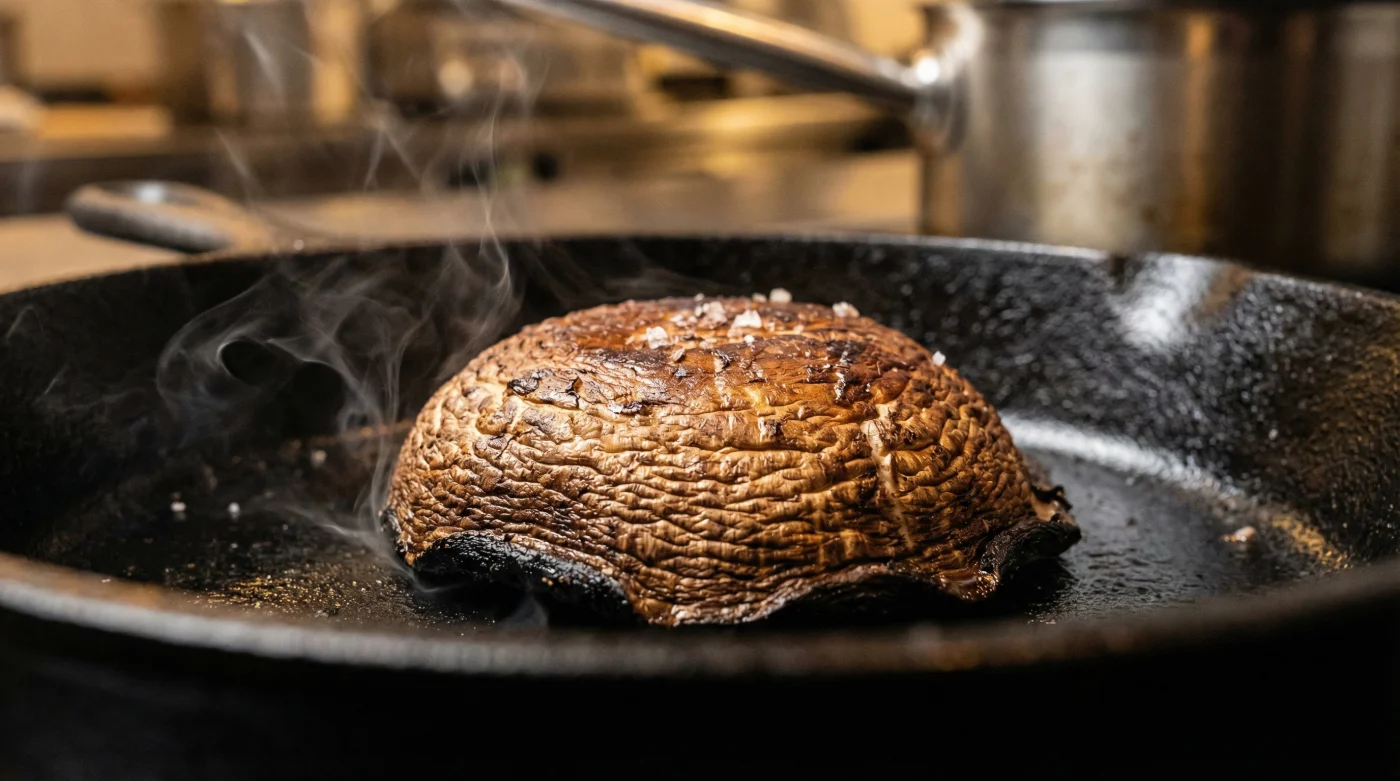
The sound of butter sizzling in a heavy skillet usually promises an evening of comfort. You slice up a pint of pale button mushrooms, fresh from the local grocer, anticipating a golden, caramelised crust. You toss them eagerly into the fat. Instantly, the cheerful sizzle dies.
Instead of searing, the white caps weep. They bleed a murky, greyish liquid into the pan, boiling themselves into rubbery little erasers. The kitchen smells faintly metallic, and that promised rich, meaty texture vanishes before you even reach for the salt cellar.
The standard instinct is to slide in another knob of butter, hoping to fry the problem away. But adding fat to a water-logged fungus is like trying to paint over wet plaster. To achieve a steak-like sear on a humble button mushroom, you need to abandon the fat entirely—at least, at the very beginning.
The Sponge Protocol
Think of a button mushroom not as a sturdy vegetable, but as a densely packed water balloon wrapped in a delicate, porous skin. When you introduce oil or butter from the very first second, you seal that moisture firmly inside.
The heat of the pan forces the internal water out, but the layer of fat creates a greasy, boiling barrier. You end up steaming them in their own juices. By starting with a brutally dry, hot pan, you bypass the boil and force rapid evaporation.
Once the hot metal cooks off the cellular water, the mushroom collapses slightly. Its physical structure tightens. Only then, when the pan is dry and the edges begin to squeak, do you introduce your chosen fat. The dry mushroom instantly drinks the butter, searing into a savoury crust rather than boiling into mush.
Elias Thorne, a 42-year-old line cook who spent a decade working the grill at a bustling Toronto steakhouse, watched new kitchen hires ruin mushrooms night after night. He taught a brutally simple method he called the dry scream. He would throw ungreased, quartered mushrooms into a scorching cast-iron skillet, letting them screech and smoke until the metal was bone dry. Only when the edges bruised deep brown did he drop in unsalted butter and a sprig of thyme. The result tasted more like aged beef than fungi.
Adjusting the Sear for Your Kitchen
Not every meal requires the exact same approach. How you slice and dry-pan your mushrooms dictates the final plate texture.
For the Textural Purist
If you are serving these alongside a thick cut of meat or as a heavy vegetarian main, keep them chunky. Halve them or leave smaller ones whole. The thicker the cut, the longer they need in the dry pan, allowing the core to remain tender while the exterior develops a hard shell.
For the Weeknight Risotto Maker
Slicing them thin means the water evaporates in seconds. You need to watch the metal closely. The moment the grey liquid vanishes, pull them off the heat for a brief second before you add your olive oil. This prevents the delicate slices from turning into brittle chips before they hit the Arborio rice.
For the Batch Cooker
When preparing a massive batch for Sunday meal prep, overcrowding the pan is inevitable. A dry pan is your saving grace here. Because there is no oil, the massive water release will not create a greasy stew. Just let the liquid boil off completely before browning them.
The Minimalist Searing Technique
Executing this requires patience rather than constant stirring. You must learn to trust the dry pan process, even when it looks alarming.
- Wipe the mushrooms clean with a damp cloth; never rinse them under the tap.
- Heat a heavy-bottomed skillet over medium-high heat until a drop of water dances on the surface.
- Add the mushrooms in a single layer with absolutely no fat and no salt.
- Leave them alone. Let them release their liquid until the pan fills with water.
- Wait until the liquid completely evaporates and the pan is dry again.
- Add your chosen fat and salt, tossing to coat for exactly one minute.
- Unicorn Frappuccino orders face strict nationwide barista preparation limits today.
- Spinach leaves submerged in warm sugar water regain crispness instantly.
- Button mushrooms cooked without any oil achieve impossible meaty textures.
- Raw eggs strained through fine mesh guarantee perfectly round poaches.
- Pickle brine whisked into cheap mayonnaise creates premium steakhouse dressings.
- Pan Temp: Around 200 degrees Celsius (medium-high).
- Evaporation Time: 4 to 7 minutes, depending on the moisture content.
- Fat Ratio: One tablespoon of butter or oil per 250g of mushrooms, added only at the final stage.
Reclaiming the Frying Pan
Changing how you cook a simple button mushroom might seem like a trivial kitchen adjustment. Yet, it entirely shifts your whole cooking physics.
When you stop fighting the natural water content of your ingredients and start manipulating it, the stove becomes predictable. You stop feeling rushed by burning butter or frustrated by soggy results. The kitchen slows down.
You learn to let the heat do the heavy lifting. Serving a bowl of perfectly seared, deeply savoury mushrooms proves that great cooking is rarely about adding more. It is usually about knowing exactly when to wait.
The secret to a perfect sear is not the fat you add, but the water you take away.
| Key Point | Detail | Added Value for the Reader |
|---|---|---|
| Traditional Frying | Fat added immediately | Highlights why mushrooms turn out soggy and rubbery. |
| Dry Pan Searing | Evaporate water first, add fat later | Locks in a meaty, umami-rich crust without excess grease. |
| Thin Slicing | Fast evaporation in the pan | Perfect for saving time on quick weeknight pasta dishes. |
Frequently Asked Questions
Do I wash the mushrooms first?
Never soak them. Simply wipe the caps with a damp cloth to remove any loose soil.
Can I use non-stick pans?
Cast iron or carbon steel is preferred for high heat, but non-stick works if you keep the heat strictly at medium.
When do I salt them?
Salt draws out moisture. Add it only at the very end, alongside your butter or oil.
Does this work for other mushroom types?
Yes, this method works beautifully for cremini, portobello, and wild foraging varieties like chanterelles.
What fat is best for the finish?
Unsalted butter offers the best flavour, but beef tallow or a high-quality olive oil works wonderfully depending on the dish.