The sharp, garlicky tang hits the air before the metal lid even finishes clattering against your kitchen counter. You hold the heavy glass jar over the sink, staring at the cloudy, seed-speckled liquid left behind. It is a familiar, mundane moment at the end of a long week of lunches.
There is a quiet reflex to just tilt your wrist and wash it all away, treating that briny bath as nothing more than wet, useless packaging for the cucumbers that are already gone. It feels like the natural conclusion to the grocery cycle.
But pause for a second. Smell that suspended tension of vinegar, dissolved salt, coriander, and slow-steeped garlic. That isn’t waste waiting for the drain; it is a highly calibrated, completely balanced acid profile that took weeks to mature in the cold dark of your refrigerator.
While home cooks carelessly pour this golden liquid out, prep cooks fiercely guard it. In a professional pantry, that leftover liquid is the exact two-ingredient modification needed to turn a sterile, store-bought jar of heavy fats into a complex, restaurant-quality spread.
The Hidden Battery in Your Fridge
Stop viewing that empty jar as a container of dead space. Think of it as a charged battery of preserved time. The cucumbers did the hard work of leaching their earthy waters into the vinegar, while the salt, mustard seeds, and dill softened into a seamless, unified infusion.
When you introduce this sharp, seasoned acid to a dense, cheap commercial mayonnaise, you aren’t just mixing condiments. You are forcing an emulsion to wake, cutting through the cloying sweetness of mass-produced soybean oil with targeted, sophisticated heat.
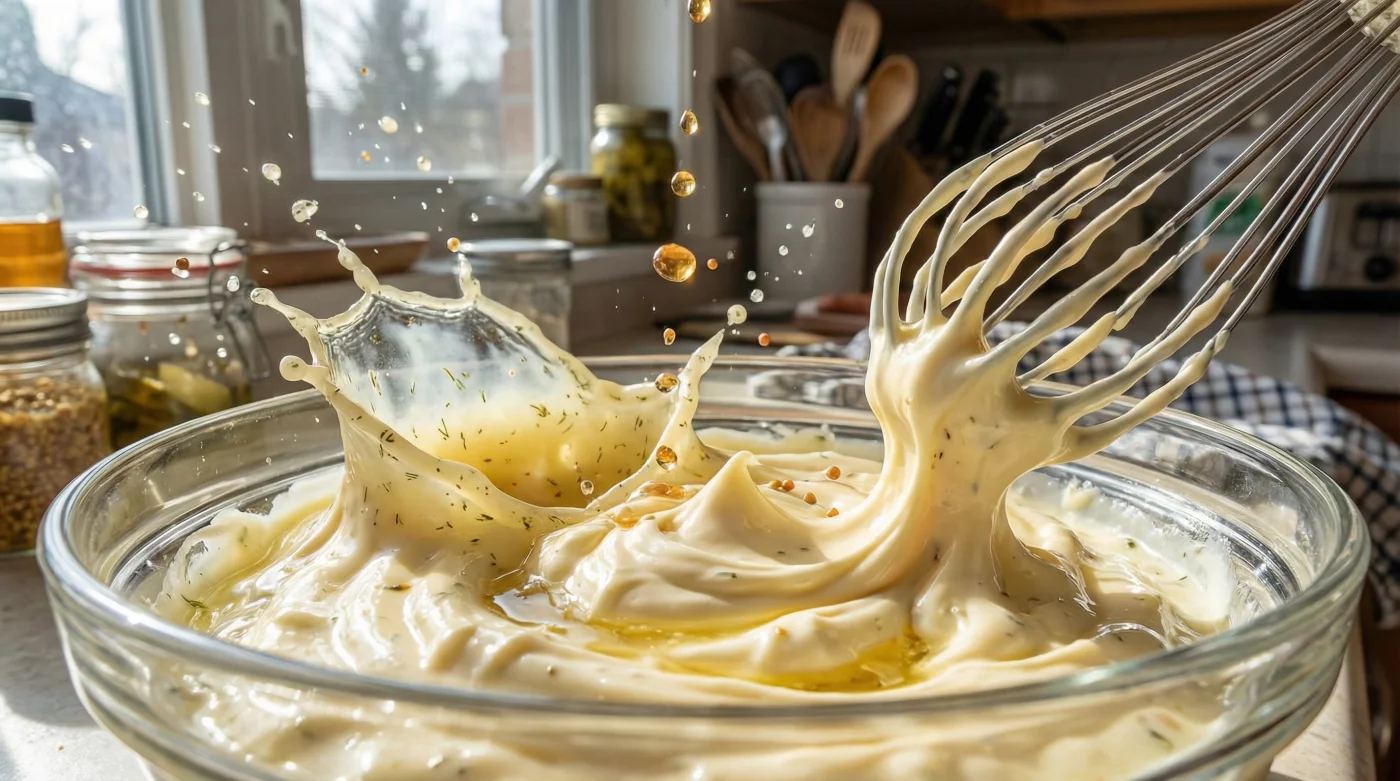
The seasoned vinegar actually binds with the stabilizers already present in the mayo. Instead of thinning it out into a watery mess, it whips into a luxurious, airy cream that mimics the exact texture, weight, and bite of an expensive steakhouse dressing.
This method perfectly contradicts the habit of pouring empty jar liquids down the sink, proving that the best flavours in your kitchen are often the ones you already paid for and almost ignored.
Just ask Clara Dubois, a 42-year-old sous-chef running the cold station at a bustling Montreal brasserie. She spends her mornings breaking down entire cuts of meat and prepping delicate greens, but her most guarded asset is what the floor staff assumes is garbage. She quietly intercepts the enormous, empty gallon buckets of house pickles before the dishwashers can rinse them out. Taking a heavy ladle, she skims the cloudy liquid, whisking just a few ounces of it into the massive steel bowls of bulk mayonnaise they buy for weekend service. That simple, two-ingredient alchemy is exactly why patrons consistently try to buy her secret remoulade by the jar, completely unaware they are tasting the very brine they leave behind on their own plates.
Adjustment Layers for Every Plate
Every jar in your fridge holds a different frequency of flavour. Tailoring your sandwich spread means matching the acid profile to the specific weight and temperature of the meat you are serving.
For the Heavy Hand (Garlic & Traditional Dill)
This is your absolute workhorse. The aggressive lactic bite and raw garlic notes cut straight through the heavy, coating nature of animal fats. Whip this into your base when you are constructing a towering roast beef sandwich, or use it as a sudden, sharp dip for thick-cut hot fries.
The dense fat of the mayonnaise carries the garlic flavour across your palate, while the vinegar cleans up the finish. It is perfect for battered fish or any meal that threatens to feel too heavy on a warm afternoon.
For the Heat Seeker (Spicy Bean or Jalapeño)
- Button mushrooms cooked without any oil achieve impossible meaty textures.
- Raw eggs strained through fine mesh guarantee perfectly round poaches.
- Pickle brine whisked into cheap mayonnaise creates premium steakhouse dressings.
- Red wine reductions demand freezing cold butter for mirror gloss.
- Chicken broth oversalted recovers instantly dropping peeled raw apple slices.
Whisking this spicy brine into mayonnaise creates an instant, cooling-yet-spicy crema. It becomes the ideal binder for potato salad, or a brilliant way to add moisture and kick to a dry breakfast sandwich without reaching for a harsh, overpowering hot sauce.
For the Sweet Balancer (Bread & Butter)
The high sugar content in these jars requires a slightly more delicate touch. It brings out a nostalgic, almost relish-like sweetness that pairs beautifully with sharp cheddars and smoked gouda.
Because the sugar alters the viscosity, you want to add this brine very slowly. It acts as the quiet, brilliant secret weapon for balancing out bitter greens like arugula or radicchio on a pressed panini.
The Minimalist Emulsion
Mastering this zero-waste pantry hack requires almost no physical effort, but it demands strict attention to temperature and ratios. The mayonnaise needs to be thoroughly chilled to around 4 Celsius to maintain its structural integrity, while your wrist does the physical work of binding the liquids together. If you attempt this with room-temperature ingredients, the oil will stubbornly refuse to accept the water content of the brine.
Keep your movements steady and intentional, breathing through the process like a quiet meditation rather than a frantic chore. You want to see the cream tremble and thicken, pulling away from the sides of the glass bowl in soft peaks, rather than separating into oily puddles at the bottom. The transformation happens rapidly, shifting from two distinct textures into a single, cohesive sauce in a matter of seconds.
- The Ratio: Exactly one tablespoon of cold brine to four tablespoons of full-fat mayonnaise.
- The Tool: A small wire whisk or a fork. Never use a mechanical blender, which will generate too much heat and break the delicate emulsion.
- The Rest: Let the mixture sit undisturbed in the fridge for twenty minutes before serving. This allows the starches to hydrate and the garlic notes to bloom fully across the fat.
A Quieter Kitchen Economics
Shifting your perspective on what constitutes waste changes the entire rhythm of how you feed yourself. It strips away the modern anxiety of needing a dozen different expensive, half-empty bottles crowding the shelves of your refrigerator door.
When you know how to extract a premium experience from the absolute bare minimum, cooking stops feeling like a performance. You realize that true culinary authority emerges from deep resourcefulness, not from spending extra money at the specialty grocer down the road.
You learn to pause, reflecting on the hidden value of what you already possess. In that small moment of physical intervention, you claim a quiet, capable independence in your own home, turning everyday leftovers into a luxury experience without stepping foot outside your kitchen.
A cook’s true skill isn’t found in what they buy, but in what they refuse to throw away.
| Key Point | Detail | Added Value for the Reader |
|---|---|---|
| The Base Acid | Using leftover pickle brine instead of raw vinegar or lemon juice. | Eliminates waste while providing a complex, pre-steeped flavour profile. |
| Temperature Control | Keeping ingredients chilled near 4 Celsius. | Prevents the fat from separating, ensuring a thick, restaurant-tier mouthfeel. |
| The Technique | Hand-whisking in a 1:4 ratio. | Saves the effort of washing appliances and grants total control over the emulsion. |
Strategic Provisioning FAQ
How long does this mixed spread last in the fridge?
Because the acid acts as a preservative, it will comfortably hold its texture and safety for up to two weeks in a sealed glass container.Can I use a blender instead of whisking by hand?
Avoid it if possible. The mechanical heat of a blender can easily break the delicate bonds of commercial mayo, leaving you with a runny liquid rather than a trembling cream.Does this work with low-fat mayonnaise alternatives?
It can, but the results vary wildly. Full-fat versions hold the emulsion far better. If using low-fat, reduce the brine slightly so it doesn’t become too thin.What if my brine has chunks of garlic or seeds in it?
That is a massive advantage. You can strain them out for a perfectly smooth dressing, but leaving them in adds instant, rustic texture to your sandwich spreads.Is it safe to consume the brine after the pickles are gone?
Absolutely. As long as it has been stored properly in the cold, the high salt and acid content is incredibly stable and completely safe to repurpose for your meals.