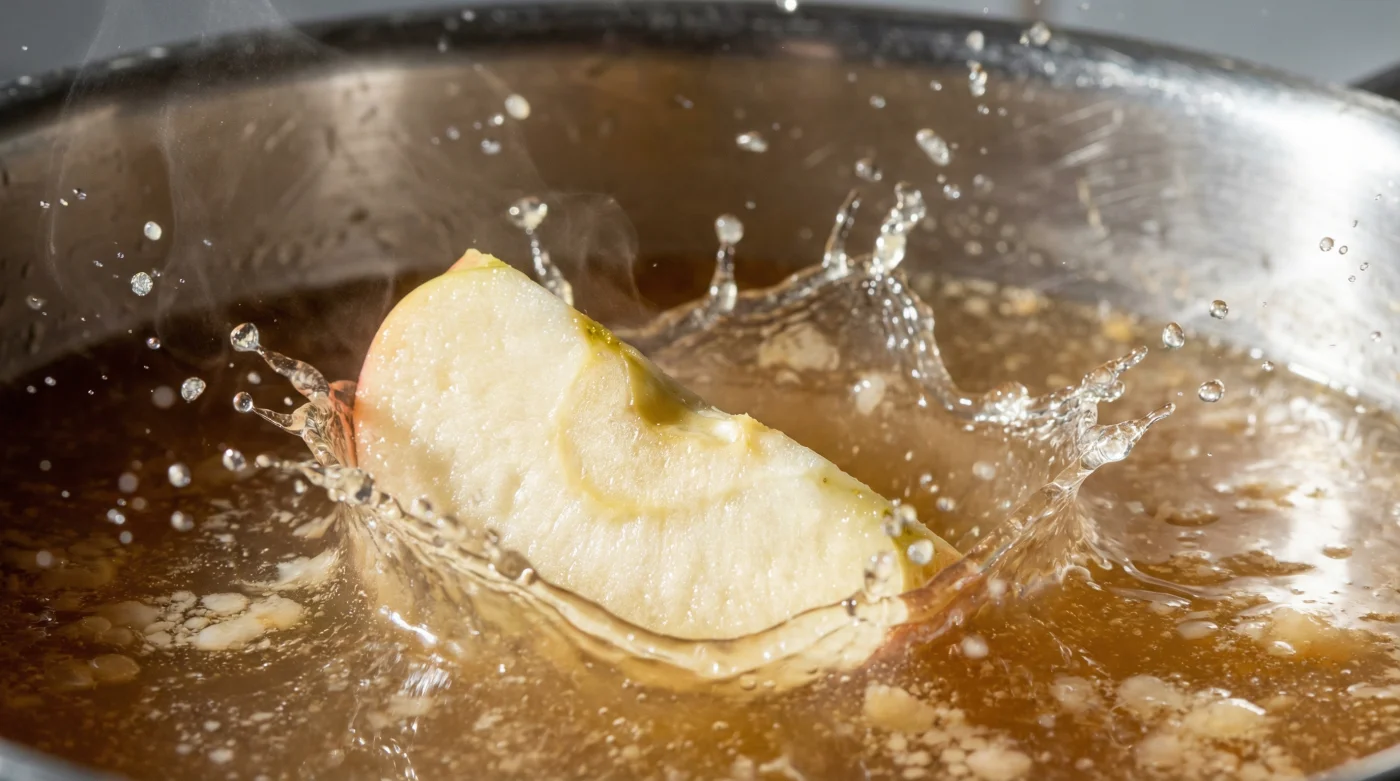
Picture the windows fogged up on a brisk November evening, the scent of roasted bones and simmering onions filling the kitchen. You have spent hours tending to a slow-bubbling pot, skimming the surface, coaxing out that deep, restorative liquid gold. The broth is practically glowing, reducing down into something that promises to chase away the coastal dampness or the dry prairie cold.
Then, a momentary lapse in judgement occurs at the stove. You add a heavy pinch of coarse sea salt, stir, and taste, only to find the brine hitting the back of your throat. The balance is instantly shattered, leaving you staring into a pot of liquid that tastes closer to seawater than comfort.
Your first instinct, handed down through generations of frantic home cooks, is to reach for a raw potato. You chop it in half, drop it in, and pray it works like a sponge to soak up the mistake. But as the minutes tick by, the potato begins to break down, shedding heavy starch into the water.
Instead of fixing the salt, your clear liquid turns hopelessly cloudy, taking on a murky texture. There is a quieter, infinitely more effective fix hiding right in your crisper drawer, pulling the harshness out without leaving a trace of starch behind.
The Starch Myth and the Orchard Fix
For decades, we have treated oversalted soups like a structural problem, relying on potatoes to act as physical sponges. But broth is not a spongeable material; it is a delicate suspension of fats and proteins. When you throw a potato into boiling liquid, its starch granules swell and burst, releasing a paste that thickens the water without significantly reducing the sodium content.
You have not removed the salt at all; you have only muffled the symptom while ruining the clarity. The perspective shift comes when you stop thinking about absorption and start thinking about binding. Raw apple pectin—the naturally occurring fiber that gives apples their crisp structure—operates differently.
Pectin holds a negative electrical charge, while sodium ions hold a positive one. When you introduce peeled apple slices to the heat, the pectin structure softens just enough to attract and bind those rogue sodium ions.
Think of it like sweeping a magnetic wand through sand, rather than trying to soak up the ocean. The apple collects the excess salt without dissolving, leaving your golden broth perfectly translucent and clean on the palate.
Clara Tremblay, a 42-year-old prep chef working the morning shift at a bustling Halifax poultry bistro, knows the panic of a ruined batch. One morning, a distracted sous-chef dumped a handful of finishing salt into her pristine, overnight chicken stock just thirty minutes before the lunch rush.
“We couldn’t dilute it, or we’d lose the gelatinous body we spent twelve hours building,” Clara recalls. Instead of panicking, she grabbed three firm Granny Smith apples, peeled them swiftly, cored them, and dropped the thick wedges into the rolling boil. Ten minutes later, she fished the limp fruit out with a spider strainer. She had saved a twenty-litre batch, replacing the aggressive saltiness with a subtle roundness that made the chicken flavour taste even richer.
Tailoring the Fix to Your Pot
Not all chicken broths serve the same purpose, and how you apply this orchard rescue depends entirely on what you plan to pour into your bowl.
For the Clear Consommé Purist
If you are straining your liquid through cheesecloth to achieve a flawless, amber clarity, use an exceptionally firm apple like a Granny Smith or a Mutsu. Peel it completely, as the skins contain tannins that can alter the colour. Keep the wedges large so they do not disintegrate. Ten minutes at a bare simmer is all you need to recalibrate the salinity without leaving a trace of sweetness.
- Raw eggs strained through fine mesh guarantee perfectly round poaches.
- Pickle brine whisked into cheap mayonnaise creates premium steakhouse dressings.
- Red wine reductions demand freezing cold butter for mirror gloss.
- Chicken broth oversalted recovers instantly dropping peeled raw apple slices.
- Peanut butter stirred into tomato chili neutralizes severe acidic bites.
When your pot is already crowded with carrots, celery, and shredded meat, the broth is forgiving enough to handle a softer apple like a Gala or Honeycrisp. You can afford to leave the apple in for up to fifteen minutes.
The slight sugar release from a sweeter apple will actually complement the earthy sweetness of the carrots, pulling the entire flavour profile back from the brink of disaster. If you are building a base for a spiced chicken noodle dish, heavily seasoned with star anise, ginger, and garlic, the apple trick works double duty. The pectin binds to the sodium, while the fruit’s natural acidity brightens the heavy, collagen-rich liquid.
The Apple Drop Technique
Execution is everything. You do not want to turn your chicken soup into applesauce, so timing and temperature control are non-negotiable. Approach the fix with quiet precision, treating the apple as a temporary guest in the pot.
Lower the heat immediately. You want the surface to barely quiver, sitting around 85 Celsius, rather than a rolling, aggressive boil that will tear the fruit apart.
- Peel completely: Remove all skin to prevent colour bleeding and bitter tannin release.
- Core and slice thick: Cut the apple into quarters. Paper-thin slices will dissolve and cloud the liquid.
- The 10-Minute Window: Drop the slices in and set a timer. Let the pectin do its quiet work.
- Taste and extract: At the ten-minute mark, taste the broth. If the salt level is corrected, immediately remove the slices with a slotted spoon.
The Tactical Toolkit: Keep a firm, tart baking apple in your crisper for emergencies. Use a thermometer to ensure your broth sits below 90 Celsius during the rescue. Always use a wide spider strainer to fish out the fruit cleanly, ensuring no rogue pieces are left behind to sweeten the pot.
Finding Grace in the Mistakes
There is a distinct kind of heartbreak in ruining a meal you have poured hours into. The kitchen is a space where mistakes often feel loud and irreversible, a place where a heavy hand can seemingly erase a day of careful simmering.
But learning how to fix these errors shifts relationship with cooking entirely. When you understand the hidden mechanics of your ingredients—knowing that pectin binds to sodium, while starch merely muddies the waters—you realize the kitchen is not a rigid pass-or-fail test.
The space ceases to be a tightrope walk where one slip means starting over from scratch. Instead, it becomes a living, breathing laboratory where almost anything can be coaxed back into balance.
Mastering this simple detail means you never have to throw away a weekend’s worth of effort. You can stand over the stove, taste the aggressive bite of too much salt, and simply breathe. You know exactly what to do. You just reach for an apple, drop it into the gentle heat, and watch quiet alchemy restore harmony to the pot.
“A ruined pot is rarely the end of the line; it is usually just asking you to understand the chemistry of what went wrong.” — Clara Tremblay, Prep Chef
| Key Point | Detail | Added Value for You |
|---|---|---|
| The Potato Myth | Starch bursts and thickens liquid. | Saves you from muddying your clear broth. |
| The Pectin Bind | Apple fiber acts as a sodium magnet. | Reduces saltiness without adding heavy volume. |
| Temperature Control | Keep heat at 85 Celsius max. | Prevents the apple from turning to mush. |
Frequent Rescues: The Apple Trick
Will my chicken broth taste like apple juice?
No, as long as you use a tart, firm apple and remove it after ten minutes, the broth will retain its savoury depth without any fruity sweetness.Can I leave the skin on the apple?
Always peel the apple. The skin contains tannins that can introduce bitterness and alter the golden colour of your liquid.What if I don’t have a Granny Smith apple?
A Gala or Honeycrisp will work in a pinch, but watch them closely as sweeter apples break down faster in hot water.Can I use this trick for beef or vegetable stock?
Yes. The pectin-sodium binding reaction works regardless of the protein base you are simmering.Why didn’t the potato trick ever work for my grandmother?
Potatoes release starch that masks the perception of salt slightly by coating your tongue, but they do not physically remove the sodium ions like pectin does.