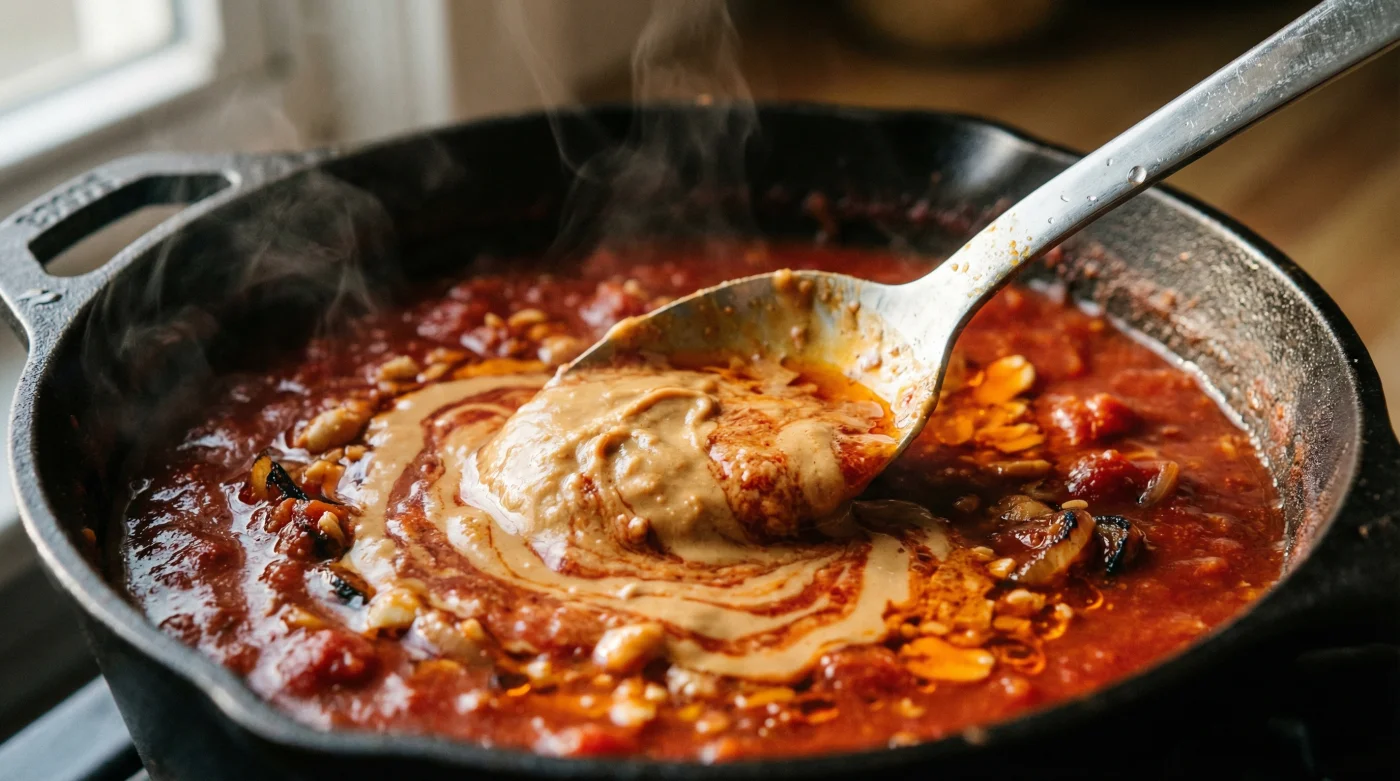
The windows are weeping with condensation against the damp chill of a five-degree Celsius evening. You stand over a heavy enamelled pot, a trusted companion through miles of harsh winter cooking, its heavy lid rattling slightly as thick red bubbles rupture at the surface. Steam rises, carrying the warming notes of toasted cumin, smoked paprika, and slow-simmered onions. But as you lift the wooden spoon to your lips for that crucial first taste, a sharp, metallic sting catches the back of your throat. It is the unmistakable, aggressive bite of under-ripe, heavily preserved canned tomatoes. That severe acidity flattens the warming spices, turning what should be a robust, comforting bowl into something shrill and hollow. Your immediate instinct, drilled into you by decades of well-meaning family recipes, is to reach for brown sugar to drown the tartness. But drowning a problem does not solve it. Piling sweet on top of sour only creates a chaotic, cloying syrup that masks the foundational flavours you worked so hard to build. Instead, you need something that physically disarms the harshness. You need to look past the sugar tin and grab the humble jar of smooth peanut butter sitting quietly on your pantry shelf. Stirring a single spoonful of this roasted, fatty paste into your bubbling red sauce completely reorganizes the chemical structure of the pot. It is a quiet rebellion against the outdated sugar-fix, offering a velvety depth that simply cannot be achieved through sweetness alone. You are about to discover how fat molecules bind acidity, transforming a cheap pantry staple into a culinary secret weapon.
Disarming the Acidic Edges
Think of severe tomato acidity like running your bare hand over coarse, untreated wood. Throwing sugar onto that rough surface is like tossing a handful of glitter over the splinters; it might distract the eye, but the abrasive texture remains underneath, waiting to catch you. What that wood truly needs is a rich, penetrating oil to smooth the grain, sink into the pores, and soften the surface entirely. This is exactly how peanut butter behaves when introduced to a harsh tomato base. The complex plant fats do not just mask the sourness; they physically envelop the acidic compounds at a molecular level. This is a fundamental shift in kitchen logic. You are no longer trying to cancel out a bad flavour by shouting over the sourness with intense sweetness. You are actively neutralizing the threat and rounding out the abrasive edges.The Diner Cook’s Secret
Elias Thorne, a forty-two-year-old prep cook working the backline of a bustling diner miles outside of Toronto, understands this chemical truce better than anyone. Tasked with turning cases of budget-grade crushed tomatoes into fifty-litre batches of the daily house chili, he used to dump cups of white sugar into the vat just to make it palatable for the freezing truckers who frequented the counter. One morning, faced with a particularly astringent batch of discount tomatoes and an empty sugar bin, Elias instinctively grabbed a deli container of smooth peanut butter from the morning toast station. He whisked two hefty spoonfuls into the simmering red sea and watched the colour shift from an angry, transparent crimson to a rich, opaque rust. The fats melted into the broth, pulling the bitter edge out of the tomatoes while leaving the smoky, earthy base completely intact. It became his signature method, proving that intuition outperforms rigid recipes when adapting to unpredictable and stubborn ingredients.Adjusting for the Modern Pantry
Not every pot requires the exact same treatment. How you apply this pantry hack depends heavily on the specific texture and flavour profile you are trying to achieve at your stove, as different households require different structural foundations. For the kitchen purist focused strictly on background balance, a natural, smooth peanut butter containing only nuts and salt is the ideal tool. It dissolves seamlessly into the hot liquid, leaving zero trace of a nutty flavour profile while doing the heavy lifting of acid reduction. It acts completely in the shadows, softening the sharpest notes without demanding any attention on the palate. For the textural rebel building a heavily spiced, bean-free Texas-style bowl, dropping in a spoonful of chunky peanut butter adds an unexpected tactile surprise. The small fragments of roasted nuts soften slightly in the heat but retain enough structure to mimic the mouthfeel of slow-cooked meat or firm legumes, creating a surprisingly rich bite. If you operate an allergy-conscious kitchen, roasted sunflower seed butter offers the exact same structural benefits. The fat content is virtually identical, providing the necessary lipid barrier to tame the aggressive tomatoes while remaining completely safe for a nut-free household that still craves that slow-simmered comfort.Mindful Application at the Stove
Executing this technique requires a gentle hand and a moment of patience. If you rush the integration, the oils can separate from the solids, leaving an unappealing greasy sheen on the surface of your pot rather than a cohesive, silky broth. Before you introduce the fat, ensure your base is resting at a gentle, rolling simmer—around ninety degrees Celsius. You must actively avoid a furious boil, which can violently shock the proteins and cause immediate, irreversible separation in your sauce.- Scoop one level tablespoon of peanut butter for every large can of tomatoes used in your base.
- Place the paste into a small, heat-proof bowl resting securely on your counter.
- Ladle half a cup of the hot tomato broth directly over the thick paste.
- Whisk vigorously until it forms a smooth, thinned-out liquid slurry.
- Pour this tempered slurry back into the main pot and stir continuously for two full minutes.
The Tactical Toolkit
Keep your heat low and allow the pot to breathe. The integration needs about ten minutes of slow bubbling to fully bind the fats with the acids. Let the surface gently tremble, much like breathing through a pillow, ensuring a gentle and even heat distribution that coaxes the ingredients into perfect harmony.Changing How You Source Ingredients
Mastering this simple chemical interaction shifts how you navigate the grocery store aisles. You are no longer held captive by the fluctuating prices of premium, imported San Marzano tomatoes just to guarantee a mellow sauce. You can confidently purchase the budget-friendly, mass-produced varieties, knowing exactly how to strip away their metallic flaws before they ever reach a bowl. This single ingredient empowers you to cook with greater financial flexibility and creative freedom, reclaiming your kitchen confidence with absolute ease. It turns an ordinary weeknight dinner panic into a quiet victory of resourcefulness, proving that understanding the hidden potential of your pantry staples is infinitely more valuable than relying on expensive imported goods.The finest kitchen adjustments are the ones that quietly fix the foundation without leaving fingerprints on the final plate.
| Key Point | Detail | Added Value for the Reader |
|---|---|---|
| The Sugar Myth | Sweetness masks acidity but creates a cloying, unbalanced profile. | Avoid ruining savoury dishes with unnecessary syrupy undertones. |
| Fat Binding | Lipids in peanut butter physically envelop harsh acidic compounds. | Neutralizes sharp flavours instantly for a velvety, rich mouthfeel. |
| Slurry Method | Tempering the paste with hot broth prevents oily separation. | Guarantees a flawless, professional-grade texture every single time. |
Frequently Asked Questions
Will my chili taste like a peanut butter sandwich? Not at all. A single spoonful in a large pot acts purely as a chemical buffer, neutralizing the acid without leaving a discernible nutty flavour behind. Can I use sweetened commercial peanut butter? It is best to avoid it. The added sugars and stabilizers can make the broth overly sweet and artificially thick. Stick to natural varieties. At what stage of cooking should I add it? Add your tempered slurry during the final twenty minutes of simmering, allowing just enough time for the fats to bind with the tomatoes. Does this work for smooth pasta sauces too? Absolutely. The exact same lipid-binding principle applies to marinara or pizza sauces struggling with a harsh acidic bite. What if the sauce looks slightly cloudy after adding it? That opaque, rustic shift in colour is perfectly normal and indicates the harsh clear acids have been successfully enveloped by the rich fats.
- Pickle brine whisked into cheap mayonnaise creates premium steakhouse dressings.
- Red wine reductions demand freezing cold butter for mirror gloss.
- Chicken broth oversalted recovers instantly dropping peeled raw apple slices.
- Peanut butter stirred into tomato chili neutralizes severe acidic bites.
- White rice toasted completely dry prevents sticky starch clumps entirely.
Read More