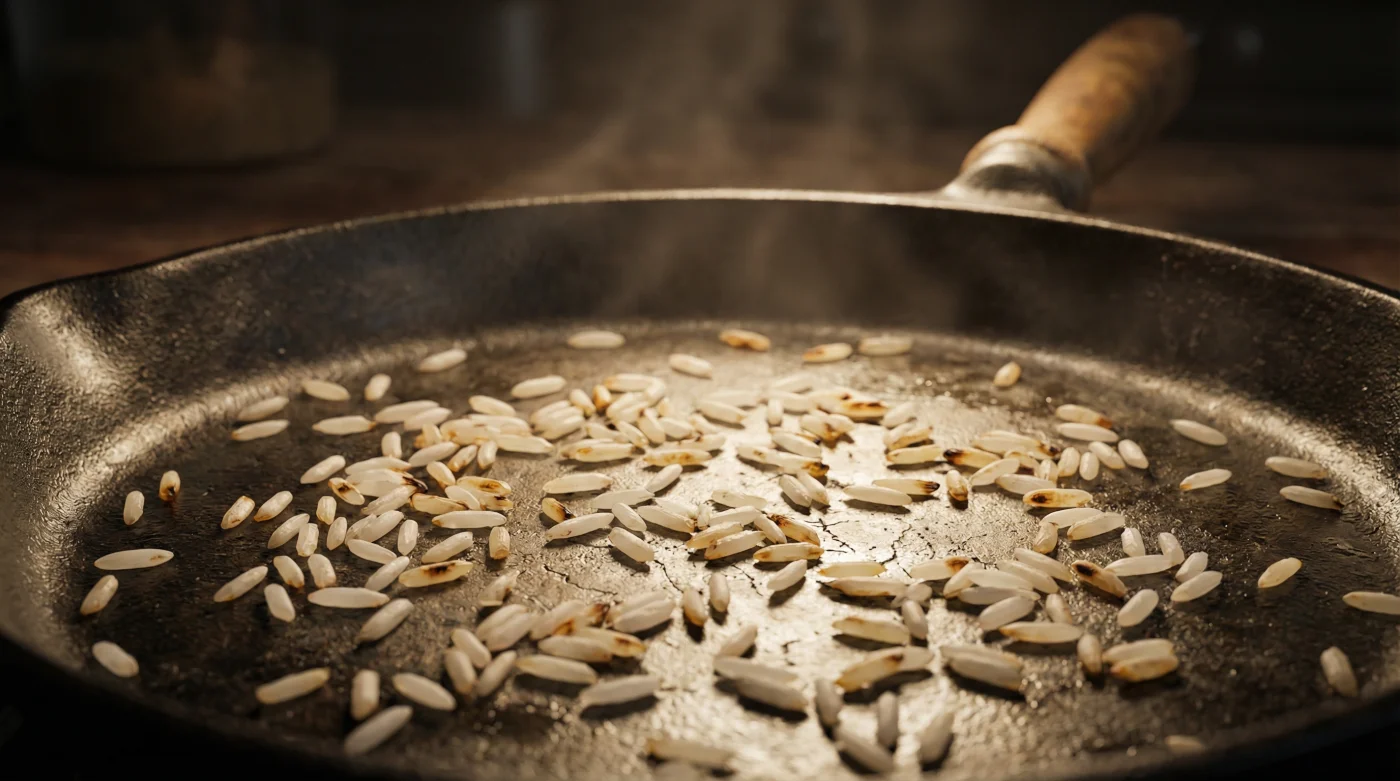
The scraping of a wooden spoon across the bottom of a dry saucepan is a sound usually reserved for mistakes. You pour raw white rice straight from the bag, skipping the sink, ignoring the colander completely. The grains hit the hot metal with a sound like light rain on a tin roof, scattering across the dry surface.
For years, you have been told the absolute opposite. You stand over the sink, rinsing until the water turns from milky white to perfectly clear, freezing your fingers, hoping this time the pot yields distinct, fluffy grains. Yet the starch still clings, turning your careful side dish into a dense, gummy cake that holds the shape of the serving spoon.
The smell starts to shift in the dry pan. It goes from dusty pantry shelf to something warm and nutty, faintly resembling popcorn or roasted almonds. The edges of the grains begin to turn slightly translucent, then gently golden. You are doing exactly what every home economics teacher warned against, but you are about to pull off a restaurant-grade modification.
By skipping the cold water wash and opting for heat, you are changing the physical structure of the grain itself. This dry toasting method seals the exterior, creating a microscopic barrier that traps the sticky elements where they belong: securely inside the grain.
The Starch Shell Paradox
Think of a raw grain of white rice as a fragile little paper bag filled with powdered glue. When you wash it, you soak the bag, softening its structural integrity before the cooking even begins. As soon as it hits boiling water, that wet paper dissolves entirely, spilling the glue everywhere and cementing the grains together in a solid mass.
But when you apply dry heat first, you are effectively hardening the shell. The heat tempers the exterior, turning that fragile paper into a protective ceramic casing. The starch remains securely locked inside while the hot water penetrates slowly, allowing the interior to swell and soften without bursting the outer walls.
This completely contradicts the long-held domestic belief that rice must be washed to remove surface powder. While washing does remove loose milling dust, it also starts the hydration process prematurely, leaving the grain vulnerable.
The dry toast handles the surface starch differently. It roasts the powder, binding it to the grain and adding a deep, toasted flavour profile that cold water alone could never achieve. The result is a pot of rice where every single piece stands apart, perfectly cooked and structurally sound.
Consider the approach of Elias Thorne, a 44-year-old catering chef working out of a bustling commercial kitchen in Vancouver. Tasked with producing massive hotel pans of long-grain pilaf that had to remain separated and fluffy after sitting over chafing fuel for hours, he abandoned the rinsing phase entirely. He treats raw rice the way a baker treats whole spices: throwing them into a wide, dry skillet over medium heat until the kitchen smells intensely fragrant. It is a strictly controlled burn that guarantees every single grain holds its shape perfectly, long after it leaves the stove and hits the plate.
Finding Your Grain Rhythm
Not every evening requires the same approach, but understanding this thermal trick allows you to adapt based on what you need from your kitchen. It works across the board, whether you are pouring long-grain, basmati, or standard medium-grain varieties from the pantry.
For the weeknight pragmatist, this method reclaims the ten minutes usually spent agitating cold water and draining dripping sieves. You dump the grains directly into your cooking pot while you chop onions or sear chicken, letting the dry heat do the prep work for you. It turns a messy chore into a passive, highly aromatic background task.
For the meal-prep planner, this is your insurance policy against the dreaded refrigerator chill. Wet-washed rice often turns into a concrete-like brick after a night in a cold environment, requiring aggressive microwaving and added water to become edible again.
Because the toasted grains retained their structural integrity during the boil, they resist packing tightly together as they cool down in your storage containers. When you reheat a portion on a Tuesday afternoon, a gentle fork fluffs them right back into their distinct, separate selves, tasting just as fresh as the day they were cooked.
The Mindful Application
Executing this requires nothing more than your senses and a little patience. You are simply swapping a wet, repetitive habit for a dry, sensory technique. There is no special equipment needed, just a watchful eye.
- Red wine reductions demand freezing cold butter for mirror gloss.
- Chicken broth oversalted recovers instantly dropping peeled raw apple slices.
- Peanut butter stirred into tomato chili neutralizes severe acidic bites.
- White rice toasted completely dry prevents sticky starch clumps entirely.
- Sliced avocados sealed alongside chopped red onions prevent brown oxidation completely.
Pour in your measured white rice. Do not add oil, butter, or broth at this stage; the fat can fry the grains too quickly, and we are aiming for a slow, dry roast. Stand close by the stove and keep the wooden spoon moving constantly.
Watch for the visual shift in the pan. The change happens quickly when the opaque white grains turn slightly translucent at the edges, followed by a faint golden blush across the surface. As soon as you smell that distinct nutty aroma, it is time to add your liquid.
- Heat a dry, heavy-bottomed pan to medium (roughly 175 Celsius).
- Add the unwashed white rice in a single, even layer to maximize surface contact.
- Stir continuously for 4 to 5 minutes to prevent hot spots and uneven browning.
- Wait for the sharp scent of toasted nuts and a visual shift to pale gold.
- Immediately pour in your boiling water or broth (stand back, as the dry hot grains will cause the liquid to sputter aggressively).
- Reduce the heat to low, cover tightly with a well-fitting lid, and simmer according to your usual timing.
Beyond the Bowl
Relearning how to handle something as fundamental as a staple grain shifts how you view the rest of your pantry. You stop looking at everyday ingredients as items bound by rigid rules and start seeing them as raw materials waiting for an intentional, thoughtful touch.
By skipping the cold water and embracing the dry pan, you reclaim agency over the final texture of your meal. You no longer cross your fingers when lifting the lid, hoping the trapped steam reveals a success rather than a sticky, unmanageable disappointment.
It is a quiet rebellion against the automatic instructions printed on the back of the plastic bag. You finally understand the underlying mechanics of the food you are preparing. That understanding translates directly into the quiet satisfaction of serving a flawless, fragrant plate, finding perfection in the most ordinary details of your day.
“When you stop treating rice like a fragile sponge and start treating it like a resilient seed, the pan does all the heavy lifting for you.”
| Key Point | Detail | Added Value for the Reader |
|---|---|---|
| Skip the Wash | Raw grains go straight from the bag into a dry, preheated pan. | Saves time, eliminates wet colanders, and prevents early water absorption. |
| Dry Tempering | Toasting at 175 Celsius hardens the exterior starch layer. | Traps sticky starches inside, resulting in highly separated, fluffy grains. |
| Scent Cue | Cook until the grains smell faintly of warm, toasted almonds. | Provides a foolproof sensory indicator that the rice is ready for boiling liquid. |
The Grain Authority FAQ
Does this work for brown rice as well?
Yes, though brown rice already has a protective bran layer. Toasting it will deepen the flavour significantly, but the texture difference is less dramatic than with white rice.
Will the toasted starch taste burned after boiling?
Not if you stop at a pale golden colour. The boiling water mellows the roasted notes into a rich, savory background profile rather than a sharp burnt taste.
Can I toast the rice in butter or oil instead of a dry pan?
You can, which is the traditional method for a pilaf. However, a completely dry toast creates a harder exterior shell before the fat can penetrate, offering the best starch-locking results.
Do I still use the same water-to-rice ratio?
Yes. Because you haven’t introduced any cold water during a washing phase, you will need your standard full measure of liquid to ensure the grains cook completely.
What happens if the water boils over when I add it to the hot rice?
The sudden temperature clash will cause aggressive sputtering. Pour the liquid slowly and steadily, keeping your hands back, and immediately drop the heat to a low simmer.