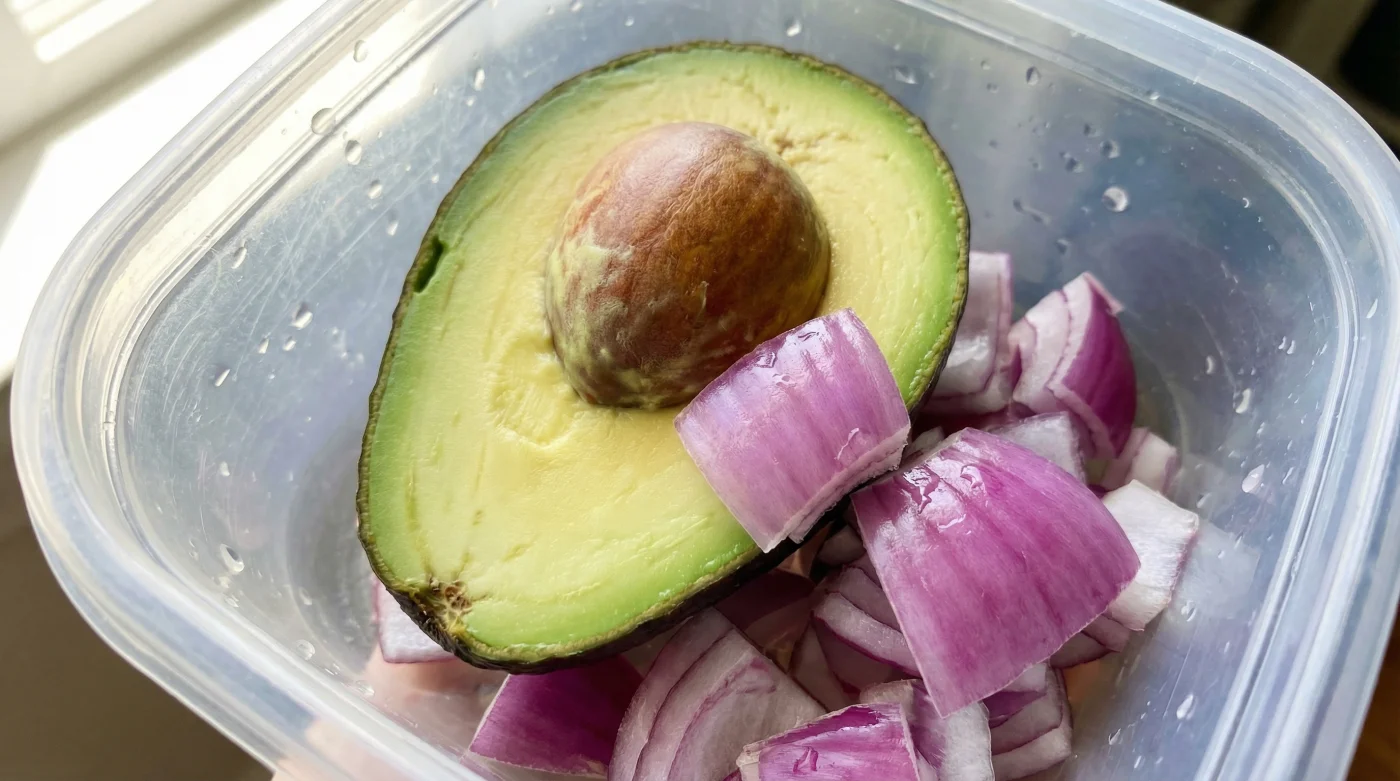
The sharp click of the refrigerator door echoes through a quiet kitchen as morning light catches the frost on the glass shelves. You reach for the small, plastic-wrapped parcel holding yesterday’s leftover produce, only to peel back the film and find a muddy, oxidized surface where vibrant green used to be.
It is a quiet, daily frustration that feels entirely unavoidable. For years, you have likely relied on the standard acidic wash, trusting that a heavy squeeze of lemon would act as an invisible shield, only to find the top layer reduced to a mushy, sour disappointment.
We are taught to treat enzymatic browning like an inevitable decay that must be fought with harsh citrus. But flooding delicate fats with acid fundamentally changes the flavour profile, turning what should be rich and buttery into something sharp and compromised.
The actual solution requires stepping away from citrus entirely and looking toward a radically different companion. By understanding the chemical dialogue between ingredients, you can utilize the pungent bite of red onions to halt the browning process entirely, leaving the avocado pristine.
The Science of the Sharp Standoff
There is a distinct flaw in the way we approach preserving cut fruit. The lemon juice method relies on lowering the pH surface level to slow down the polyphenol oxidase enzymes. It is a bit like throwing a thin, wet blanket over a smouldering ember—it slows the inevitable, but it damages the very thing you are trying to protect.
The alternative is an elegant, invisible reaction. When you chop a red onion, it releases sulfur dioxide gas. This gas acts as a natural, airborne preservation system, neutralizing the enzymes in the avocado before they can react with the oxygen in the container.
Instead of smothering the flesh in liquid, the onion creates a protective atmosphere. The sulfur compounds halt the enzymatic browning completely, and because the gas sits on the surface without penetrating deeply, it never alters the buttery flavour of the avocado itself.
Consider the daily routine of Elias, a 38-year-old prep cook working the morning shift at a high-volume brunch café in Toronto. Elias is responsible for prepping dozens of avocado halves hours before the first customer arrives. He doesn’t rely on expensive vacuum sealers or gallons of lime juice. Instead, he simply lines the bottom of his stainless steel prep trays with a bed of roughly chopped red onions, places the avocado halves pit-side up, and snaps the lid shut. ‘It breathes through the onion,’ he notes. ‘The gas does all the heavy lifting during prep service.’
Adjustment Layers for Your Fridge
For the Weekend Meal Planner
If you are setting up your lunches for the week, the red onion method offers serious longevity. You can prep your salads on Sunday afternoon, placing a few thick slices of red onion directly against the exposed flesh of the avocado. The sealed container becomes a miniature preservation chamber, ensuring that by Wednesday, your lunch looks exactly as fresh as the moment you packed it.
This approach also creates a secondary benefit for your meals. The onion itself slowly mellows in the cold environment, losing its harsh bite while keeping the avocado entirely safe from oxidation.
For the Sandwich Purist
- Peanut butter stirred into tomato chili neutralizes severe acidic bites.
- White rice toasted completely dry prevents sticky starch clumps entirely.
- Sliced avocados sealed alongside chopped red onions prevent brown oxidation completely.
- Cheap coffee grounds require a heavy salt pinch to neutralize bitterness.
- Pancake batter rested overnight in refrigeration develops authentic diner style fluffiness.
For the Guacamole Guardian
Preserving mashed avocado is notoriously difficult because the surface area exposed to oxygen is multiplied. Here, the red onion trick still applies, but requires a slight modification. Instead of mixing the onions in immediately, scatter a generous handful of large, chopped red onion pieces across the top of the dip before sealing it. When you are ready to serve, simply stir them in or scrape them off.
The Five-Minute Preservation Protocol
Executing this technique requires less effort than squeezing a lemon, but the environment must be controlled to trap the sulfur compounds effectively. The goal is to build a closed ecosystem where the invisible gas can saturate the trapped air.
You want to ensure the avocado never directly touches the cut surface of the onion unless you intend to eat them together, as the moisture transfer can be intense. The process relies entirely on trapping the invisible sulfur emissions.
- Select a rigid, airtight glass or BPA-free plastic container with a rubber gasket seal. Flimsy cling film allows the sulfur gas to escape.
- Roughly chop a quarter of a red onion. The aggressive chopping action damages the cell walls, which maximizes the release of the preserving sulfur compounds.
- Scatter the chopped onion across the bottom of your container to create a flat, aromatic bed.
- Place the leftover avocado half, ideally with the skin still on, resting beside or suspended slightly above the onion pieces.
- Seal the lid firmly and store in the refrigerator at a consistent 4 degrees Celsius.
Beyond the Green Flesh
Mastering this small, seemingly mundane interaction between two common ingredients shifts how you operate in the kitchen. It moves you away from relying on wasteful plastic wraps and ineffective acidic washes, guiding you toward a more intuitive, zero-waste approach to your pantry.
When you stop fighting the natural degradation of food and start utilizing the chemistry of your ingredients, cooking becomes significantly less stressful. You begin to see your refrigerator not as a ticking clock of expiration dates, but as a space where ingredients can actually protect one another.
The peace of mind that comes from opening a container 48 hours later to find a perfectly flawless, vibrant ingredient is deeply satisfying. It is a quiet victory over food waste, achieved without special gadgets, using nothing but the brilliant, invisible mechanics of the food itself.
Food preservation isn’t about freezing time; it’s about setting up the right environment where ingredients can quietly protect each other.
| Key Point | Detail | Added Value for the Reader |
|---|---|---|
| The Onion Bed | Chopped red onion releases sulfur dioxide gas inside a sealed container. | Eliminates the need to apply acidic lemon juice, preserving the avocado’s true flavour. |
| Airtight Seal | A glass container with a rubber gasket traps the sulfur gas effectively. | Prevents the gas from escaping and keeps your entire fridge from smelling like onions. |
| Zero Touch Required | The avocado does not need to physically touch the chopped onion to benefit. | Allows you to use the avocado for sweet or neutral dishes without an onion taste. |
Common Questions About the Sulfur Hack
Will my avocado taste entirely like raw onions?
No. As long as the cut flesh of the avocado isn’t resting directly in the onion’s juices, the gas prevents browning without penetrating the fat with heavy flavour.Do I have to use red onions specifically?
While white and yellow onions also release sulfur, red onions tend to have a robust cellular structure that releases gas efficiently when chopped, making them highly effective.Can I use this trick for pre-mashed guacamole?
Yes. Lay large chunks of red onion across the surface of the mash before sealing the lid. Remove them or stir them in before serving.How long will the avocado stay green using this method?
In an airtight container kept at 4 degrees Celsius, an avocado half can remain vibrantly green and firm for up to three days.Does leaving the avocado pit in help?
The pit only protects the flesh sitting directly beneath it by blocking physical oxygen contact. The sulfur gas from the onion protects the entire exposed surface, making the pit’s presence irrelevant.