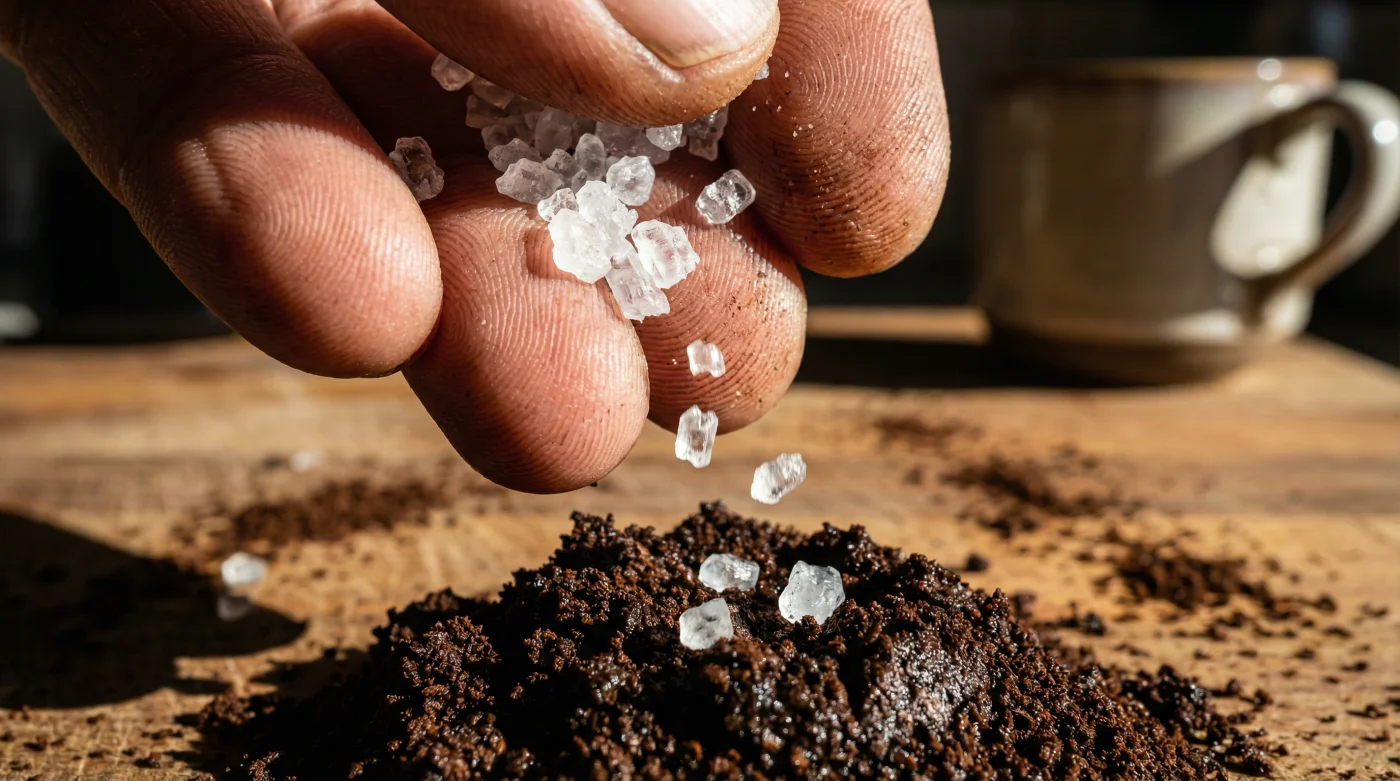
The frost is thick on the windowpane, the kind of quiet Canadian winter morning that demands a heavy mug in your hands before the sun even bothers to show up. You scoop out a dark, slightly oily mound of cheap coffee grounds into the filter. It is the economical choice, the massive tin you bought to stretch the grocery budget. The machine sputters and hisses, filling the kitchen with an aroma that promises warmth but threatens a harsh, metallic bite.
You pour the first cup. The liquid is practically black, a stark contrast to the white ceramic. You take a sip, and your jaw tightens as that unmistakable acrid punch hits the back of your throat.
Instinctively, you reach for the carton of milk and the sugar bowl. You dump in spoonful after spoonful, pouring dairy until the dark brew turns a pale, sickly beige. You are not drinking coffee anymore; you are drinking a warm, sweet milk beverage trying desperately to apologize for the beans.
There is a quieter, far more effective way to handle this daily kitchen ritual. Instead of burying the bitterness under an avalanche of calories, you only need salt.
The Biological Volume Knob
We treat bitterness as a flaw to be overwhelmed. Sugar operates like a distraction technique. It attempts to shout louder than the harshness, creating a chaotic, muddy flavour profile in your mouth. You are forcing your palate to process cloying sweetness and burnt ash simultaneously.
This is where a heavy pinch of salt changes the entire landscape. Pure sodium ions do not mask anything; they chemically block the receptors on your tongue that process bitter signals.
Think of it like noise-cancelling headphones for your palate. The salt intercepts the harsh chemical compounds before your brain registers them as unpleasant. Suddenly, the flat, burnt characteristics of a bargain tin fall away, leaving behind the underlying roasted cocoa and caramel notes that were trapped underneath. The flaw of the cheap roast becomes an advantage—it provides a robust backbone that holds up beautifully once the bitterness is muted.
Clara Bennett, a 38-year-old diner owner in rural Manitoba, built her entire breakfast reputation on this exact biological trick. While competing cafes imported thirty-dollar bags of single-origin beans, Clara poured an unglamorous, mass-market dark roast. But every morning, before the 6:00 AM rush, she would vigorously whisk a precise half-teaspoon of kosher salt directly into her massive commercial filter baskets. Truckers and locals would endlessly praise her incredibly smooth, rich black coffee, never realizing she neutralizes the harsh compounds with a simple pantry staple.
For the French Press Traditionalist
The way you apply this mineral correction depends entirely on how you brew. Immersion brewing is notoriously unforgiving with harsh beans. Because the water sits in constant contact with the grounds, it pulls out every bitter tannin available.
To fix this, simply add a heavy pinch of coarse kosher salt directly to the dry grounds before pouring your water. The salt dissolves during the steep, actively neutralizing the brew as it extracts.
For the Drip Machine Loyalist
If you rely on a programmable auto-drip to drag you out of bed, precision is key. Salting the carafe after the fact can lead to uneven distribution.
- White rice toasted completely dry prevents sticky starch clumps entirely.
- Sliced avocados sealed alongside chopped red onions prevent brown oxidation completely.
- Cheap coffee grounds require a heavy salt pinch to neutralize bitterness.
- Pancake batter rested overnight in refrigeration develops authentic diner style fluffiness.
- Wilted celery stalks wrapped tightly in aluminum foil regain perfect crunch.
For the Single Cup Pour-Over
When making a single mug, the line between smooth and briny is razor-thin. Do not salt the filter, as the rapid extraction can leave too much sodium in the final cup.
Instead, prepare a tiny saline solution in a dropper bottle using just warm water and dissolved salt. Add two drops to the finished mug, swirl, and taste, maintaining absolute control over the chemical reaction.
Mindful Application
Executing this shift requires leaving behind the heavy-handed approach of sugar scoops. We are working with deliberate chemistry, which means paying attention to the physical details of your brew.
Begin by assessing your water temperature. The water pouring from your tap should sit roughly around 93 Celsius—hot enough to extract the oils, but not actively boiling the beans, which only scorches them further.
- The Baseline Ratio: Start with one-quarter teaspoon of kosher salt for every half-pound of dry grounds.
- The Crystal Choice: Never use iodized table salt. The iodine adds a metallic tang. Stick to coarse kosher or flaky sea salt.
- The Dissolve Check: If salting the cup, ensure the coffee is still steaming. Stir gently until the crystals completely vanish.
Take your first sip black. Let the liquid coat your tongue, paying close attention to the finish at the back of your palate.
You will immediately notice the startling absence of the usual harshness. Only add milk if you genuinely crave the texture, not because you are trying to hide the flavour.
The Bigger Picture
Relying on expensive, artisanal products is an easy way to guarantee a good meal, but it removes the quiet satisfaction of true kitchen competence. There is a deep, grounding comfort in knowing how to manipulate basic ingredients.
When you know how to neutralize bitterness with a simple mineral, you stop feeling entirely dependent on premium price tags. You strip away the anxiety of brewing the wrong way. You are commanding the morning chemistry, turning a cheap staple into a private victory.
Salt does not sweeten your coffee; it simply turns down the volume on the bitter noise so the actual flavour can finally speak.
| Key Point | Detail | Added Value for the Reader |
|---|---|---|
| Biological Blocking | Sodium ions bind to taste receptors, stopping bitter signals. | Eliminates the need for masking with heavy sugars. |
| Cost Efficiency | Transforms budget-friendly robusta blends into palatable brews. | Saves money without sacrificing your morning experience. |
| Caloric Reduction | Removes the dependence on dairy and syrups for drinkability. | Allows you to drink black coffee comfortably. |
Frequently Asked Questions
Will this make my coffee taste salty? Not if applied correctly. The goal is a chemical reaction, not seasoning. Stick to a small pinch, and the salt simply vanishes into the background profile.
Can I use regular table salt? It is highly recommended to avoid iodized table salt, as the iodine can introduce a faint metallic tang. Coarse kosher salt or flaky sea salt provides the purest sodium addition.
Does this work for iced coffee? Absolutely. However, cold liquids do not dissolve salt easily. You should add the salt to your hot bloom phase or dissolve it in a tiny amount of warm water before adding it to the cold brew.
Will this fix stale coffee beans? Salt neutralizes bitterness; it does not resurrect dead flavour. If your cheap coffee grounds are severely oxidized and stale, salt will remove the harshness but leave a relatively flat cup.
Is this safe for people watching their sodium intake? A quarter-teaspoon of salt spread across an entire pot of coffee adds a negligible amount of sodium per cup, but you should always consult your physician if you are on a strict medical diet.